The Mediterranean · Volume 03, The Aegean and the Contested Table
Kleftiko
Greece, with a Cypriot parallel neither research pass could fully reconcile with the other, see below
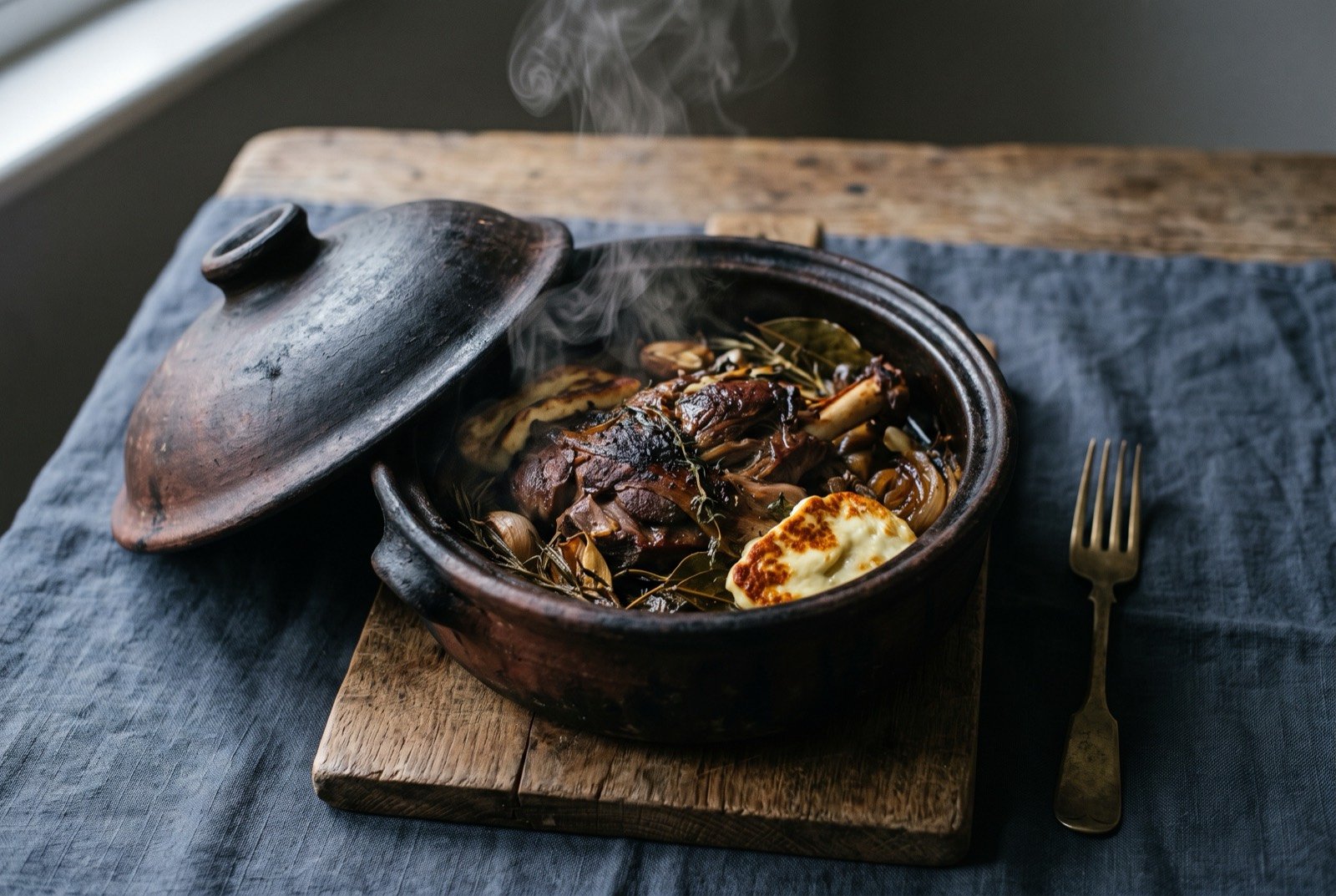
An illustration of the dish, not a photograph of it cooked.
- Time
- 3 hours
- Researched
- 11 sources cited
- Reviewed
- Not yet reviewed from inside the tradition
- Cooked
- Not yet cooked and reported
The name comes from the klephtes, irregular fighters against Ottoman rule who needed to cook stolen lamb without smoke or visible fire giving away their position.
As tradition built it
Serves 6. Several hours, low and slow.
Ingredients
An outline, not yet a recipe: the tradition's method with its ingredients named but not weighed. Quantities are being added from sources inside the tradition, lead dishes first.
- 1 lamb shoulder or leg, bone in
- as available bay, wild carob leaves if available, oregano, thyme, lemon, wild garlic
- kefalotyri or another hard sheep's cheese, roughly chopped
- to taste salt
Method
- Rub the lamb with salt and the herbs.
- Pack it into a lidded clay gastra, or a heavy lidded casserole, with the chopped cheese and remaining aromatics.
- Seal the lid, traditionally with a flour-and-water paste, so no steam escapes.
- Cook low and slow for several hours, until the meat falls from the bone. No source consulted for this chapter gives a reliable specific time or temperature; this chapter does not invent one.
- Bring the sealed vessel to the table and open it there, so the aroma releases in front of the diners.
What a modern chef changes
A Big Green Egg run as the domestic gastra it already resembles
Rung 2
Method
- Seal properly. A genuine flour-and-water lute around the lid rim, not just a tight-fitting lid, is what actually traps the steam and replicates the pit's sealed atmosphere.
- Run indirect and low, using the Egg's own thermal mass the way the traditional embers-and-earth method uses the ground's, checking only by feel of the vessel's exterior rather than lifting the lid, which breaks the seal you have just built.
- Do not guess at a shorter time to compensate for modern equipment. The mechanism this dish depends on is time and seal, not raw heat; treat "many hours" as the honest instruction it is rather than converting it to a false precision.