France and the Alps · Volume 12, Choucroute, Bière de Garde and the Double Border
Baeckeoffe
Alsace
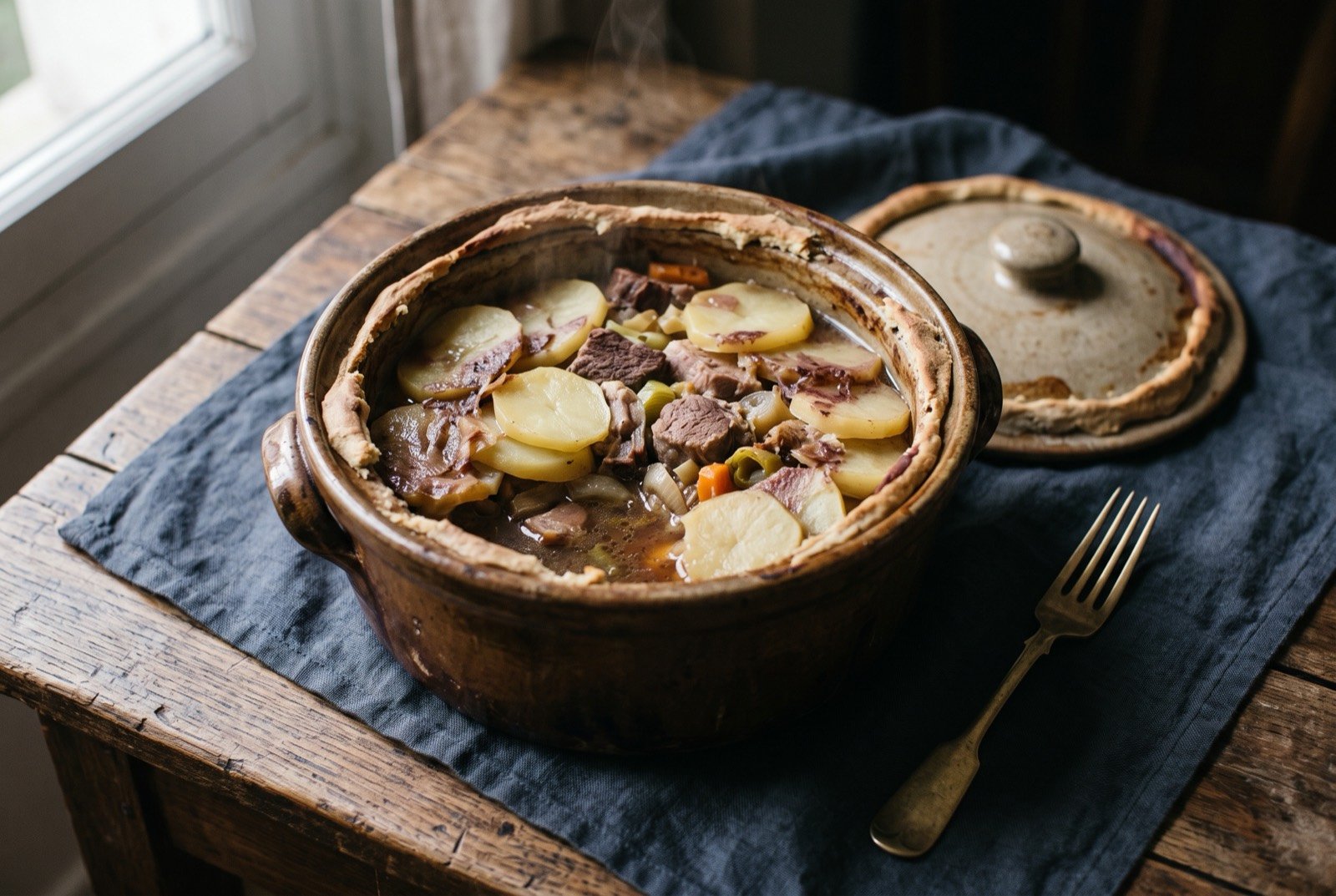
An illustration of the dish, not a photograph of it cooked.
- Time
- Hands on 4 hours · Waiting 8 hours
- Researched
- 10 sources cited
- Reviewed
- Not yet reviewed from inside the tradition
- Cooked
- Not yet cooked and reported
The name comes from Alsatian Bäckerofen, the baker's oven. Traditionally, three meats, beef, mutton or lamb, and pork, marinated overnight in white wine with onions, were layered with potatoes in a terrine, sealed with a dough lute, and left at the village baker's oven on Monday morning, washing day, to be collected at midday, cooked through by the oven's own residual heat after the morning's bread bake. A single source links the technique to Jewish hamin or cholent, the Sabbath dish kept warm without lighting a fire; this is plausible given Alsace's historic Jewish population but not corroborated elsewhere, and is offered here as a genuine open question rather than settled fact.
As tradition built it
Serves 6. Marinate overnight, then about 4 hours to cook.
Ingredients
- 400 g each beef, lamb, pork shoulder, cubed
- 2 onions, sliced
- 750 ml dry Alsace white wine
- 1 kg potatoes, sliced
- 2 bay leaves, a few thyme sprigs, 4 garlic cloves, to taste bay, thyme, garlic, salt and pepper
- as needed, to seal flour and water, for the seal
Method
- Combine the beef, lamb and pork shoulder with the onions, wine, bay, thyme, garlic, salt and pepper. Marinate overnight in the fridge.
- Layer potato, then the marinated meats and onions, then more potato, in a large earthenware terrine, pouring over the marinade to just cover.
- Mix flour and water to a firm dough, roll into a rope, press around the rim to seal the lid completely.
- Bake at 180°C for around 4 hours, or a two-stage 200°C for 2 hours followed by 170°C for a further 1h45, never exceeding 200°C.
- Break the seal at the table, so the aroma releases in front of the diners.
What a modern chef changes
The seal done properly, and the three meats given separate, precise treatment before assembly.
Rung 2.
Method
- Sous vide each of the three meats separately at its own correct low temperature before the final assembly and bake, so each is properly tender rather than relying on the single long communal braise to fix an unevenly cooked mix, the same logic this atlas applies to any dish built from several proteins with different needs.
- Seal the terrine properly with a real dough lute, not just a tight-fitting lid; this is the mechanism the dish depends on, not decoration.
- Do not exceed 200°C at any stage. The traditional method's whole virtue is a long, gentle, falling heat; a hotter, faster version dries the dish out and defeats the point of sealing it in the first place.