France and the Alps · Volume 12, Choucroute, Bière de Garde and the Double Border
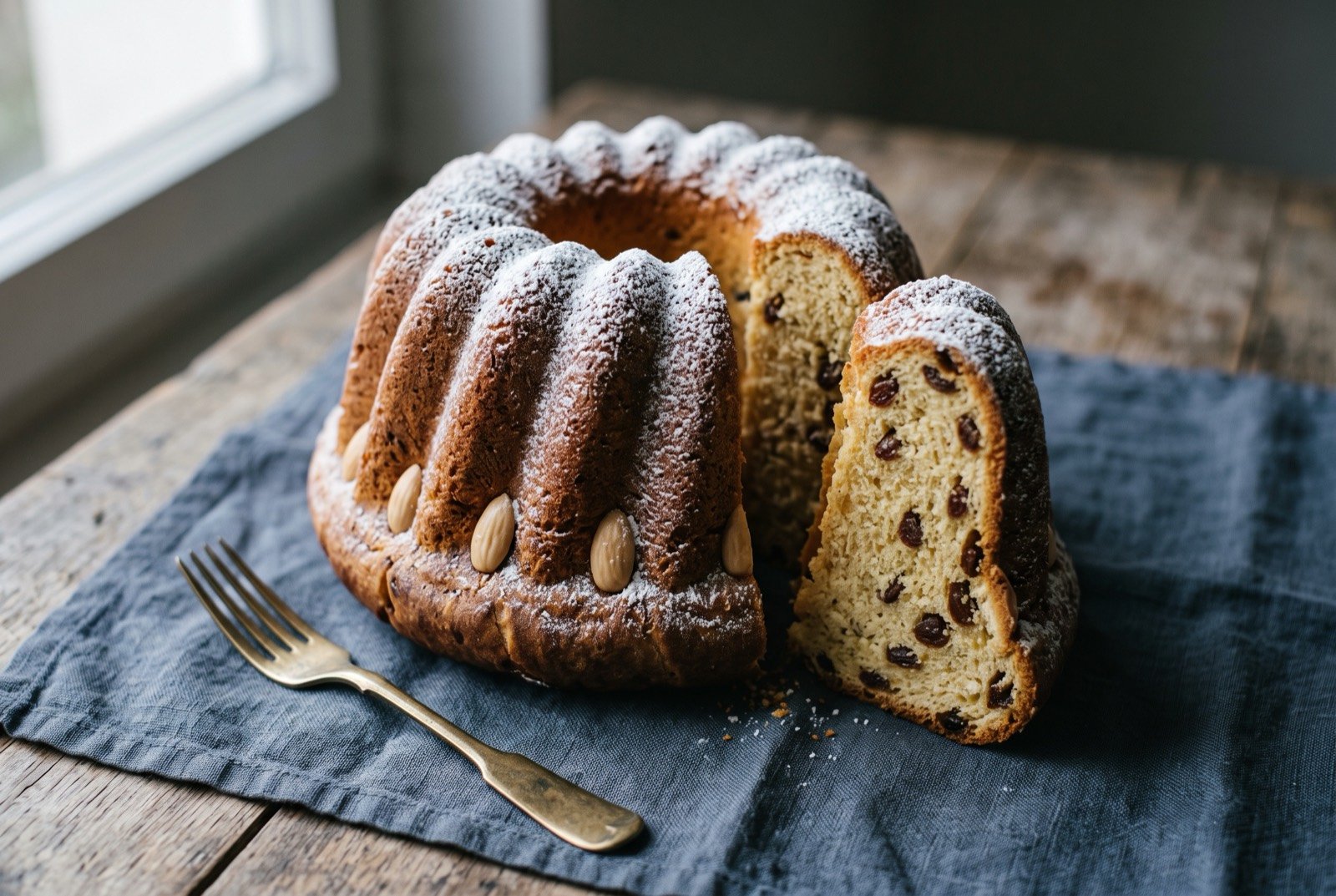
Kougelhopf
Alsace
Illustration
- Time
- 1 hour
- Researched
- 10 sources cited
As tradition built it
Makes one large cake. About 1 hour active, 3 to 4 hours proving, 40 to 45 minutes baking.
Ingredients
- 500 g strong flour
- 15 g fresh yeast
- 150 ml warm milk
- 100 g sugar
- 3 eggs
- 150 g soft butter
- 100 g raisins, soaked in a little kirsch
- a few, to line whole almonds, for the mould
- a little, to dust icing sugar, to finish
Method
- Bloom the yeast in the warm milk with a spoonful of the sugar, about 15 minutes.
- Combine with the flour, remaining sugar, eggs and a pinch of salt, knead well, then work in the soft butter gradually.
- Fold in the drained raisins.
- First proof, covered, 1.5 to 2 hours, until doubled.
- Press whole almonds into the base of a terracotta kougelhopf mould, never washed, only wiped clean after use.
- Knock back the dough, shape and place in the mould.
- Second proof to the rim of the mould.
- Bake at 180°C for 40 to 45 minutes, until deeply golden and a skewer comes out clean.
- Dust generously with icing sugar once cool.
What a modern chef changes
The proof given its full, unhurried time, and the raisins made to earn their place.
Rung 1, applied by analogy to yeast rather than lactic fermentation.
Method
- Do not rush either proof. A yeasted dough denied its full rise bakes dense and tight rather than the open, tender crumb a properly proved kougelhopf should have, exactly the same discipline this chapter asks of a choucroute ferment.
- Macerate the raisins properly in kirsch for several hours, not a token soak, so they plump and carry real spirit flavour into the crumb rather than sitting as dry specks.
- Use a genuine terracotta mould, never washed, for the specific, slow heat transfer and easy release the dish depends on; a metal bundt tin gives a different, less even bake.