The Levant and Anatolia · Volume 02, The Steppe, the Fire and a Divided Table
Ali Nazik kebabı
Gaziantep and the wider southeast
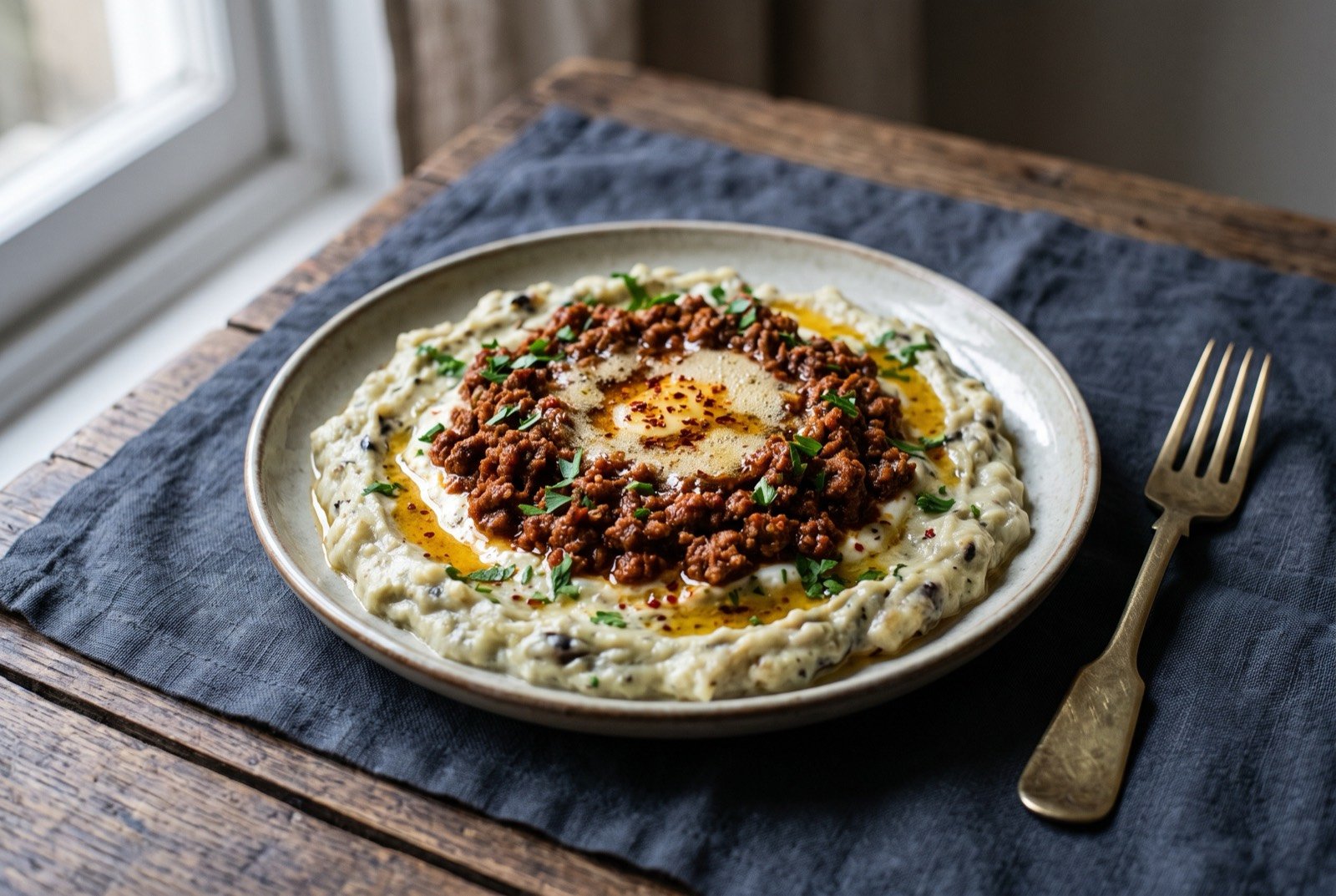
Illustration
- Time
- 30 minutes
- Researched
- 1 source cited
As tradition built it
Serves 4. 30 minutes.
Ingredients
- 3 large aubergines
- 300 g strained yoghurt
- 2 garlic cloves, crushed
- 400 g lamb or beef mince
- 1 onion, finely chopped
- 2 tbsp tomato paste
- 40 g butter
- To taste salt
- To taste black pepper
- To taste pul biber
Method
- Char the aubergines whole over a direct flame or hot coals until the skin blackens and blisters and the flesh collapses, then peel and mash the flesh, discarding the skin.
- Beat the mashed aubergine with the strained yoghurt and crushed garlic to a smooth, spoonable base.
- Fry the mince with the onion and tomato paste until well browned and cooked through, seasoning with salt, pepper and a little pul biber.
- Melt the butter separately until foaming.
- Spread the yoghurt-aubergine base on a plate, top with the spiced mince, and pour the foaming butter over just before serving.
Notes
This dish's name carries two genuinely incompatible origin stories, reported here side by side rather than resolved. The Ottoman-legend version attributes it to Sultan Selim I's 16th-century visit to Gaziantep, where he is said to have asked "which delicate hand [el nazik] made this," the name evolving from "ala nazik." A Kurdish-language source gives a different, non-royal etymology for the same name, "elînazîk," tracing it to "ala nazîk," meaning "delicate flatbread," and lists the dish as shared Kurdish, Syriac, Turkish and Arab heritage.
What a modern chef changes
Real fire smoke, and a coarser, hand-cut mince.
Rung 1
Method
- Char the aubergines over genuine charcoal or wood embers on a Big Green Egg, rather than a gas hob flame, for a deeper, more even smoke through the flesh.
- Hand-cut the mince coarsely rather than using a fine machine grind, giving the topping more bite against the aubergine's softness.
- Brown the butter to a beurre noisette before pouring, for a nuttier finish than plain melted butter.