The Levant and Anatolia · Volume 02, The Steppe, the Fire and a Divided Table
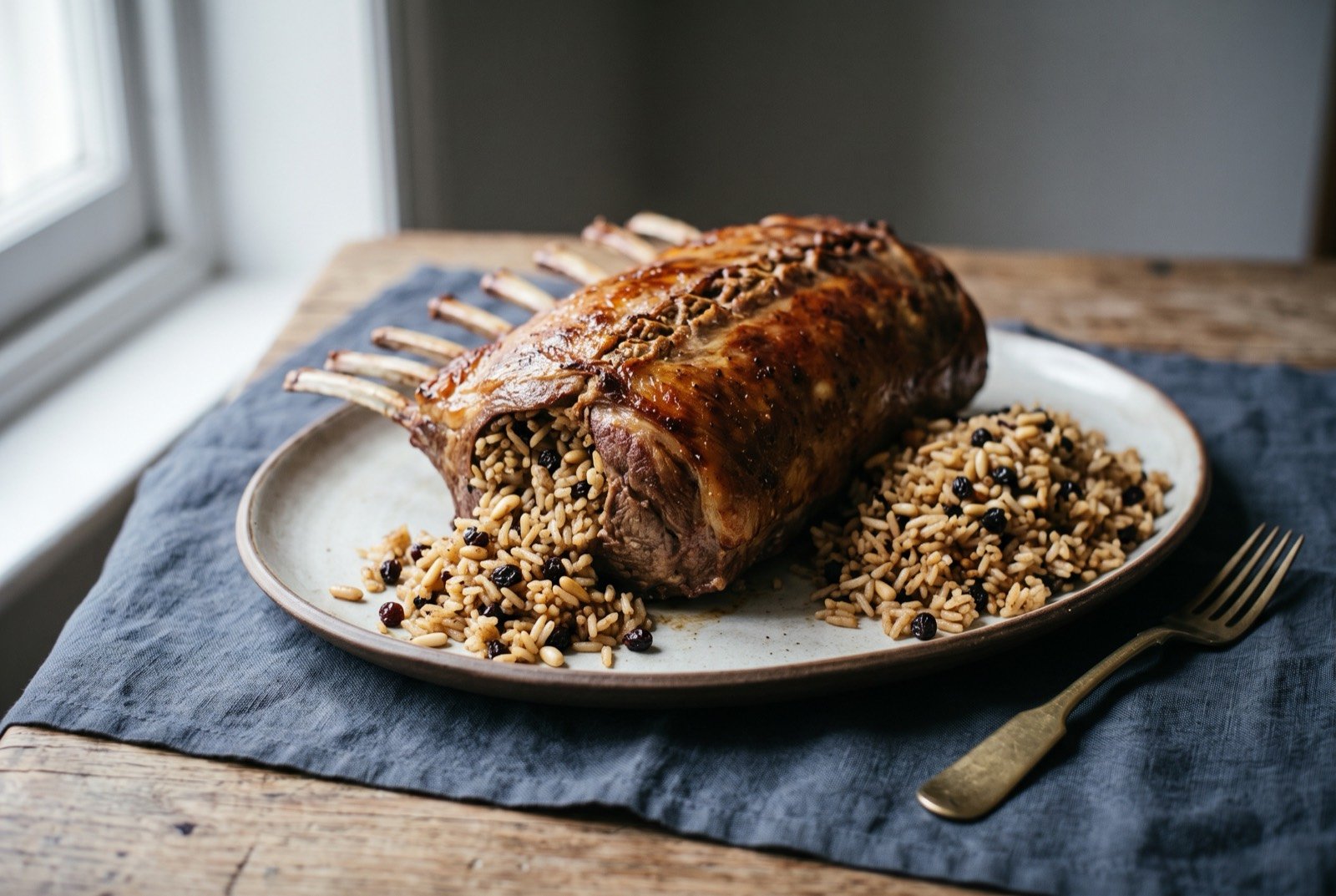
Kaburga dolması
Diyarbakır and Mardin
Illustration
- Time
- 3 hours
- Researched
- 1 source cited
A pocket is cut between the rib bones and skin of a rack of lamb, salted, and packed with a spiced rice pilaf filling, then slow-roasted.
As tradition built it
Serves 4 to 6. Around 3 hours.
Ingredients
- 1 rack of lamb ribs, whole
- 200 g rice, well rinsed
- 40 g walnuts, chopped
- 40 g dried currants
- 100 g lamb liver, finely diced
- 30 g pine nuts
- To taste black pepper
- To taste allspice
- To taste cinnamon
- To taste coriander
- To taste salt
Method
- Cut a deep pocket between the rib bones and the outer skin of the rack, taking care not to pierce through.
- Combine the rice, walnuts, currants, diced lamb liver, pine nuts and the black pepper, allspice, cinnamon, coriander and salt to make the inner pilaf.
- Pack the pilaf mixture firmly into the pocket, leaving a little room for the rice to expand, and secure the opening.
- Roast at a high initial heat to bring the filling to temperature, then reduce to medium and cook for around 3 hours, until the meat is fully tender.
- Serve hot with the extra inner pilaf alongside and a lemony, herb-heavy salad.
Notes
This dish's ownership is genuinely, and honestly, shared rather than singular: a Kurdish-perspective source identifies it as Diyarbakır's Kurdish heritage; the Houshamadyan project's Armenian-sourced documentation for the same city independently describes the same stuffed-rib dish under the name Kabourgha. This chapter treats it as belonging to both, not to whichever community's source was read first.
What a modern chef changes
An indirect, held heat, for a filling that finishes exactly when the meat does.
Rung 2
Method
- Cook indirectly in a Big Green Egg at a stable, held 150°C dome temperature, rather than a domestic oven's less consistent heat, for closer control over the long, slow cook this dish needs.
- Use a probe thermometer in the meat itself, pulling the rack once it reaches full tenderness rather than working to a fixed clock time, since rack size varies more than most recipes admit.
- Rest the finished dish, loosely covered, for 15 minutes before cutting, letting the pilaf filling settle rather than spilling out the moment it is sliced.