The Levant and Anatolia · Volume 02, The Steppe, the Fire and a Divided Table
Lahmacun
Gaziantep and Urfa
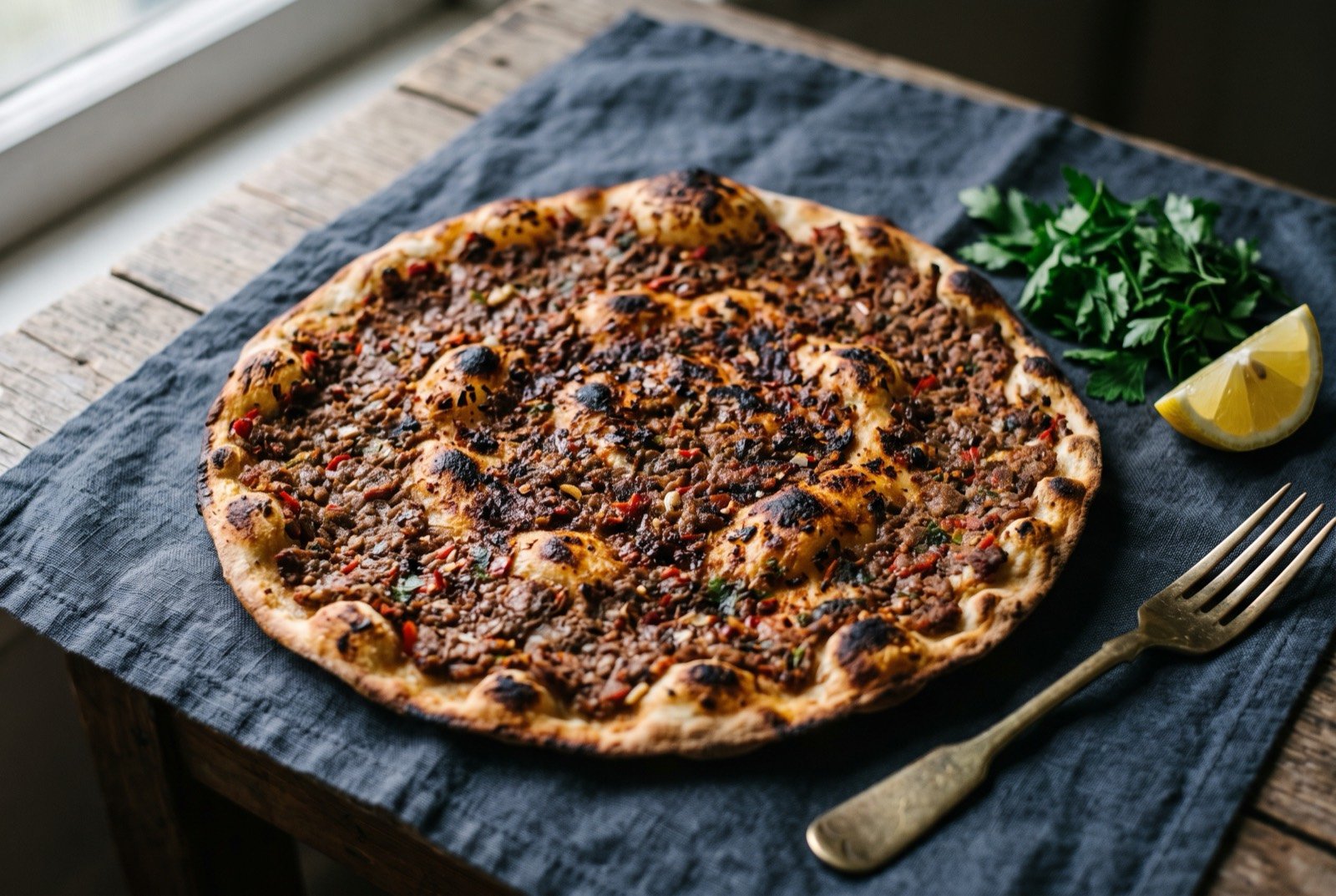
An illustration of the dish, not a photograph of it cooked.
- Time
- 5 minutes
- Researched
- 1 source cited
- Reviewed
- Not yet reviewed from inside the tradition
- Cooked
- Not yet cooked and reported
Gaziantep's version is garlic-forward and traditionally contains no onion; Urfa's is onion-forward, built with a little tail fat worked through the mince.
As tradition built it
Gaziantep style
Makes 10 to 12. 5 minutes to bake each, once the oven is properly hot.
Ingredients
An outline, not yet a recipe: the tradition's method with its ingredients named but not weighed. Quantities are being added from sources inside the tradition, lead dishes first.
- 500 g strong bread flour
- 7 g fast-action yeast
- salt, a little oil, warm water
- 500 g lamb or beef mince, finely minced
- 4 garlic cloves, finely chopped
- To taste parsley, pul biber, salt, black pepper
Method
- Make a soft yeasted dough with the flour, yeast, salt, oil and warm water; knead until smooth, rest until doubled.
- Combine the mince with the garlic, parsley and seasoning.
- Divide the dough into 10 to 12 balls, roll each to roughly 3mm thickness, and spread a thin, even layer of the meat mixture to the edges.
- Bake in an oven preheated as hot as it will go, ideally 350 to 400°C, for a very short time, 1 to 2 minutes, until the edges blister and char without the base drying out.
Notes
A genuine, unresolved dispute sits behind this dish's origin, reported here without adjudication: Turkish food-history sources describe it as a widespread Ottoman-era Mesopotamian dish rather than a specifically Turkish invention; an Armenian claim exists that "lahmajo" is an ancestor or parallel dish from the same root, and became a real public flashpoint in 2020 when Kim Kardashian, who is of Armenian descent, called lahmacun "Armenian pizza"; a Kurdish ownership claim also circulates locally. None of these is settled by any source this chapter's research reached, and this chapter settles none of them either.
What a modern chef changes
An oven pushed past where it wants to go.
Rung 5
Method
- Preheat a baking stone or pizza stone inside a Big Green Egg run as hot as the setup allows, ideally 400°C or above, well before the first lahmacun goes in.
- Roll the dough thinner than instinct suggests: at true high heat, a too-thick base cannot cook through in the one to two minutes available before it burns.
- Bake one at a time, watching rather than timing by the clock, since the exact moment is measured in seconds once the stone is properly hot.