North Africa · Volume 14, The Tagine and the Preserve
Couscous bidaoui with seven vegetables and tfaya
Casablanca
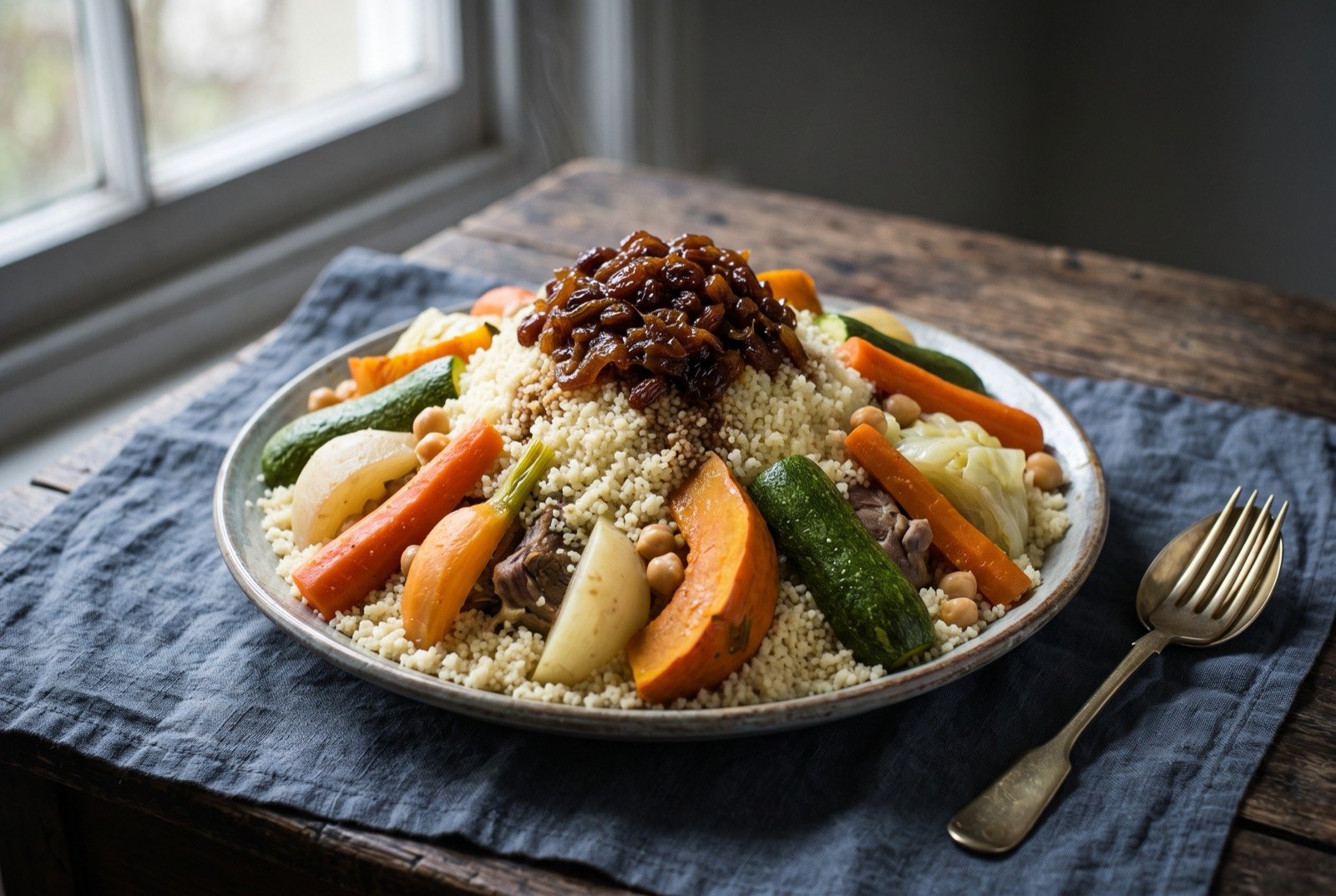
An illustration of the dish, not a photograph of it cooked.
- Time
- 3 hours
- Reviewed
- Not yet reviewed from inside the tradition
- Cooked
- Not yet cooked and reported
Couscous was inscribed on UNESCO's Representative List in 2020 as a joint submission by Algeria, Mauritania, Morocco and Tunisia, the first time those four states co-filed anything. The file describes a ceremonial process running from cultivating the cereal through grinding, hand-rolling, steaming and cooking, with a stated significance of solidarity, conviviality and togetherness, transmitted informally through observation and imitation. If you want an argument about whether couscous is Moroccan or Algerian or Tunisian, the four countries have already settled it, together, in writing.
As tradition built it
Serves 6 to 8. About 3 hours.
Ingredients
An outline, not yet a recipe: the tradition's method with its ingredients named but not weighed. Quantities are being added from sources inside the tradition, lead dishes first.
- 1 kg lamb, beef, goat, or one whole chicken
- 60 ml oil
- 1 large onion, and 3 fresh tomatoes
- 1.5 tbsp salt
- 1 tbsp ground dried ginger, and 1 tbsp black pepper
- 1 tsp turmeric
- 1 bouquet of parsley and coriander
- 2.8 L water
- 100 g dried chickpeas, soaked overnight
- cabbage, onions, tomatoes, turnips, carrots, squash, courgettes
- 1 kg medium couscous, not instant
- 60 ml oil for the grain, plus more, and 2 tsp fine salt
Method
- Brown the meat in the oil with the large onion and the tomatoes. Add the ground dried ginger and black pepper, the bouquet and the water. After 30 minutes, add the soaked chickpeas.
- First steam. Rub 60 ml oil into the dry couscous for 1 to 2 minutes. Toss through a cup of water until absorbed. Load the basket loosely, seal the seam, steam uncovered 20 minutes from when steam rises through the grain.
- Second steam. Turn out wide, break every lump with oiled hands, add a cup of water, rub, add the fine salt and a further cup of water. Steam 20 minutes. Meanwhile add cabbage, halved onions and quartered tomatoes to the broth.
- Third steam. Break apart again, add up to 3 cups of water or broth in portions, tossing between each. Steam a final 10 to 20 minutes. Meanwhile add turnips and carrots, then squash, then courgettes.
- For the tfaya, cook the onions with the raisins, cinnamon, ginger, turmeric, salt, sugar and oil about 45 minutes until soft, dark and sweet.
- Mound the grain, moisten with broth, dome the vegetables over it, spoon the tfaya on top, serve the rest of the broth separately.
Notes
For the tfaya: 8 to 10 medium onions sliced thin; 150 g raisins; 1 broken cinnamon stick; 1 tsp ground ginger; ½ tsp turmeric; ½ tsp salt; 2 tbsp sugar; 4 tbsp oil.
This tfaya carries no smen, honey, saffron or ras el hanout, and many restaurant versions add all four. Despite the name, the vegetable count floats by cook and season.
What a modern chef changes
A trimmings broth built separately, the restaurant steam schedule, everything cooked apart
Rungs 6, 4 and 5
Method
- Build the broth from vegetable trimmings and strain it. Sweat oil, onion, fresh tomato and the spices without colour, add water and all the trimmings, simmer 40 to 45 minutes, sieve. Ben Baba's measured spice load is 3 g turmeric, 5 g ground ginger, 12.5 g fresh ginger, 80 g tomato paste and a bouquet, and nothing else. Rung 4: the complexity comes from the extraction.
- Cook the vegetables separately in that strained broth, each to its own doneness, and hold them. This is the difference between a couscous where every vegetable tastes of itself and one where the turnip has collapsed while the courgette is raw.
- Steam the grain on the restaurant schedule: 20, 15, 15. Between each, turn out wide, separate every grain with oiled hands, add the water and rest 5 minutes before the basket goes back on. Rung 6.
- Season the broth with smen and preserved lemon brine, not salt. A teaspoon of smen for six, and two tablespoons of brine off your lemon jar. Rung 5, and the single move that makes a British couscous broth taste Moroccan.