North Africa · Volume 15, Harissa and the Ottoman Line
Chakhchoukha de M'sila
The Algerian high plains
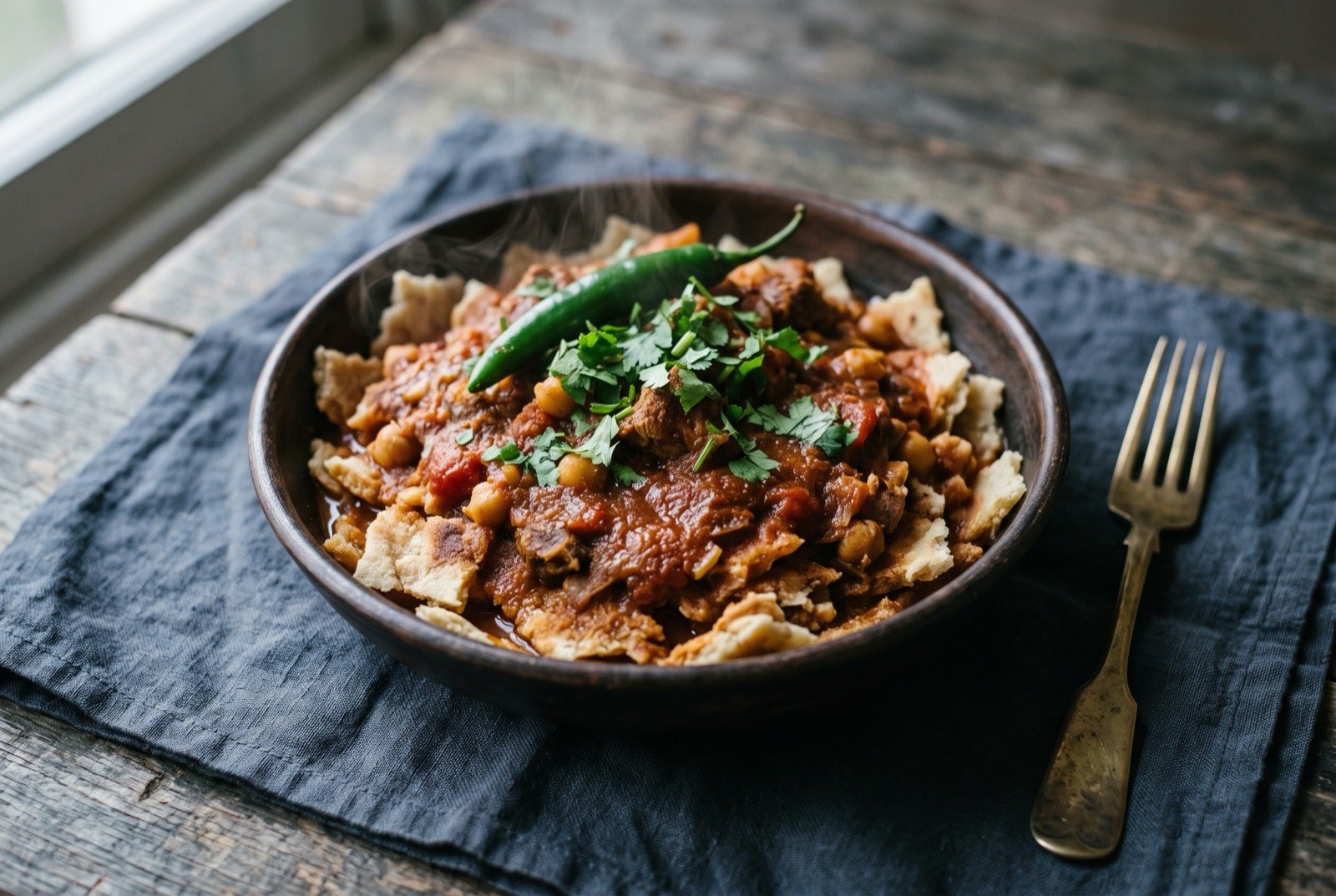
An illustration of the dish, not a photograph of it cooked.
- Time
- 2 hours
- Reviewed
- Not yet reviewed from inside the tradition
- Cooked
- Not yet cooked and reported
This is the red half of Algeria, and a completely different cuisine from the rechta of Algiers three hundred kilometres away: paprika, chilli powder, ras el hanout, tomato and concentrate, and a starch that is not couscous at all but flatbread, cooked, torn and steamed again. That last step is a technology for a place where bread is more abundant than semolina of couscous grade. The galette is deliberately thicker than a rougag sheet so the fragments hold structure, and steaming them before they meet the sauce pre-hydrates them so they absorb evenly rather than the top layer going to mush while the bottom stays dry.
As tradition built it
Serves 6. About 2 hours.
Ingredients
- 500 g fine or extra-fine semolina, and 8 g salt, for the galettes
- 500 g lamb or beef, plus chicken pieces
- 400 g peeled tomatoes, and 2 tbsp tomato concentrate
- 2 medium onions, and 2 garlic cloves
- 1 bowl chickpeas, soaked overnight
- ½ tbsp paprika
- ½ tsp red chilli powder
- ½ tbsp ras el hanout
- 1 fresh green chilli
- to taste oil or smen, salt, black pepper, coriander to finish
Method
- Work water gradually into the semolina and salt and knead 10 minutes to a smooth elastic dough. Divide into balls the size of a small citrus fruit, oil them, cover, and rest 30 minutes.
- Flatten each on an oiled surface, slightly thicker than a rougag sheet, and cook both sides on a dry griddle without burning.
- Crumble by hand into small fragments, then steam the fragments before assembly.
- For the marqa, brown the meat, poultry, onion and garlic. Add the tomato, concentrate, the paprika, red chilli powder, ras el hanout and fresh green chilli, and the rinsed chickpeas, and cook 5 to 10 minutes.
- Add hot water, cover, and cook until tender, 45 minutes in total.
- Assemble: fragments in the bowl, marqa over, a drizzle of oil or smen, salt, black pepper and coriander on top.
Notes
After a published Algerian source.
What a modern chef changes
The paste fried out, the fragments graded and steamed over the marqa, assembled at the last second
Rungs 2, 1 and 6
Method
- Fry the concentrate and paprika out before the liquid goes in. Rung 2. Both in hot oil for a full three to four minutes, until the paste darkens from bright red to brick and the oil around it runs orange, which drives off the raw green hexenal notes, browns the paste's sugars, and moves the paprika's carotenoids into the fat phase.
- Steam the fragments over the marqa, not over water, and grade them first. Rung 1 exactly as for couscous: dry starch absorbs whatever the vapour carries, so over water it absorbs water and over the pot it absorbs the dish. And hand-tearing gives pieces from fingernail-sized down to crumbs, which hydrate at different rates, which is why a home chakhchoukha has both sodden patches and dry ones. Two minutes with a coarse sieve, the fines set aside to thicken the marqa, gets you an even bowl.
- Assemble at the moment of eating and not one minute before. Bread in sauce is a clock: fragments that have sat ten minutes are bread pudding. Marqa hot, fragments hot and separate, and put together in front of the people who will eat them.