North Africa · Volume 14, The Tagine and the Preserve
Rfissa
Rural Morocco, and the dish that proves the cookbooks were lying by omission
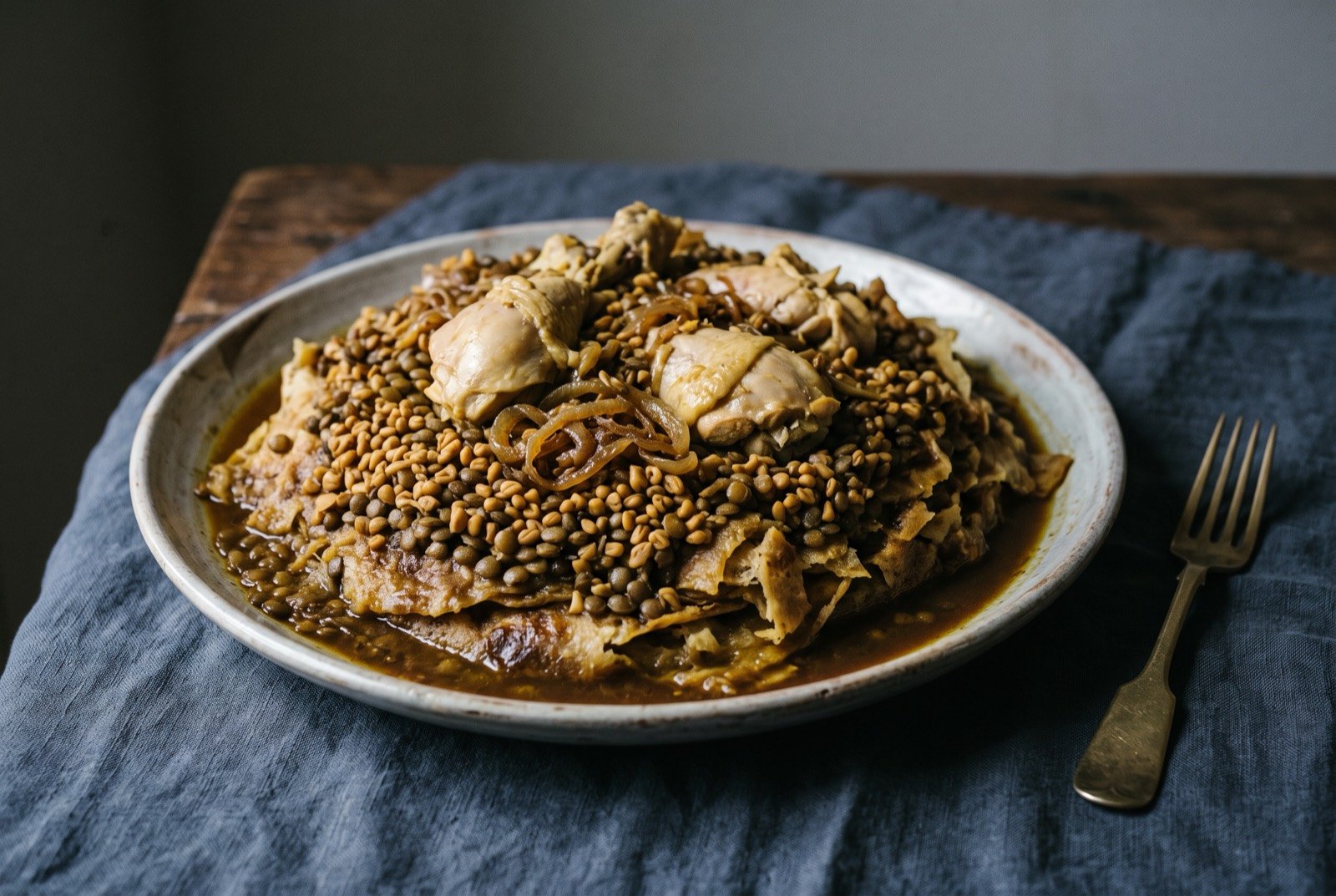
An illustration of the dish, not a photograph of it cooked.
- Time
- Hands on 2 hours 30 · Waiting 8 hours
- Reviewed
- Not yet reviewed from inside the tradition
- Cooked
- Not yet cooked and reported
As tradition built it
Serves 6. About 2 hours 30, plus overnight soaking and 6 hours marinating.
Ingredients
- 1 large chicken, quartered or whole
- 3 large onions, sliced thin
- 120 ml olive oil
- 1.5 tbsp ground dried ginger
- 1 tbsp each salt and black pepper
- 1 tbsp ras el hanout, or 1.5 tbsp msakhen
- 1.5 tsp turmeric, and 1.5 tsp saffron threads, warmed and crumbled
- 1.5 tsp smen
- 100 g green or brown lentils
- 4 tbsp fenugreek seeds, soaked overnight and drained
- 1 L water, and a handful each of coriander and parsley
- to serve msemen or meloui, shredded, to serve
Method
- Marinate the chicken with the onions, oil, ginger, salt, black pepper, ras el hanout, turmeric, saffron and smen 6 hours or overnight. Soak the fenugreek and the lentils separately, overnight.
- Cook the chicken in the water with the onions, lentils, fenugreek and herbs. A free-range bird takes about 2 hours. An ordinary bird must be lifted out midway or it will disintegrate.
- Spread the shredded msemen on the serving dish. Ladle broth over until soaked, arrange the chicken, lentils and fenugreek on top, pour the rest of the broth over.
Notes
For the msemen: 440 g white flour, 100 g fine semolina in the dough plus more for folding, 355 ml warm water, only ¼ tsp dried yeast, 2 tsp salt, 2 tsp sugar, and for lamination 240 ml oil plus 60 g soft butter. Knead very smooth, divide into plum-sized balls, rest 10 to 15 minutes on an oiled tray. On a heavily oiled surface stretch each to a paper-thin circle with a quick sweeping motion from the centre outward. Dot with butter, sprinkle semolina, fold in thirds like a letter, then in thirds again the other way. Griddle on medium, turning several times. The very low yeast is the tell: this is lamination, not fermentation, and the semolina between the layers stops the sheets welding.
What a modern chef changes
The bird cooked in two parts, the broth built as a broth, the bread crisped
Rungs 2, 6 and 5
Method
- Cook the legs and the crown separately. The problem the tradition names openly is that a chicken has two muscles with different collagen loads. Joint it: two hours in the broth for the legs, 35 minutes for the crown, then carve.
- Treat the broth as the dish. This is not a sauce over bread, it is bread irrigated with broth. Strain it, defat it, reduce it by a quarter, whisk a little of the reserved fat back in, and season it with the smen off the heat. Rung 5.
- Crisp half the msemen. Rung 6. Soak half in the broth as tradition asks and hold the other half back, torn and toasted dry in a pan until it shatters, to scatter on top. Two textures of the same bread, and the reason this dish otherwise reads as monotonous is solved.
- Brown the chicken skin separately at the end. Rung 2. Lift the skin off before the bird goes into the broth, crisp it flat between two trays in a hot oven, break it over the finished dish.