North Africa · Volume 14, The Tagine and the Preserve
Tagoula
The High and Middle Atlas
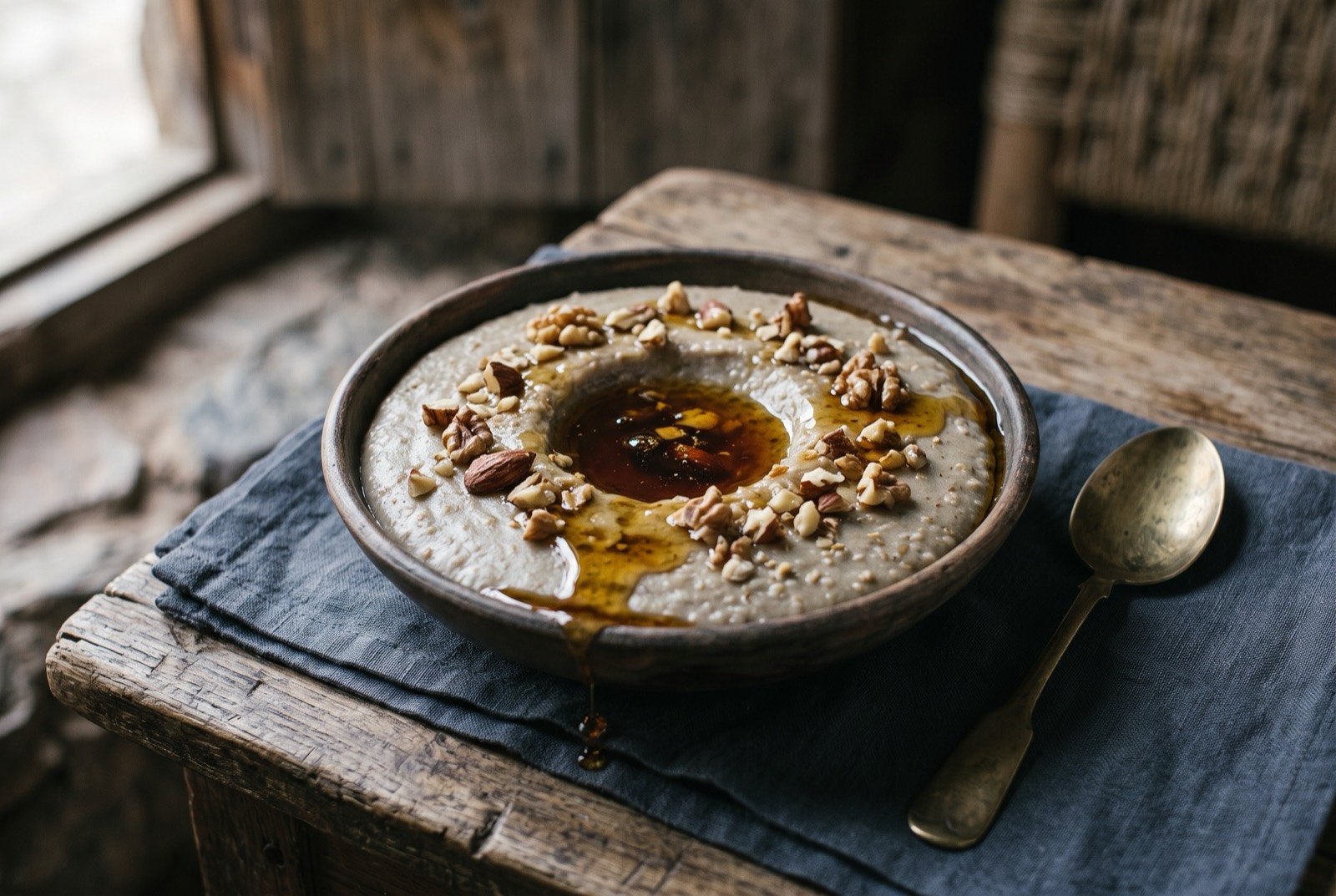
An illustration of the dish, not a photograph of it cooked.
- Time
- 1 hour 40
- Reviewed
- Not yet reviewed from inside the tradition
- Cooked
- Not yet cooked and reported
Three ingredients. It is here because it is the oldest layer in the volume and the exact opposite of the Fassi repertoire: no saffron, no sugar, no spice cabinet, no cone. Eaten at Yennayer, the Amazigh New Year, and as post-natal food. Barley in Amazigh symbolism carries endurance and humility where wheat carries celebration, and this is what endurance and humility taste like.
As tradition built it
Serves 4. About 1 hour 40.
Ingredients
- 250 g roughly milled barley grits, washed and drained
- 2 L water
- 1 tsp salt
- to taste culinary argan oil, honey, walnuts or almonds, to finish
Method
- Bring the salted water to a simmer and rain in the barley grits.
- Simmer approximately 90 minutes on low, stirring constantly with a wooden spoon. This is genuine physical work and it does not get easier.
- Turn into bowls, make a well in the centre, pour in argan oil and honey, scatter the nuts.
What a modern chef changes
Two liquids, a rest, and the argan protected
Rungs 6, 5 and 4
Method
- Slake the grits cold before they meet heat. Mix them to a slurry with 400 ml of the cold water, then rain that into the remaining 1.6 litres at a simmer. No lumps, and roughly half the stirring. This is the same cold-slake principle every grain paste on the continent arrived at independently.
- Replace a third of the water with lben or a thinned live yoghurt, added in the last 20 minutes. Rung 5. Lben sits at pH 4.25 with diacetyl-producing cultures, and barley with soured dairy is within this region's own grammar rather than imported into it. Add it late: at a rolling simmer for ninety minutes it would split.
- Rest it 10 minutes off the heat, covered. Barley starch continues to hydrate after the pan comes off, and ten minutes takes it from grainy to silky with no further work.
- Never heat the argan. Rung 4 as a rule: culinary argan's entire character is roasted-kernel volatiles, and heating destroys them. Warm the bowl, not the oil.