North Africa · Volume 14, The Tagine and the Preserve
Dafina
The mellah
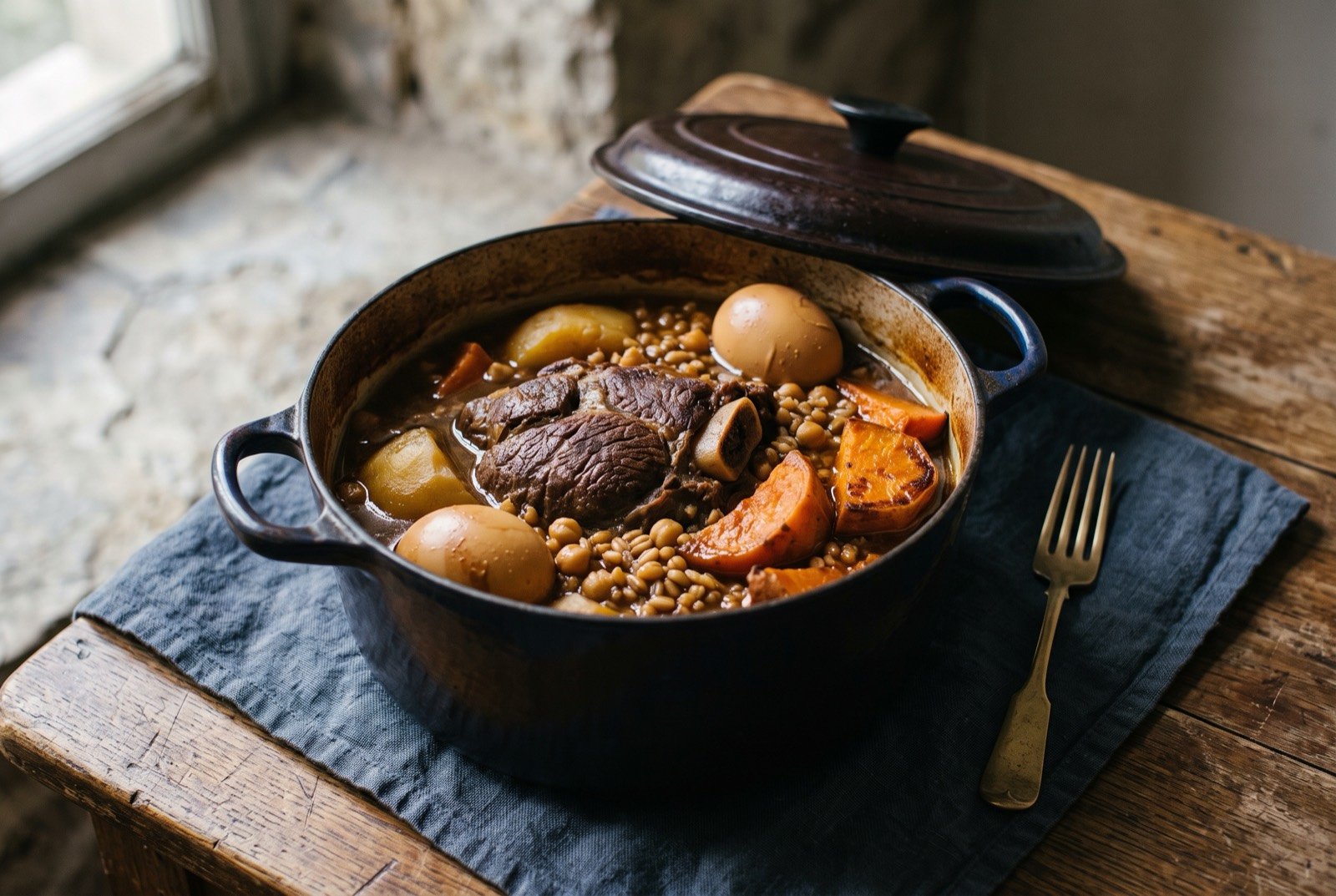
An illustration of the dish, not a photograph of it cooked.
- Time
- 6 hours
- Reviewed
- Not yet reviewed from inside the tradition
- Cooked
- Not yet cooked and reported
Also called skhina. The Moroccan Jewish Shabbat stew, cooked overnight because observant Jews could not cook on Saturday, and dropped at the ferran on Friday to be collected the next day. The point here is the technique, not the theology. Dafina uses the same communal wood oven, at the same temperature, by the same method, as the Muslim ferran-cooked dishes. It is the timing, not the method, that makes it Jewish. One oven served two communities on different days of the week, in the same street, for centuries.
As tradition built it
Serves 6 to 8. 6 hours minimum, easily 12 to 15.
Ingredients
- 900 g beef arm roast, in one piece, plus beef feet if you want them
- 6 to 8 potatoes and 6 to 8 sweet potatoes, one of each per person
- 6 to 8 eggs, one per person, whole and in the shell
- 3 to 4 garlic cloves, half a clove per person
- 1 tin chickpeas
- 100 g wheat berries or barley
- 2 tsp each black pepper and ground cumin
- 1 tsp turmeric, ½ tsp ground cinnamon, 1.5 tsp salt
Method
- Layer everything into a heavy pot: meat and garlic, then pulses and grain, then the potatoes and sweet potatoes, with the black pepper, cumin, turmeric, cinnamon and salt scattered through, and the whole eggs pushed down among them.
- Cover with water, bring to a simmer, then hold at the lowest possible heat, sealed, for 6 hours minimum and ideally 12 to 15.
- The eggs come out brown and creamy, having spent the night in the pot. They are the best thing in it.
Notes
Family variations add dates, sugar or honey for caramelisation, saffron, or marrow bones.
What a modern chef changes
A held low temperature, the eggs given their own treatment, one crisp element
Rungs 1, 2 and 6
Method
- Hold it at 90 to 95°C and stop worrying about the fifteen hours. Rung 1 again: the ferran's residual heat is a stable low temperature over a long span, and an oven at its lowest setting with a sealed pot reproduces it. What the span is doing is converting collagen and letting the wheat berries and chickpeas collapse into a thickener.
- Brown the beef and the beef feet first, separately. Rung 2. Fifteen hours of moist heat produces no browning whatsoever, and this is a dish with fifteen hours in which to taste flat.
- Give the eggs a shorter start. Bury them for the last 6 hours rather than the whole fifteen. You still get the brown, creamy yolk without the white going rubbery.
- Finish with something sharp and something crisp. Rung 6. A relish of raw preserved lemon rind, parsley and olive oil, and a scatter of the crisped fat skimmed off the top and fried. Neither is a foreign import.
Notes
Part Four