East Africa and the Islands · Volume 17, The Great Lakes
Malakwang with odii
Acholi and Lango, northern Uganda
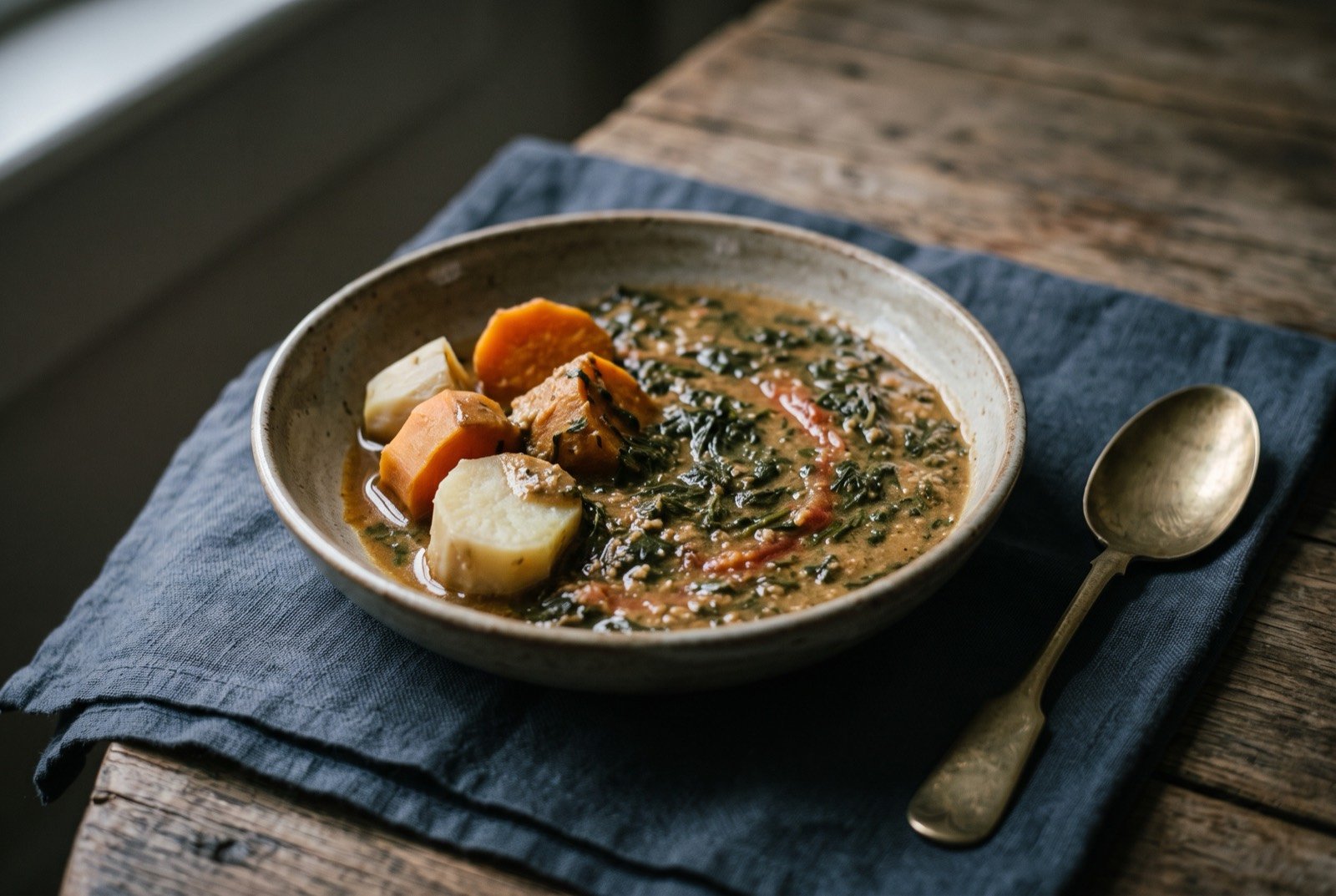
An illustration of the dish, not a photograph of it cooked.
- Time
- 45 minutes
- Reviewed
- Not yet reviewed from inside the tradition
- Cooked
- Not yet cooked and reported
The dish that shows the northern kitchen is a completely separate cuisine from Buganda's. Sour hibiscus leaf, boiled, drained, and refreshed with fresh water, then finished with pounded sesame and groundnut, and eaten with boiled sweet potato. The Alur make it with fish and with beans. The leaves are dried for storage, which is how the dish survives the dry season. The drain and refresh is the whole technique and it is a deliberate acidity control. Malakwang is loaded with organic acids. Discarding the first cooking water removes most of that acid load, and what survives is exactly enough sourness to cut the fat of the sesame and groundnut, which is the point of the pairing, and to justify sweet potato as the starch. Sour against sweet against fat, arranged deliberately, and none of the three overwhelming. Note also the ratio. This is a sauce you pour, not a sauce you scoop: 340 g of paste into roughly 1.5 litres, about 1 to 4.5, against the Baganda groundnut sauce's 1 to 2.
As tradition built it
Serves 6. About 45 minutes.
Ingredients
- 300 g dried malakwang leaves
- 1.5 L water, plus more fresh hot water for the refresh
- 340 g smooth groundnut paste, or better, odii, sesame and groundnut pounded together
- 1/2 tin chopped tomatoes
- 1 tsp salt
- 1 kg sweet potatoes, peeled
Method
- Bring the 1.5 litres of water to the boil, add the dried leaves, and cook 15 minutes. Test by pressing a leaf against a wooden spoon: it should collapse.
- Drain completely and add fresh hot water. Do not skip this and do not keep the first water for stock. It is carrying the acid you are deliberately removing.
- Add the tomatoes and boil 5 minutes. Salt.
- Stir in the paste and bring back to a simmer. Total time from the leaves going in is about 20 minutes.
- Meanwhile boil the sweet potatoes 20 to 25 minutes until tender.
Notes
After a Ugandan producer's method with weighed quantities.
What a modern chef changes
Sorrel instead of a leaf you cannot buy, the acid titrated rather than discarded, and white wine from a Kampala pass
Rungs 3 and 5
Method
- Substitute honestly, and say what you have done. There is no verified UK retailer of malakwang, fresh or dried. Sorrel, Rumex acetosa, is the best British match, because its sourness is oxalic and malic and it collapses to a purée exactly as malakwang does. Frozen sorrel from any Polish or Eastern European grocer is the cheapest reliable route. Roselle calyces, bissap or karkade, give you the right acid and a much stronger colour but the wrong texture, so use them with a neutral green rather than instead of one. What does not work is spinach with lemon squeezed on it: the acid is in the wrong place chemically and the dish reads as spinach with lemon on it.
- Titrate rather than discard. With sorrel you control the acid load from the start, so cook it once, taste, and add a second handful if it is flat. Keep and reduce the first water instead of throwing it away, then add it back by the spoonful. Rung 5's principle: acidity is a dial.
- Use real odii and not just groundnut. Rung 3. Sesame protein is the better emulsifier and it brings lignans and bitterness that groundnut alone does not. A 50:50 blend of tahini and plain peanut paste gets close if you cannot buy Ugandan simsim paste.
- Deepen it with white wine, as Ernest Kayondo does. Reduce 150 ml of dry white wine to 3 tablespoons and stir it in with the paste. Malakwang is already an acid-and-fat sauce, so white wine deepens the acid without adding sweetness, which is why he chose white for this one and red for the eshabwe. Those are two mechanically correct choices, made in Kampala, and worth copying exactly.