East Africa and the Islands · Volume 17, The Great Lakes
Ebinyebwa
Uganda, and as ubunyobwa across Rwanda and Burundi
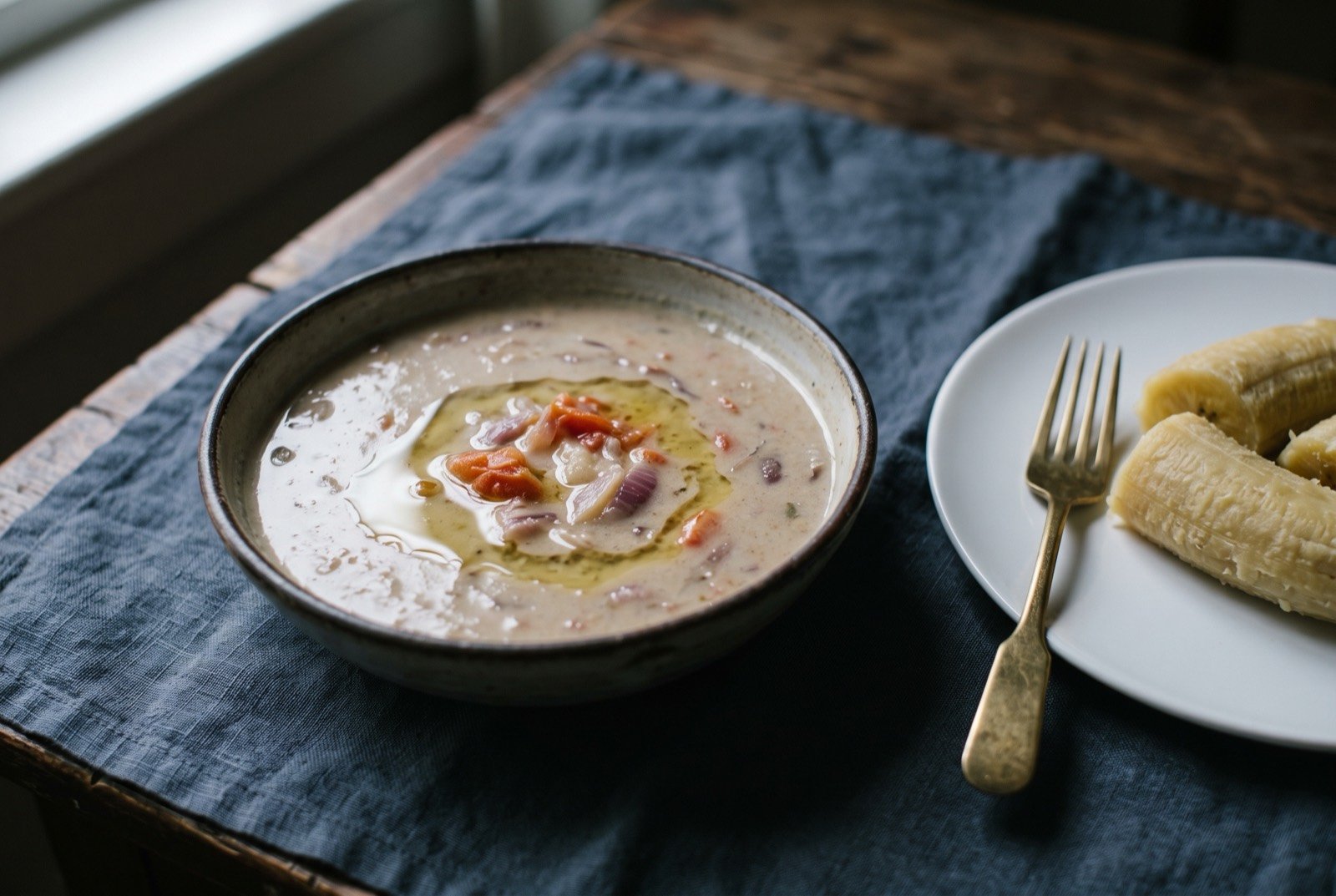
An illustration of the dish, not a photograph of it cooked.
- Time
- 50 minutes
- Reviewed
- Not yet reviewed from inside the tradition
- Cooked
- Not yet cooked and reported
If you cooked tigadèguèna in Volume Five or a Nigerian groundnut soup in Volume Three, put both of them out of your mind. This sauce starts from raw, pinkish, unroasted groundnut powder and it is never fried out. It is thinner, paler, milkier and greener than its West African cousins, and it is cooked for less than half as long. Getting that backwards is the commonest error in Western write-ups of Ugandan food, and it produces a dish that is recognisably wrong to anybody who grew up on it.
As tradition built it
Serves 4. About 50 minutes.
Ingredients
- 2 cups raw groundnut powder, pinkish, not roasted
- 4 cups water. The ratio is 1 part paste to 2 parts water and it matters
- 2 tbsp oil
- 1 onion, diced
- 1 tomato, diced
- to taste salt
Method
- Sweat the onion in the oil until soft and sweet. Add the tomato and cook it out.
- Slake the groundnut powder into the water cold, or into warm water, to a smooth pourable slurry before it goes anywhere near the pot. In Busoga this is done as a matter of course, and it is the same anti-flocculation move as the West African technique.
- Stir the slurry into the base and bring to the boil stirring continuously.
- Reduce and simmer 25 to 30 minutes, seasoning with salt, stirring every five or six minutes, thinning with hot water if it tightens too far.
- The doneness cue: groundnut oil separates and rises to the top. That is the emulsion telling you the aqueous phase can hold no more dispersed oil. Stop there. Past that point you are breaking it.
Notes
After a Ugandan household formula with weighed quantities.
Serve with matooke, sweet potato or posho, and with smoked catfish or nkejje stirred through if you have it.
What a modern chef changes
Split roast, steamed in the leaf, and the inosinate axis restored
Rungs 3, 1 and 6
Method
- Split the paste 70 to 30. Make 70 per cent of the sauce exactly as above, unroasted, for its sweet, milky length. Dry-roast the remaining 30 per cent of the nuts hard in a pan until they smell of coffee, grind them, and stir that in in the last two minutes. You now have pyrazines sitting on an unroasted base, which is a flavour neither the Great Lakes nor West Africa produces on its own. It is the best single idea in this chapter and it costs you ten minutes.
- Steam it in the leaf instead of simmering it in a pot. Luwombo lwe binyebwa is widely held in Uganda to be the best version, and the mechanism is clear: the sauce never boils turbulently, so the emulsion does not break, and it takes the leaf's aroma. Build the slurry, seal it into a smoked leaf parcel, and steam 1 hour alongside the matooke. Rungs 1 and 6 in one move.
- Add smoked fish powder, not a stock cube. Toast dried silver cyprinid in a dry pan until it smells nutty, blitz, sieve, and stir a teaspoon in near the end. Dried small fish carry inosinate in the hundreds of milligrams per 100 g, and inosinate against the glutamate already in the onion and tomato is supra-additive. A cube gives you one axis. This gives you both.
- Buy paste that separates. A no-stir stabilised paste will not release its oil, which means you have lost the doneness signal entirely and will cook by guesswork. Oil on top of the jar is a good sign, not a fault.