East Africa and the Islands · Volume 17, The Great Lakes
Malewa
Bugisu, eastern Uganda
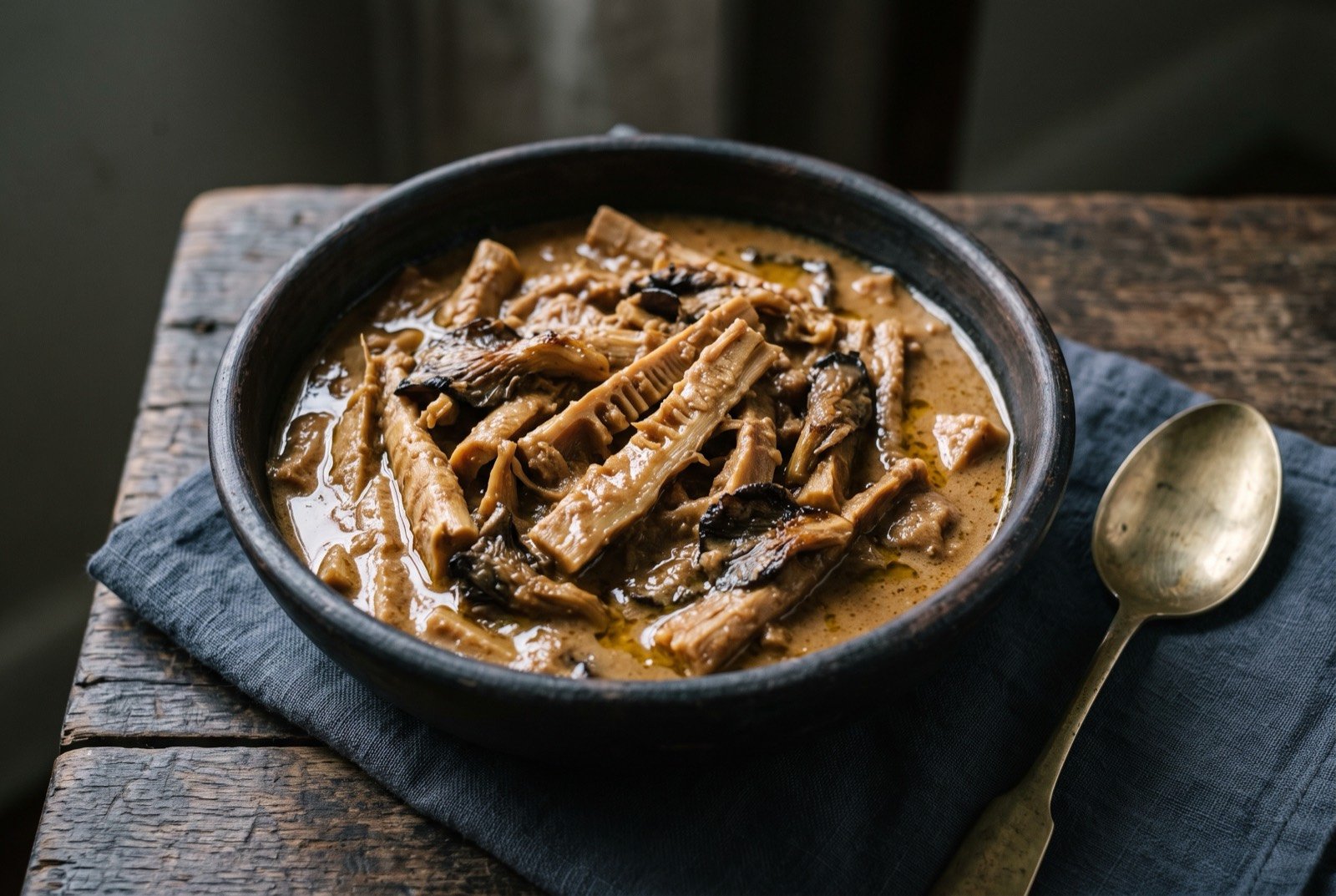
An illustration of the dish, not a photograph of it cooked.
- Time
- 1 hour 30
- Reviewed
- Not yet reviewed from inside the tradition
- Cooked
- Not yet cooked and reported
Shoots of the bamboo growing on Mount Elgon, cut young, air dried under mountainside caves, with optional smoking that gives a burnt note. Dried malewa is identified in the market by its sweet smell and its visible joints, which is what distinguishes it from banana fibre. Slow Food describes the flavour as reminiscent of forest mushrooms, which is exactly right and is why it belongs in a serious kitchen. Malewa is central to imbalu, the Bagisu mass circumcision held in even numbered years, at which mothers serve it to their sons to give them courage. It is also under pressure: settlement and cultivation on the Elgon slopes are reducing the quantities reaching local markets, at the same moment that the Ugandan press is describing it as going global. The rock salt is doing chemistry. Dried, lignified bamboo shoot is extremely tough, and alkaline rock salt attacks the hemicellulose that cements the cell walls and cuts the cooking time substantially. This is the same mechanism as the potash of Volume Four, used more sparingly and named honestly as a tenderiser rather than as a seasoning.
As tradition built it
Serves 4. About 1 hour 30, plus soaking.
Ingredients
- 200 g dried malewa, smoked bamboo shoots
- 1/2 tsp rock salt, of the alkaline kind
- 250 g smooth groundnut paste
- 1 onion, sliced
- to taste salt
- to cover water
Method
- Soak the dried shoots, then boil them in water to clean them and pour that water away.
- Cut off the joints. They will not soften and they are unpleasant to chew.
- Return to fresh water, add the rock salt to tenderise, and simmer until the shoots give under a knife.
- Add the onion, then stir in the groundnut paste slaked with a little of the cooking liquid.
- Simmer, stirring, until thickened and the groundnut oil shows. Salt at the end.
Notes
After a Bugisu method.
What a modern chef changes
The alkali measured, the smoke doubled, and the shoot treated as a mushroom
Rungs 6 and 3
Method
- Dose the alkali rather than guessing at it. Start at a quarter teaspoon per litre and taste the cooking liquid: alkali overshoot gives a soapy, slippery mouthfeel and a slightly grey colour, and it is not recoverable. You want the tenderising and nothing else. Add in two stages, twenty minutes apart.
- Cook it in a smoked vessel. Rung 6. This ingredient already carries smoke, and the argument of that rung is that smoke deposited on a vessel wall partitions into a fatty medium slowly and selectively. A charred earthenware bowl or a smoked leaf lining doubles the smoke without adding a single acrid note.
- Treat it as a mushroom, because it behaves like one. Dry-toast a third of the soaked shoots hard before they go in, until they colour and smell nutty, and then add them back. You are running the same split-roast logic as Rung 3's groundnut trick on a different ingredient: an unroasted base for length, a roasted fraction for depth.
- Finish with fresh oyster mushrooms. Obutiko are a real Ugandan ingredient and the standard vegetarian luwombo filling, and British oyster mushrooms are cheaper and better than the dried Ugandan ones you can buy here at eight pounds for forty grams. Torn and seared hard, folded through at the end, they meet the malewa exactly halfway.