The Horn · Volume 12, The Nile Foodways
Swala, or mula kombo ta bamia
Kakwa, from Yei in South Sudan
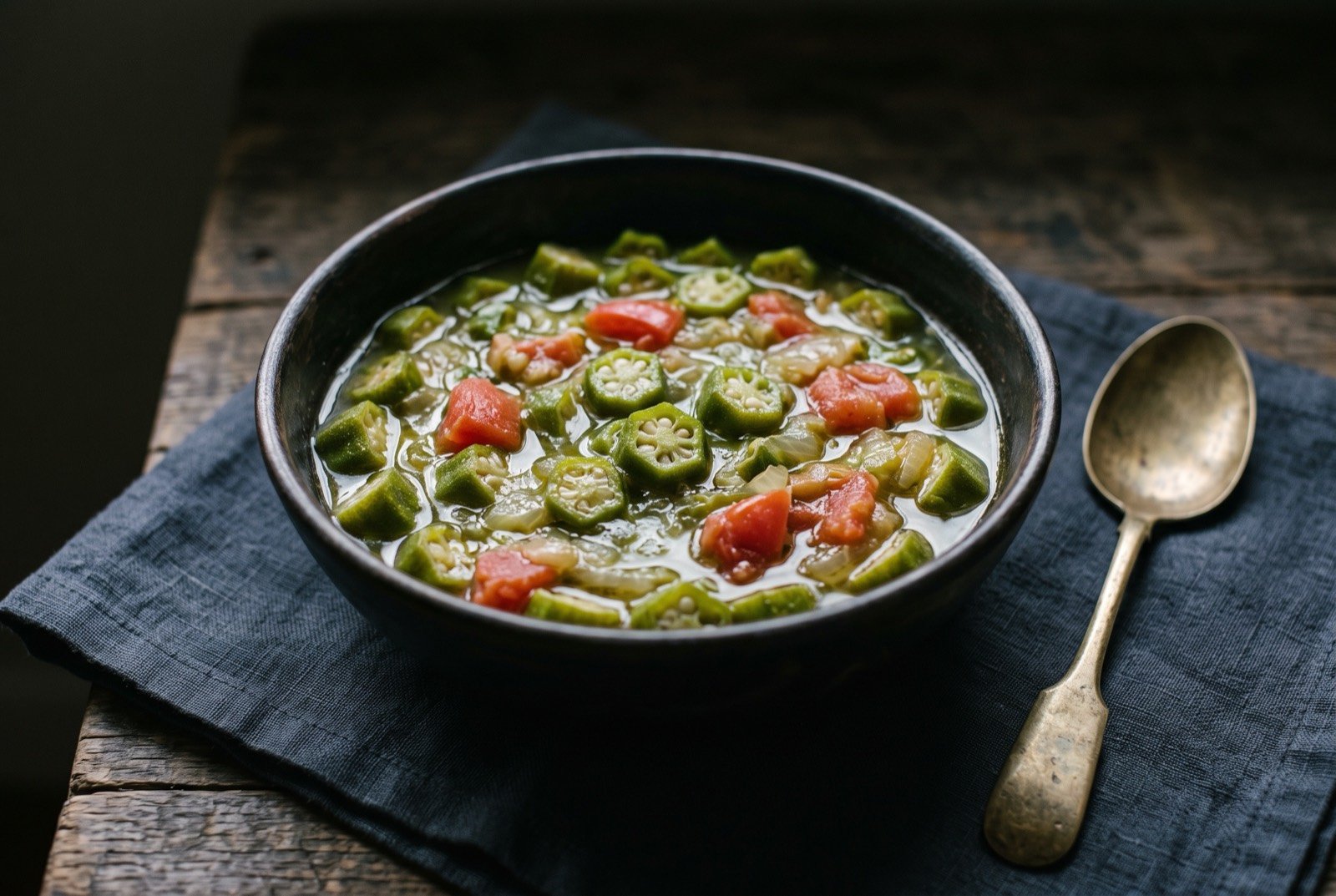
Illustration
- Time
- 30 minutes
- Researched
- Researched from 124 sources in the brief
Thirty minutes, five ingredients, and a piece of chemistry most British kitchens have never once used deliberately.
As tradition built it
Serves 2 to 3. 30 minutes.
Ingredients
- 240 ml water
- 1/2 tsp kombo lye, or bicarbonate of soda
- 1 onion, chopped
- 2 cups okra, sliced into 6 mm rounds
- 480 ml water
- 2 tomatoes, diced
- 1 tbsp oil
- to taste salt; hot pepper, optional
Method
- Put the first 240 ml of water into a pan with the kombo lye or bicarbonate and the onion, and bring to the boil over medium heat.
- Add the okra and the further 480 ml of water. Cook 15 minutes, until softened.
- Add the tomatoes and oil, then season with the salt; hot pepper, optional. Five minutes. Off.
Notes
After Dr Noela Mogga, whose domestic substitution for the traditional wood-ash lye is given in the recipe itself.
Note the sequencing, because it is not casual. The tomato goes in at the very end. Acid and alkali cancel, so a tomato added at step one buys nothing except a slower softening and the vitamin cost of the alkali with none of its benefit. Mogga's own order of operations already encodes the chemistry.
What a modern chef changes
Dose the alkali by weight, split the okra, and give back what the alkali costs
Rungs 3, 2 and 6
Method
- Dose it, and know what you have dosed. Half a teaspoon of bicarbonate is roughly 2.8 g, which in 240 ml of water is a little over 1 per cent by weight. That is a lot of alkali, and it is right for tough field okra rather than for a supermarket punnet. Start there, taste for a slippery soapy edge, and pull it back if you find one.
- Acid last, always, and only one acid. Nothing sour until the okra is soft: Rung 3's principle stated for alkali rather than for mucilage.
- Split the okra. Half at step two for the bind, half in for the last five minutes for the bite. Fifteen minutes of alkaline boiling is right for the polysaccharide and wrong for the vegetable, and there is no reason one decision should serve both.
- Put a spoon of unsweetened groundnut paste in off the heat. The tradition's own answer rather than an addition to it: the alkaline technique co-occurs with groundnut, milk and offal precisely because those replace what the lye destroys. Slake the paste with hot liquid before anything acidic goes near it, or the emulsion breaks.