The Horn · Volume 12, The Nile Foodways
Mullah sharmout
West Darfur, and a Ramadan dish
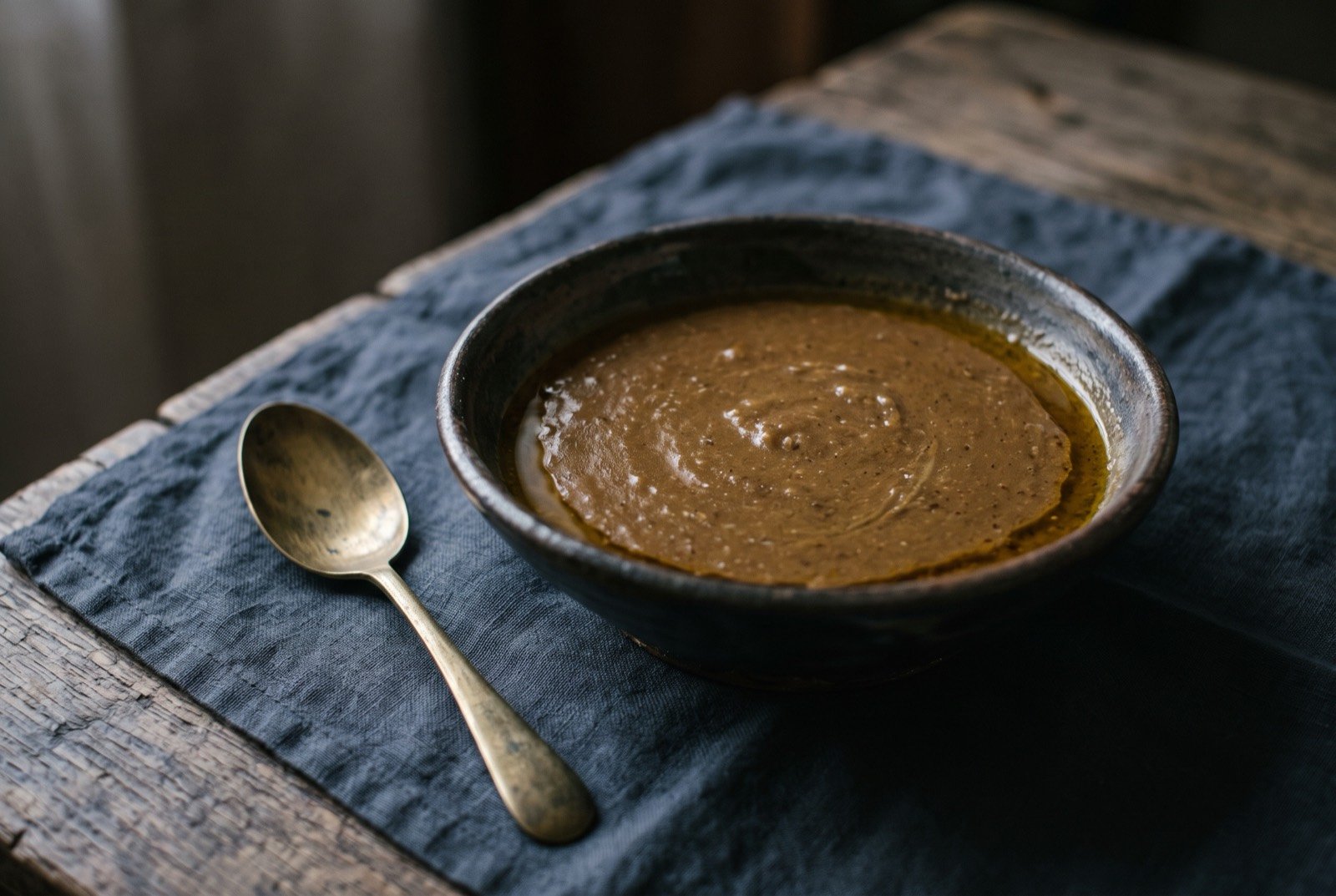
Illustration
- Time
- 40 minutes
- Researched
- Researched from 124 sources in the brief
- Reviewed
- Awaiting a reader from inside the tradition
- Cooked
- Awaiting a cook report
Cook this one to understand what makes Sudanese stew architecture different. There is no fresh meat in it. There is dried meat, pounded to powder, dosed like a spice, and two other powders keyed to its weight. The ratios are the recipe: salsa naashifa at about one eighth of the sharmout weight, weika at about one fifth.
As tradition built it
Serves 4. About 40 minutes.
Ingredients
- 100 g sharmout, sun-dried beef or lamb strips
- 20 g weika
- 12 g salsa naashifa, dried tomato powder
- 3 onions, sliced
- 100 ml sesame or groundnut oil
- 1.2 L boiling water
- to taste salt, chilli, black pepper, coriander; optionally ginger or cinnamon
Method
- Fry the sliced onions in the sesame or groundnut oil.
- Pound the sharmout to a powder, and be serious about it. Coarse fragments will not release what they hold.
- Add the sharmout powder, the salsa naashifa and the weika to the onions.
- Pour in the boiling water with continuous stirring, until the onions dissolve. That phrase is the endpoint, and it is a texture instruction rather than a time.
- Season with the salt, chilli, black pepper and coriander, adding ginger or cinnamon if you like, and simmer to a mullah's consistency.
Notes
After a Darfuri account recorded by Women's Literacy in Sudan.
Serve with aseeda.
What a modern chef changes
Dry the meat yourself, powder it properly, hydrate the weika apart
Rungs 3 and 2
Method
- Make a sharmout stand-in, because you cannot buy the real thing here. Lean beef, silverside or topside, cut with the grain into 5 mm strips, salted lightly, dehydrated until it snaps rather than bends; a dehydrator at 60°C does it in hours rather than days. The briefs give no traditional Sudanese drying protocol, so this is an approximation reasoned from the material and it is not sharmout. It gives concentration and clean meat flavour and it does not give whatever the Darfuri sun does over weeks.
- Powder it properly. Spice grinder, then a sieve, then grind the tailings again. The dish is built on a powder and it is only as good as that powder's fineness, because the whole point is that the protein disperses rather than sits.
- Cold-hydrate the weika separately and whisk it in off the boil. At 20 g in 1.2 litres you are at the ropy end of the range, which is correct here, so control it rather than fight it.
- Take the onions genuinely to dissolution, long and slow in enough oil, until they have gone from slices to a suspension. That is where the body comes from, and it is the step a hurried version skips. Then a teaspoon of sigda at the end if you have made it: Rung 2, because this dish has meat depth and no acid at all, and sigda at pH 4.0 is the tradition's own acid-plus-savour agent.