West Africa · Volume 05, The Sahel Interior
Riz au gras, or zaamè
Mali and Burkina Faso
Illustration
- Time
- 1 hour 15
- Researched
- Researched from 106 sources in the brief
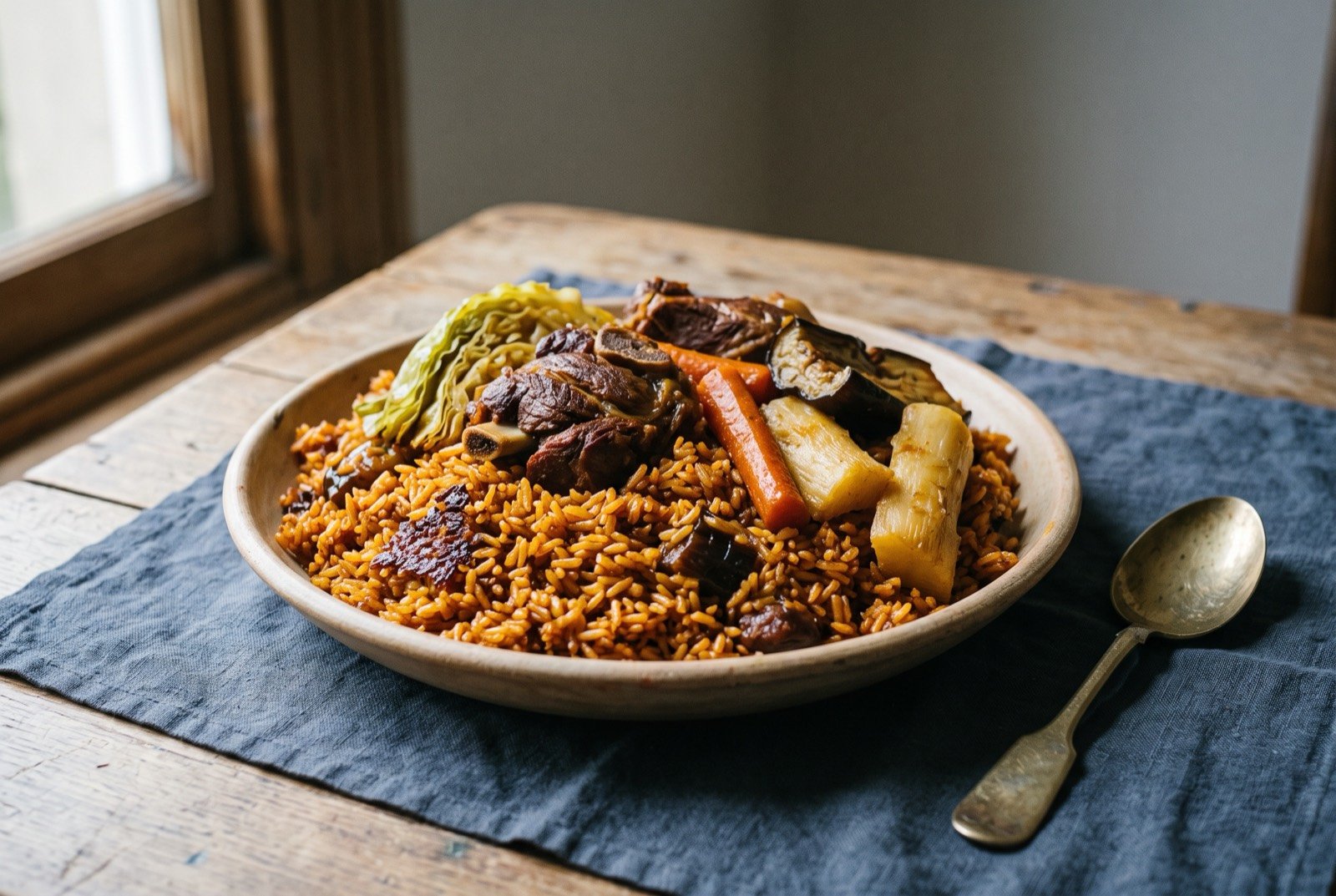
Riz au gras is the interior's celebration rice: rice cooked in the coloured, fat-rich broth left after a tomato and onion base has been reduced hard, with meat and vegetables returned on top. The Burkinabè name zaamè is a cognate of the family containing Senegalese ceebu jën, Gambian benachin and Nigerian and Ghanaian jollof. The part to get right. Jollof takes its name from the Wolof empire of Jolof, and Senegambia, specifically the Saint-Louis fishing community, is the documented homeland of ceebu jën. The engine of the dish's spread is unglamorous: West African per capita rice consumption rose from about 12 kg a year in 1961 to 27 kg by 1990, and a one-pot technique travelled with the ingredient. The story that the Juula diaspora carried the dish along its trade corridor is plausible, widely repeated, and not something I could verify against a scholarly source.
As tradition built it
Serves 6. About 1 hour 15.
Ingredients
- 500 g long grain rice, rinsed
- 1 kg beef, lamb or chicken in large pieces
- 400 g onion, sliced
- 500 g fresh tomato, blended
- 3 tbsp tomato concentrate
- 100 ml groundnut oil
- 1 small cabbage, in wedges
- 2 carrots, in batons
- 1 aubergine, in chunks
- 200 g cassava, in chunks
- 1 tsp cumin, the Burkinabè marker
- 1 tbsp dried baobab leaf powder, optional
- 1 whole scotch bonnet
- to taste, 1 stock cube salt, stock
Method
- Brown the meat hard in the oil. Remove it.
- Cook the onion down in the same fat until deep gold.
- Add the blended tomato and the concentrate and cook hard until the oil separates and stands clear. This is the difference between the dish and a tomato rice, and it takes as long as it takes.
- Add stock, the vegetables, cumin, baobab leaf, whole chilli and salt. Return the meat. Simmer until the vegetables are nearly done, then lift them out and keep them warm.
- Add the rinsed rice into that coloured broth and let it absorb the lot, covered, over low heat.
- Return the meat and vegetables on top. Serve from the pot.
What a modern chef changes
A flavoured stock, a base reduced past comfort, and the crust treated as a component
Rungs 1, 4 and 6
Method
- Cook the rice in a stock, and make the stock interesting. Akoko's jollof is cooked in a sweet pepper stock. Roast red peppers and onion, blend, pass through a chinois, combine with the meat stock.
- Reduce the base past where your nerve fails. The oil-separation cue is the same emulsion-inversion signal as the groundnut sauce and most cooks stop two minutes early. The base should be jammy and darker than looks right.
- Take the crust seriously. Five minutes uncovered at the end, lifted separately and scattered back over the top, gives two rice textures in the bowl.
- Whole spice at the start, ground spice at the end. Cumin toasted whole into the base, grains of paradise ground over the finished bowl.