West Africa · Volume 05, The Sahel Interior
Fonio, steamed twice
Across the Sahel; Mali, Burkina Faso, Guinea
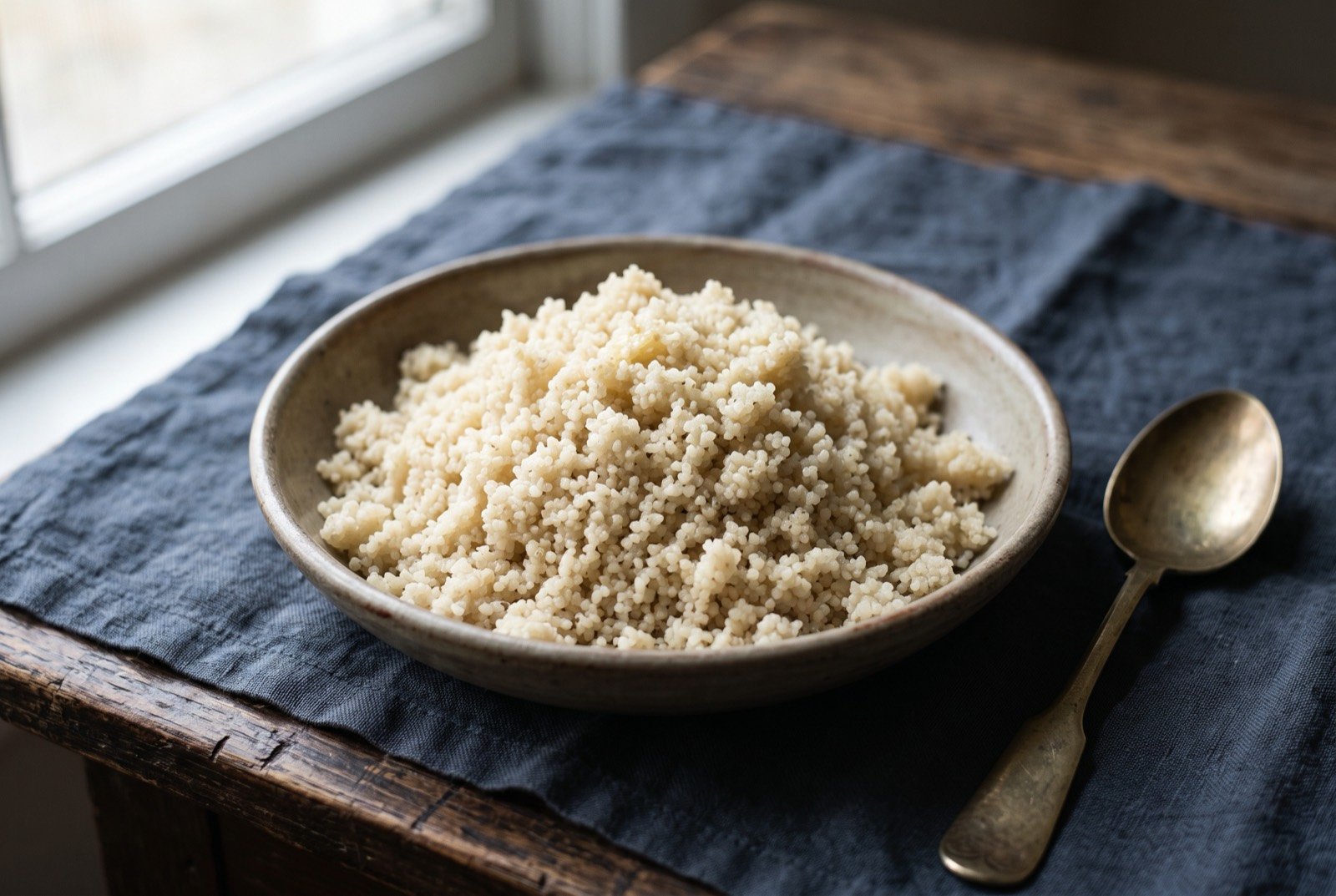
Illustration
- Time
- 30 minutes
- Researched
- Researched from 106 sources in the brief
- Reviewed
- Awaiting a reader from inside the tradition
- Cooked
- Awaiting a cook report
Fonio is the volume's prestige grain and its most misunderstood one, and Rung 6 sets out why its margin between correct and ruined is measured in tens of seconds. Be precise rather than enthusiastic about the nutrition: fonio is not a protein grain, at around 6.6 per cent against millet's 12.9. What it has is a better protein, rich in the sulphur amino acids deficient in wheat and rice, at 441 mg of methionine and 8.5 mg of iron per 100 g.
As tradition built it
Serves 4. 30 minutes.
Ingredients
- 300 g whole white fonio
- enough to submerge, 3 to 4 changes warm water for washing
- 1 tsp salt, dissolved in 100 ml water
- 1 tbsp butter, clarified butter or groundnut oil
Method
- Wash it properly. Submerge in warm water in a wide bowl, swish hard with the fingers, pour off, and repeat until the water runs clear, usually three or four changes. Drain into a sieve of 0.5 mm or finer, or a muslin-lined chinois: a standard colander pours your dinner down the drain.
- Line a steamer basket with damp muslin. Add the fonio loosely, without pressing.
- Steam 15 minutes over simmering salted water.
- Turn out, fluff with a fork, drizzle over a few tablespoons of the salted water, fork the fat through.
- Return and steam a further 5 to 10 minutes. Fluff again.
Notes
Pierre Thiam's specification, which is the one to learn.
Without a steamer: 1 part fonio to 1 part water, boiled, fonio and salt stirred in, covered tight, 2 minutes on low, heat killed, fluffed from the bottom, rested covered 5 to 10 minutes. It works, and it has almost no margin.
What a modern chef changes
The wash verified rather than assumed, and the second steam used as a flavouring step
Rungs 6, 1 and 5
Method
- Verify the wash instead of counting rinses. Swirl a spoonful of the drained grain in a glass of clean water and let it stand ten seconds. Grey sediment means you are not done. Grit is why most British cooks abandon fonio after one attempt, and it is entirely preventable.
- Use the second steam as an infusion. The tradition sprinkles salted water between steams; sprinkle a reduced stock instead, or the strained steeping water from bikalga, which is the documented Sahelian way to use that condiment and is not obvious.
- Use a setting fat, not a liquid one. Clarified butter forked through holds each grain separate as it cools.