West Africa · Volume 05, The Sahel Interior
Dambou
Niger, the Zarma-Songhai southwest
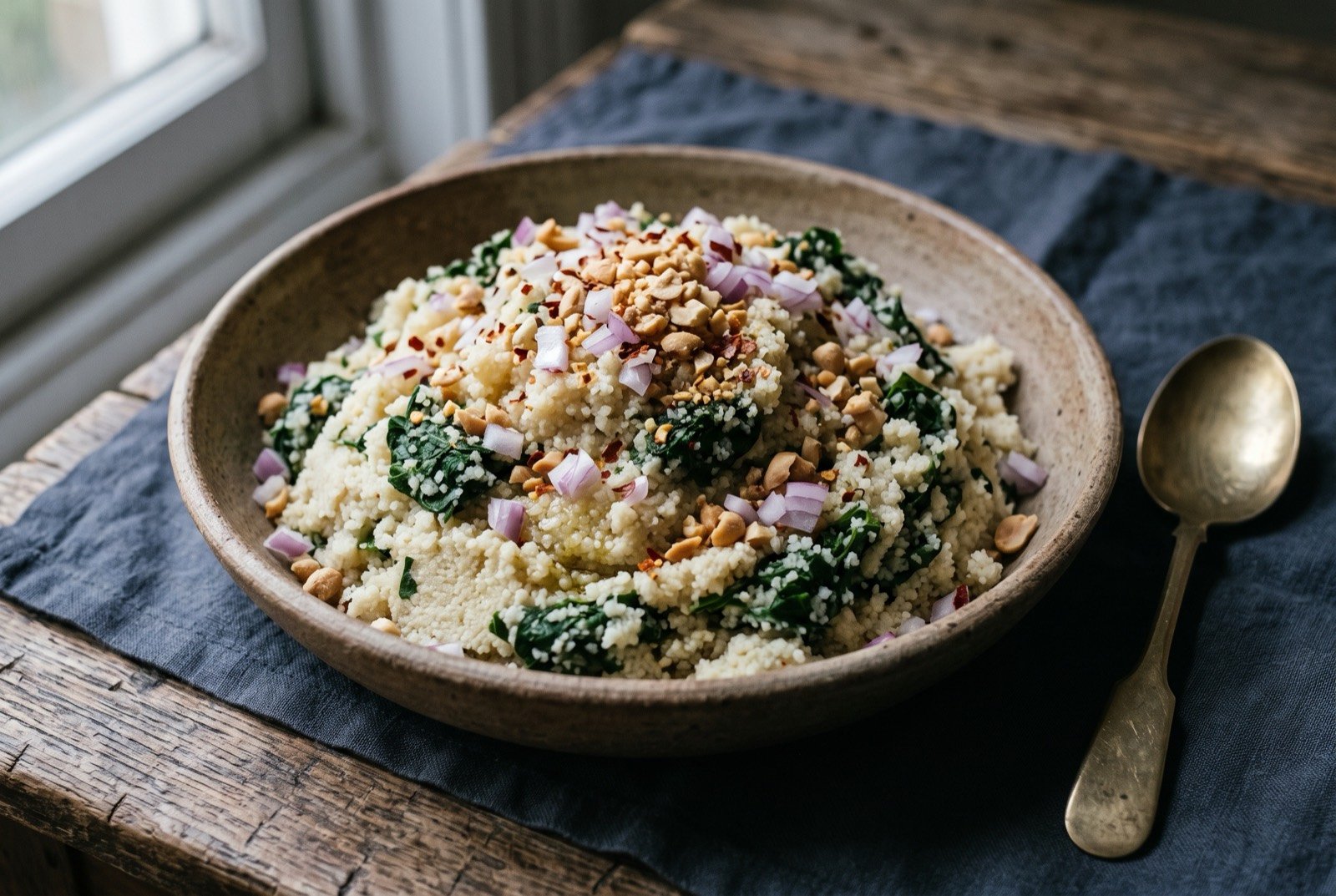
Illustration
- Time
- 45 minutes
- Researched
- Researched from 106 sources in the brief
Dambou is a steamed grain with cooked greens folded through it, served at namings and weddings and now spread to the Dendi in northern Benin and to zongo quarters across West Africa. The base is rice semolina, cracked millet or couscous; the green is moringa. The technique is the couscous principle stated cleanly, which is why it is here. The cereal is oiled and rubbed between the palms before it meets water, so fat coats each starch granule and the granules cannot fuse. Then it is steamed rather than boiled, so it hydrates from vapour and never sits in liquid. And the moringa goes in already cooked, because raw moringa would leach green water down through the grain. Three decisions, all about keeping things separate, which is the exact opposite philosophy to tô in the same region.
As tradition built it
Serves 4. About 45 minutes.
Ingredients
- 500 g fine semolina, rice semolina or cracked millet
- 300 g moringa leaves, or spinach at a push
- 2 onions, one sliced, one finely chopped
- 3 tbsp groundnut oil, plus more to finish
- 60 g groundnuts, crushed
- 1 dried chilli, crushed
- to taste, 2 stock cubes salt, stock
Method
- Boil the moringa with the sliced onion until tender, drain hard and squeeze it dry. Chop coarse.
- Put the semolina in a wide bowl, add 2 to 3 tbsp of oil and rub it through with your palms until every grain is coated and the bowl no longer looks dusty. Sprinkle in a little salted water and rake it through.
- Steam 20 to 30 minutes in a muslin-lined basket, without pressing the grain down.
- Turn out, fork through, and fold in the greens, chopped onion, crushed groundnuts, chilli and salt.
- Finish with a little more oil and serve warm.
What a modern chef changes
Two steams, the greens kept green, the groundnut toasted late
Rungs 6, 3 and 1
Method
- Steam twice with a rest between. Twenty minutes, out, raked with a fork and rested uncovered five minutes so surface moisture flashes off, then a further ten. Two short steams give a drier, more separate grain than one long one, the same reason they do for attiéké in Volume Four.
- Shock the greens. Boil the moringa in well-salted water with a pinch of bicarbonate, then straight into iced water, then squeeze. The alkali holds chlorophyll against pheophytin conversion and the shock stops residual heat carrying it to olive.
- Toast the groundnuts and crack them in a mortar as the grain leaves the basket. Ground in advance they go flat within hours; done late they are the best thing in the bowl.