West Africa · Volume 05, The Sahel Interior
Katta
Timbuktu and Gao, Mali
Illustration
- Time
- 1 hour 30
- Researched
- Researched from 106 sources in the brief
- Reviewed
- Awaiting a reader from inside the tradition
- Cooked
- Awaiting a cook report
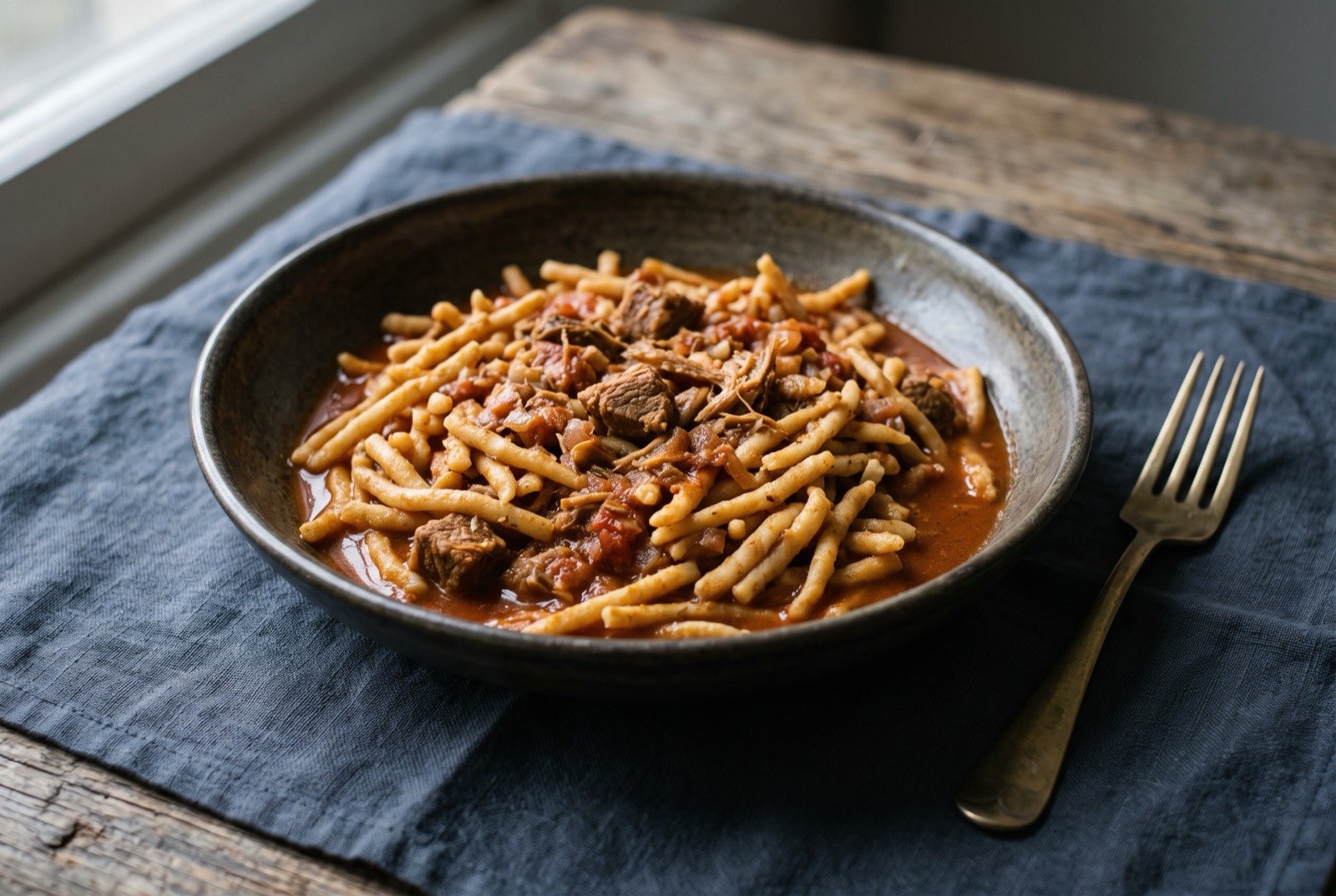
Katta is a hand-rolled wheat pasta from the Niger bend, a Slow Food Presidium since 2011 made by thirty-six women in two informal groups. It is served at Ramadan, Eid ul-Fitr and Mawlud and for honoured guests, which places it precisely: festival food from the Islamic, trans-Saharan layer of the cuisine rather than the savanna layer. The Presidium's own description of the rolling is the best sentence in the research: each piece is rolled between two fingers almost like spinning wool. And then it is toasted, dried a day in the shade and toasted in a dry pan before storage. Same logic as toasted fregola: it partly dextrinises the surface starch so the strands stay separate in a wet sauce, and it adds a nutty note raw pasta does not have.
As tradition built it
Serves 4. About 1 hour 30 of rolling, then a day's drying.
Ingredients
For the pasta
- 400 g plain wheat flour
- 180 ml water
- 1 tsp salt
For the sauce
- 400 g lamb or beef, diced
- 80 g dried fish, pounded
- 400 g tomato, blended
- 2 tbsp tomato concentrate
- 250 g onion, sliced
- 60 ml groundnut oil
- 1 tsp the Timbuktu set: cumin, anise, cinnamon, bay, black pepper
- 30 g soumbala
- to taste salt
Method
- Work the flour, water and salt to a firm dough and knead smooth. Rest 20 minutes.
- Tear off small pieces. Roll each between two fingers into a thin short thread, as if spinning wool. It is slow and there is no way round it.
- Dry one day in the shade, spread on cloth.
- Toast in a dry pan until golden brown, moving constantly. Store in jars.
- For the sauce, brown the meat in the oil, cook the onion down, add the blended tomato and concentrate and reduce hard. Add the pounded fish, soumbala, spices and water to a thin sauce, and simmer until the meat is tender.
- Cook the katta in the sauce, letting it down with water as the pasta drinks.
What a modern chef changes
The toast measured, the sauce built as a broth, and the pasta cooked in two stages
Rungs 6, 1 and 4
Method
- Toast to a colour and stop. Pale biscuit, not brown, off the heat the moment the aroma turns from raw flour to toasted grain. Further and the dextrins go bitter, the failure Volume Four's djenkoumé warns about. With a probe, around 130°C in the pan bed.
- Cook the katta in two stages. Blanch briefly in salted water, drain, finish in the sauce for the last four minutes. Evenly cooked pasta, and a sauce not thickened by everything the pasta shed. A European habit applied to an African pasta, and the one borrowing I would defend, because the dish is already a trans-Saharan import.
- Make the sauce a stock first. Draw the dried fish and the lamb bones at 70°C for 40 minutes, strain, defat, and build the tomato reduction into that.
- Bloom the spices in fat, infuse and strain. Cumin, anise and cinnamon toasted whole, bruised, steeped in warm oil 20 minutes, strained, the oil used for the onion: aromatics without the ground spice that muddies the sauce.