Central Africa · Volume 09, Where Desert Meets Forest
Kanda ti nyma
Central African Republic
Illustration
- Time
- 1 hour 35
- Researched
- Researched from 142 sources in the brief
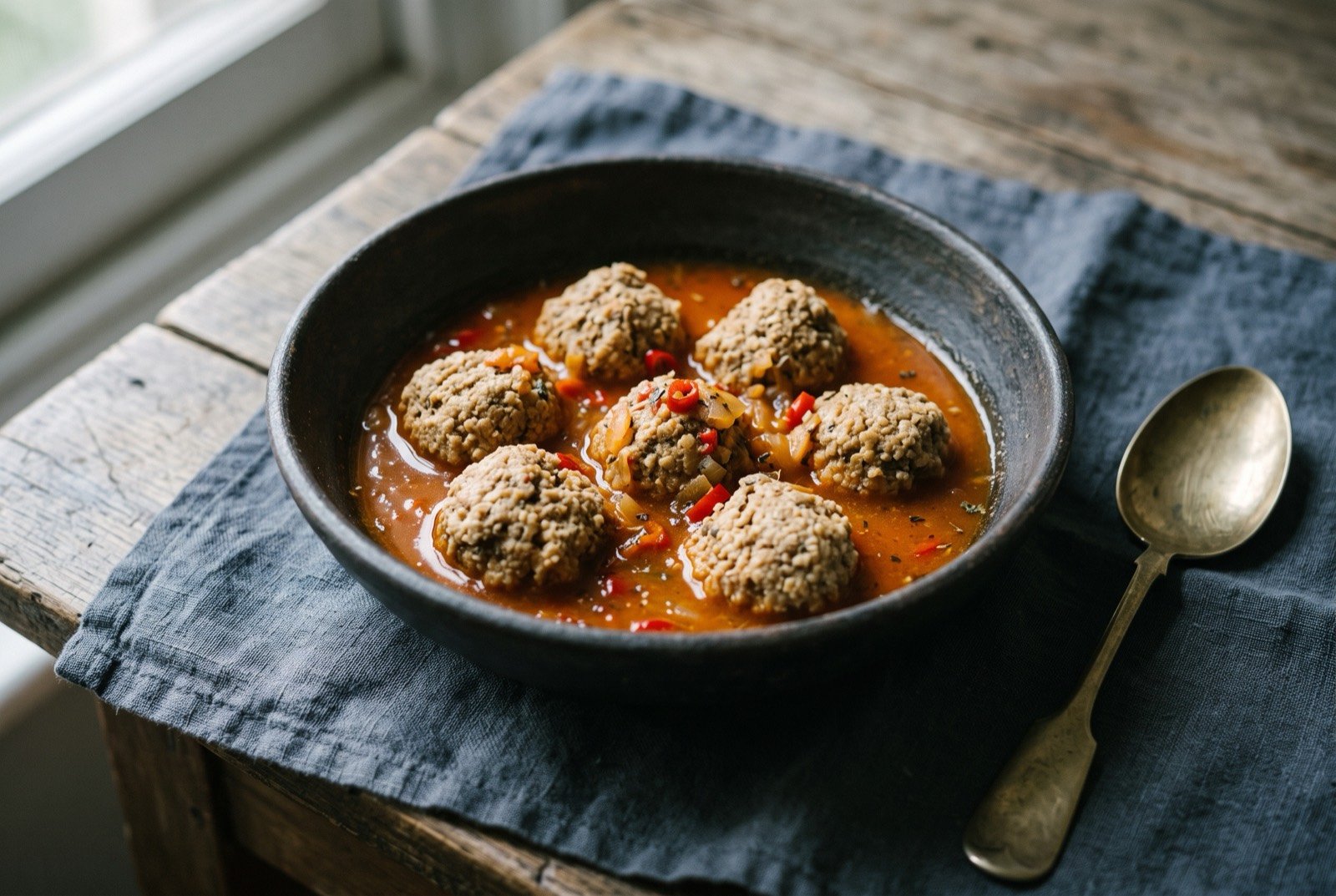
Two things are called kanda here and conflating them is a tell. In Bangui street usage, kanda names the leaf-wrapped steamed parcel of meat, fish or termites. Kanda ti nyma is the seed-paste meatball, which looks very much like a de-leafed descendant of that wrapped form.
As tradition built it
Serves 8. About 1 hour 35.
Ingredients
- 600 g minced beef
- 400 g pumpkin or squash seeds
- 2 onions, and 6 garlic cloves
- 4 tomatoes, diced
- 2 cayenne chillies, and parsley
- 100 ml cold water, for the paste
- 350 ml water, for the sauce
- 100 ml groundnut oil
Method
- Lightly toast the pumpkin or squash seeds and grind to a powder.
- Pass the minced beef, seed powder, garlic and one of the onions through a food mill together.
- Work in the 100 ml cold water and knead 3 minutes until smooth. Chill.
- Sweat the second onion in the groundnut oil for 2 minutes. Add the tomatoes and cayenne chillies, cook 5 minutes covered, add the 350 ml water and bring to the boil.
- Form 40 g balls and lower them gently into the sauce.
- 10 minutes off the heat, 20 minutes at medium, 30 minutes at low. Scatter with the parsley to serve.
Notes
The fullest specification available, from MyAfricaInfos. Neither of the two sources giving quantities is Central African, and the second gives a much heavier ratio of 600 g beef to 1 kg seed on a page that also renders the beef as "600 Kg". This chapter prints the lighter ratio and records the dispute.
What a modern chef changes
Toast measured, salt moved earlier, the curve held, a glaze on the finish
Rungs 5 and 3
Method
- Toast the seeds to a colour and stop. Pale biscuit, stirring, until the aroma turns from raw seed to nut. Past that they go bitter and the bitterness carries into the ball. Cool completely before grinding or residual heat smears the oil out.
- Salt the meat before the knead, not after. Salt solubilises myosin, the protein doing the binding, so a ball salted at the start of the knead survives poaching better.
- Hold the curve with a probe, not a dial. The staged heat is holding the liquid well below a simmer while surface protein sets. Probe the sauce and hold 80 to 85°C throughout. A boil at any point breaks the balls and they cannot be recovered.
- Finish with a kilishi-style glaze. Lift the poached balls, brush with a thin slurry of groundnut paste, garlic and reduced sauce, and give them 90 seconds under a hot grill or a pass with a torch. The substrate is now protein-rich and sugar-rich and browns hard and fast. Traditional logic, different protein.