Central Africa · Volume 09, Where Desert Meets Forest
La souce dihé
Kanem, Chad
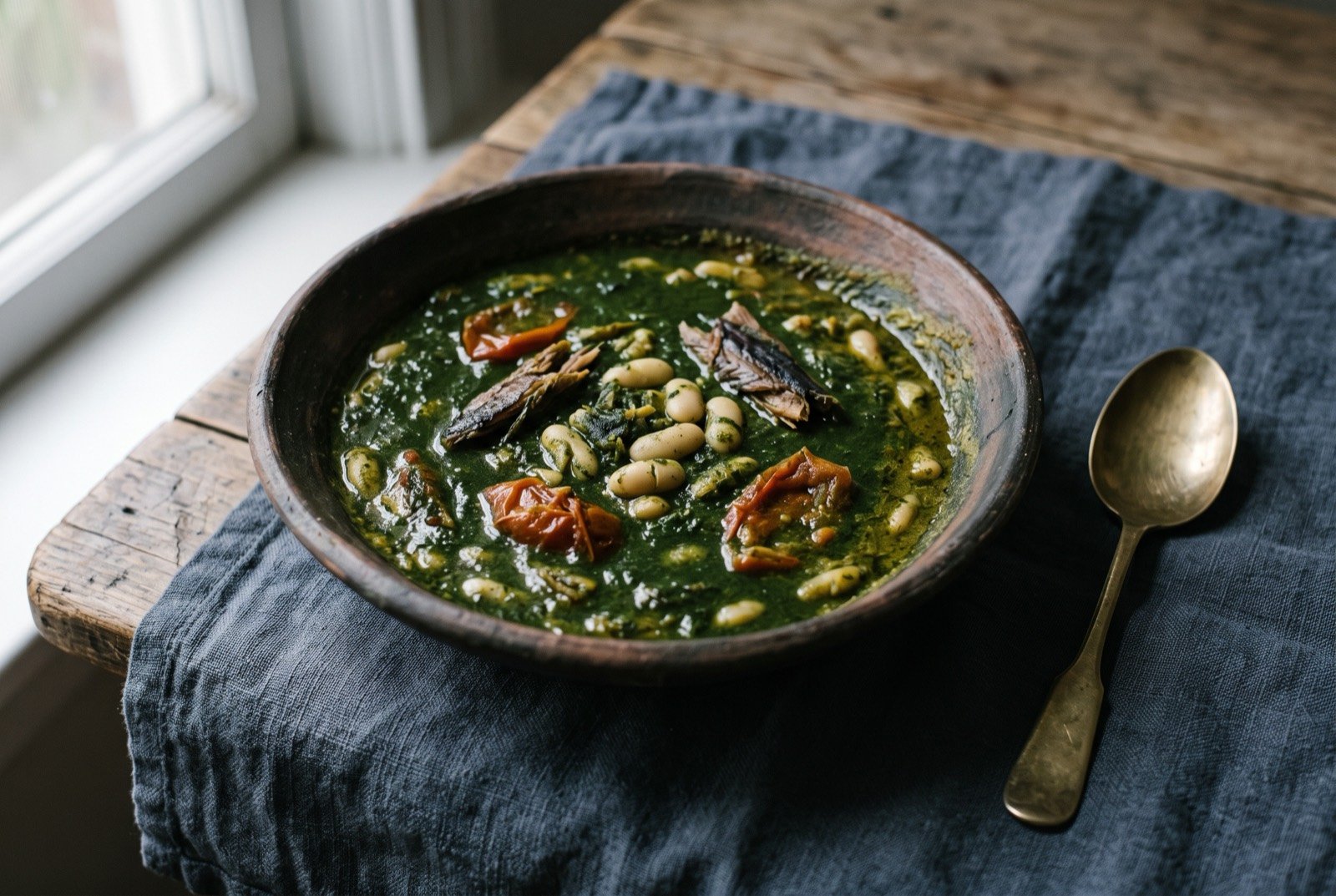
Illustration
- Time
- 2 hours
- Researched
- Researched from 142 sources in the brief
- Reviewed
- Awaiting a reader from inside the tradition
- Cooked
- Awaiting a cook report
The volume's headline, and the least documented cooking process in this book: almost everything written about dihé in English is written about spirulina as a supplement, and almost nothing about how a Kanembu cook gets it onto a plate. What follows is assembled from the Slow Food Ark of Taste entry and from Abdulqader, Barsanti and Tredici's fieldwork.
As tradition built it
Serves 4. About 2 hours.
Ingredients
- 60 g dried dihé cake, or dried spirulina in flake or block form
- 200 g dried white beans, soaked overnight and boiled tender
- 100 g dried or smoked fish, or meat
- 2 tomatoes, chopped
- 1 onion, chopped
- to taste oil, salt, dried chilli
Method
- Crumble the dried dihé cake by hand, then work it in a mortar until smooth. It is hard and brittle and lumps will not disperse.
- Reconstitute with water to a thick, dark green slurry.
- Cook 1 to 1.5 hours. This is the figure the sources agree on, and it is far longer than anyone approaching this as a health food would expect.
- Build it out with the dried white beans, the dried or smoked fish or meat, the tomatoes and the onion. Season.
- Serve with rice, milk and oil, or with a millet ball.
Notes
The flavour is bitter and the bitterness is the honest note. Do not let anybody, this chapter included, sell it to you as mild.
What a modern chef changes
The bitterness managed rather than denied, and a shorter cook justified
Rungs 6 and 3
Method
- Understand what the long cook is for, then decide how much you need. It is dispersing and hydrating the cell mass so it stops being gritty, and volatilising the more aggressive aromatics. Disperse it properly at the start with a high-powered blender and you can cut the cook substantially and keep the colour, which otherwise travels from deep green to olive-brown. Start at 30 minutes and taste.
- Answer the bitterness with fat and lactic acid, not sugar. Bitterness is suppressed by fat coating the tongue and by a competing acid sensation. A spoonful of samn and a tablespoon of thick soured milk at the end do more here than any amount of tomato.
- Reconstitute in salanga-type stock, not water. The sauce is described in the source literature as a fish or meat and vegetable broth, so building it on a properly extracted small-fish stock is not an addition. It is doing what the dish already says it is.