Central Africa · Volume 09, Where Desert Meets Forest
Koko na nyama
Ngbaka and general CAR
Illustration
- Time
- 40 minutes
- Researched
- Researched from 142 sources in the brief
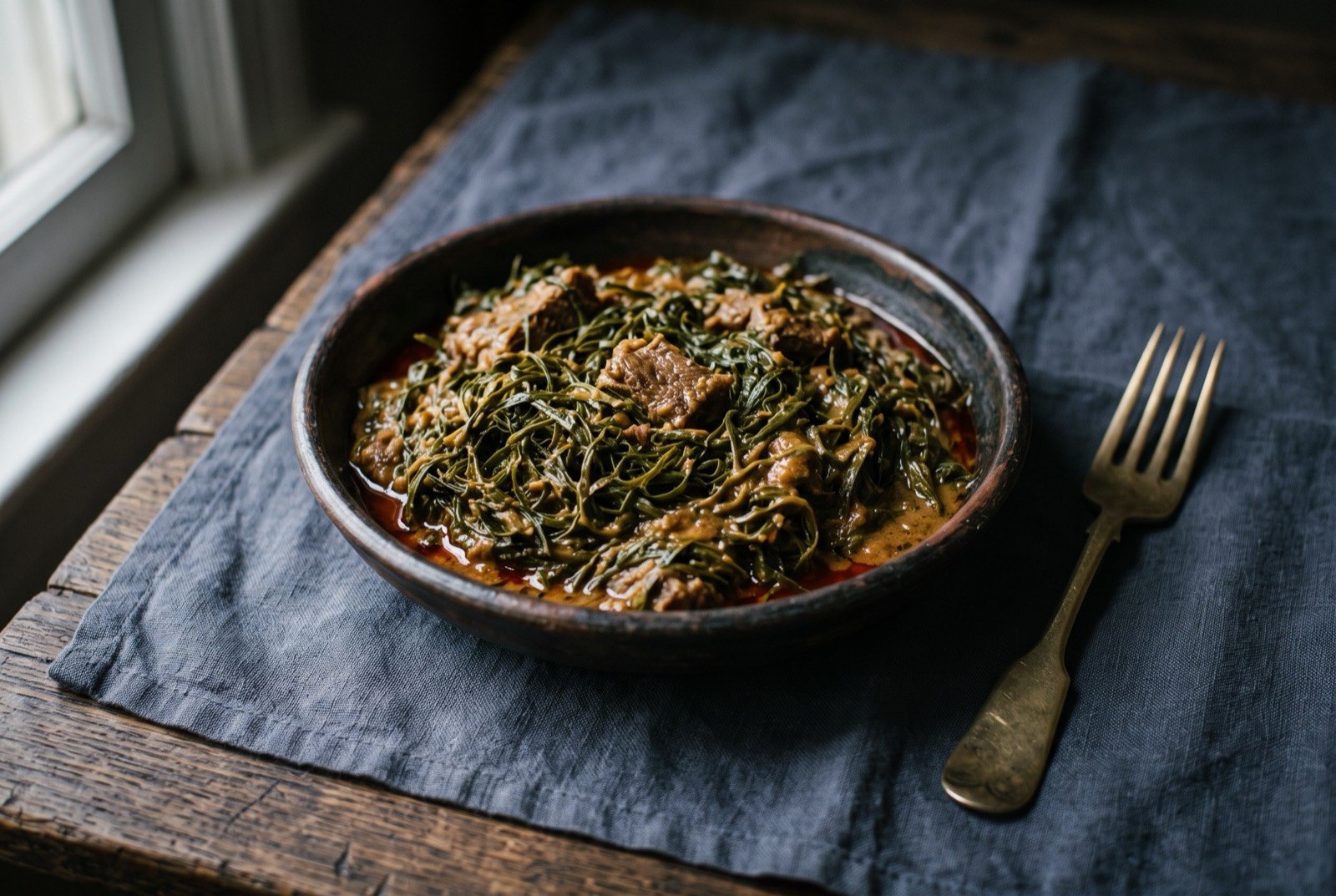
Gnetum africanum, koko in Sango, is the same plant as Gabonese nkumu, Congolese mfumbwa and Cameroonian eru, met in Volumes Seven and Eight. What makes the Central African version its own dish is a knife skill. Acewala is explicit: the leaves are cut very finely thanks to the know-how of Ngbaka women, which distinguishes Central African koko from the same leaf in every neighbouring country, all of which cut it thicker. That is mechanism, not decoration. Gnetum leaf is tough, leathery and heavily fibrous, and cutting it to a hair-fine chiffonade shortens every fibre to a length the mouth can deal with. The cut substitutes for cooking time, without the colour and texture loss a long braise brings.
As tradition built it
Serves 4. About 40 minutes.
Ingredients
- 400 g fresh koko leaves, or 80 g dried and rehydrated
- 150 g groundnut paste
- 2 onions, sliced
- 400 g beef (na nyama), or dried fish (na susu)
- 3 tbsp red palm oil, or groundnut oil
- to taste chilli, salt
Method
- Stack the fresh koko leaves, roll them tight and shred as finely as you physically can. The pile should look like cut grass, not ribbons. This is the dish.
- Cook the beef (na nyama) or the dried fish (na susu) with the onions until tender, keeping the liquor.
- Add the shredded leaf and the red palm oil or groundnut oil and cook until the leaf softens and darkens.
- Loosen the groundnut paste with the cooking liquor and stir it through. Season with chilli and salt.
Notes
The Central African sources describe the dish clearly and give no weighed quantities, so what follows is scaled from what the descriptions imply.
Yabanda is the same leaf without peanut paste: oil, onions, chilli, salt and smoked or fresh fish, fast enough to work as Central African fast food, and the base into which makongo, the Lobaye caterpillars, are folded in season. Note that diaspora cooks use dried leaf, which is tougher and pushes you back towards the long cook the fine cut exists to avoid.
What a modern chef changes
The cut done properly, the emulsion built, the fish split
Rungs 4 and 3
Method
- Take the cut seriously and give it fifteen minutes. Stack, roll and shred with a genuinely sharp knife, then cut back across the pile a second time. Thaw and dry frozen leaf on a cloth first: wet leaf tears rather than cuts, and you get bruising instead of chiffonade.
- Shear the groundnut paste into the liquor before it meets the pot. The most repeated correction in this chapter, because it is the most common failure in this family of sauces.
- Split your fish, and do not overcook once the leaf is in. Salanga-type powder infused into the liquor for background savour, banda-type smoked fish flaked in at the end for smoke and structure, and eight to ten minutes after the leaf goes in. Beyond that you are undoing the knife work with heat.