Melanesia, Micronesia and Polynesia · Volume 12, The Umu, the Mission and the Sunday Table
Koko alaisa
Samoa
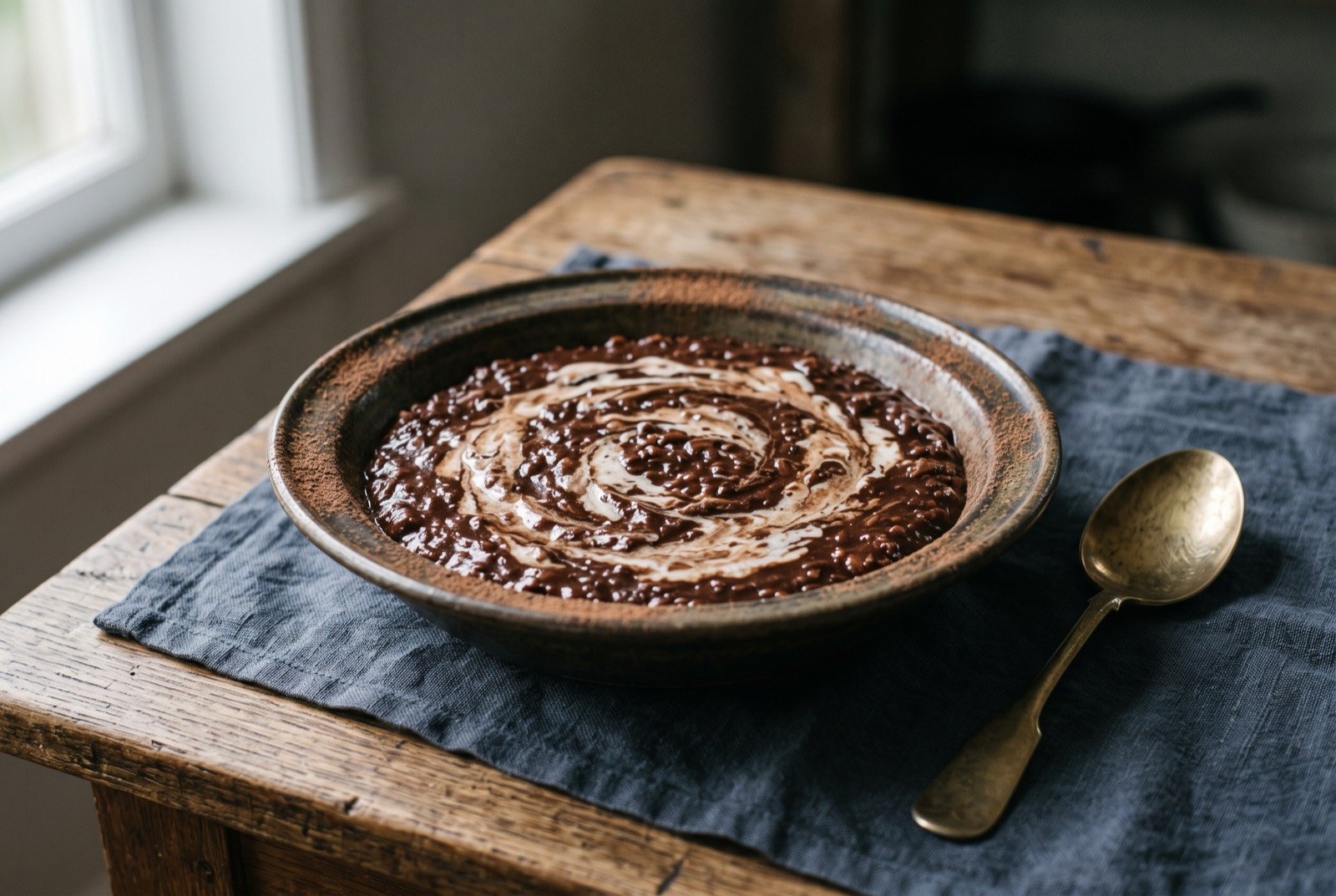
An illustration of the dish, not a photograph of it cooked.
- Time
- 40 minutes
- Researched
- 29 sources cited
- Reviewed
- Not yet reviewed from inside the tradition
- Cooked
- Not yet cooked and reported
Both rice and, per the sources, the pairing itself postdate colonial trade, koko Samoa combined with imported rice into a dish that emerged from household economy rather than an older tradition.
As tradition built it
About 30 to 40 minutes
Ingredients
- 2 to 3 tbsp, grated koko Samoa, the roasted, ground cacao paste
- 1 cup rice
- 1 tin coconut cream
- ¼ cup, or to taste sugar
Method
- Brew koko Samoa, the roasted, ground cacao paste, in boiling water.
- Add rice and cook down slowly, stirring, until the rice has broken down into a thick porridge.
- Stir in coconut cream and sugar to finish.
What a modern chef changes
After Metita's "pacific koko" and the specialty koko Samoa producer scene now supplying it.
Rung 5
Method
- Grind roasted cacao in a spice grinder rather than a wooden mortar, holding the roast at a steady, controlled temperature in a low oven or dehydrator first. Rung 5.
- Fold in a citrus and warm-spice element, tipolo or another sharp citrus with cinnamon, following Metita's own pairing logic rather than serving the porridge plain.
- Finish with shaved 72 per cent koko Samoa chocolate, sourced from a specialty producer rather than a supermarket cocoa powder, for a genuinely different depth of flavour than Dutch-processed cocoa gives.
Notes
Metita's "pacific koko" dessert pairs turmeric, pineapple, tipolo, Samoan citrus, and cinnamon cream. Cuisine, "Metita: A Polynesian Love Letter" Wilex Samoa's Koko Loa brand and the Melbourne-based Living Koko, run by Fipe Preuss, both demonstrate koko Samoa holding up as a bar-format eating chocolate at 72 per cent and above, not only as the traditional thick breakfast drink. ABC Pacific, "Living Koko's Phoebe Pruess chats cacao, the lunar cycle and food sovereignty"