Melanesia, Micronesia and Polynesia · Volume 12, The Umu, the Mission and the Sunday Table
Sapasui
Samoa
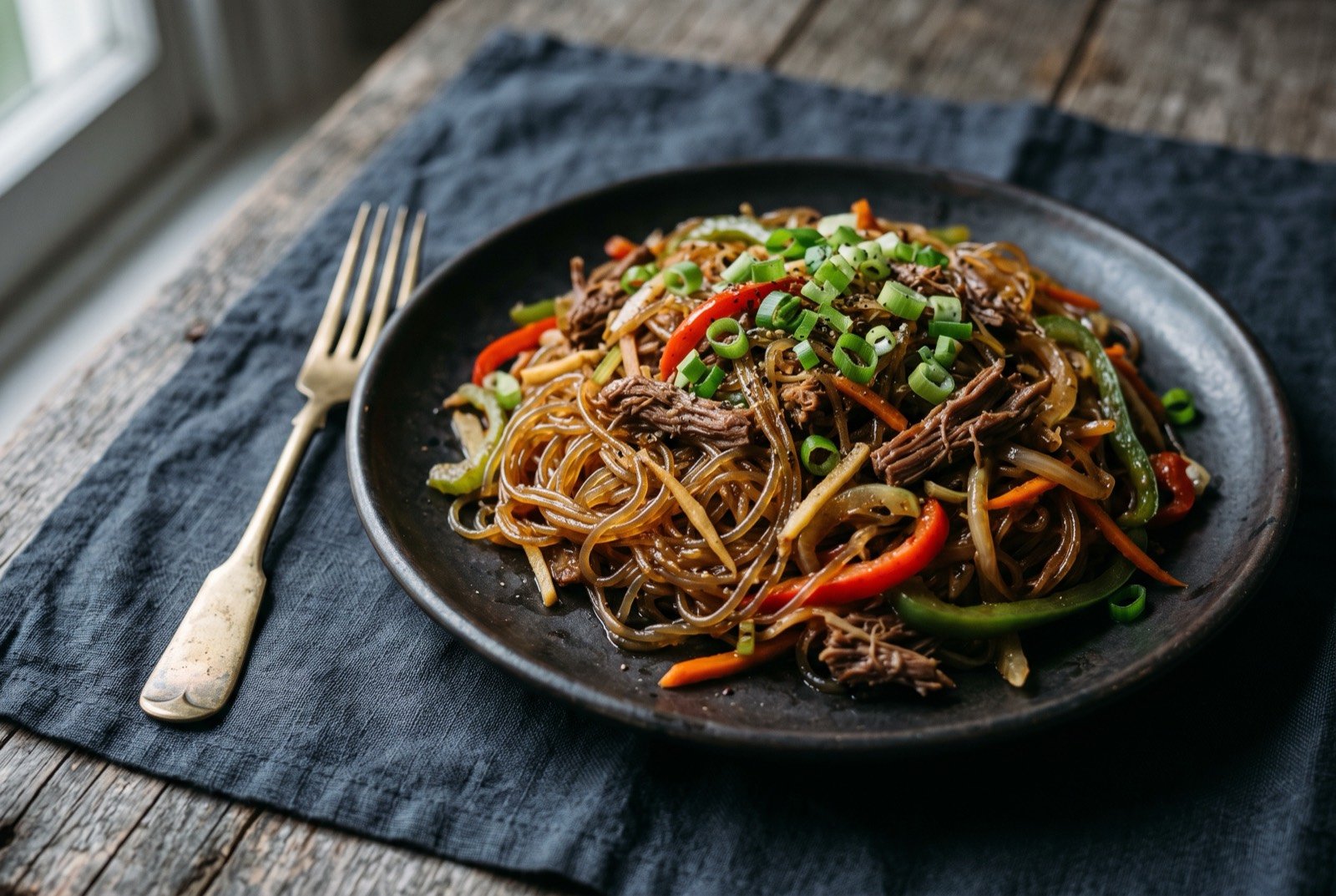
An illustration of the dish, not a photograph of it cooked.
- Time
- 20 minutes
- Researched
- 29 sources cited
- Reviewed
- Not yet reviewed from inside the tradition
- Cooked
- Not yet cooked and reported
Chinese indentured labourers, recruited from Fukien and Guangdong provinces from 1903 onward under German colonial administration, brought ginger, garlic, rice and noodles into a colony where these were novel; working with limited resources, cooks adapted Cantonese stir-fry technique to Samoan ingredients and methods, producing something genuine culinary fusion rather than simple borrowing. The Spinoff, "The Chinese origins of Sāmoa's most popular dish, chop suey" The dish is cooked in roughly twenty minutes from about six ingredients.
As tradition built it
About 20 minutes.
Ingredients
- 125g glass noodles
- 400g chicken, pork or corned beef
- 1 clove garlic
- A knob, about the size of a 20p coin ginger
- 1 carrot, 1 head broccoli and 150g green beans vegetables
- 2 tbsp soy-based sauce
Method
- Soak glass noodles until pliable.
- Stir-fry chicken, pork or corned beef with garlic and ginger.
- Add vegetables and a soy-based sauce, and toss through the softened noodles.
- Cook through, roughly twenty minutes total, until the noodles have absorbed the sauce.
What a modern chef changes
After Henry Onesemo's sapasui at Tala.
Rung 4
Method
- Build the sauce as a proper reduction, controlled on the stovetop rather than tossed together at high heat, so it coats the noodles evenly rather than pooling.
- Finish with fresh herbs, citrus zest and a puffed grain garnish, following Onesemo's own documented move, texture and brightness added at the very end rather than cooked into the dish.
- Choose the protein for the occasion, lamb and pork belly for a feasting plate, following the same logic as the traditional dish's own flexibility across chicken, pork and corned beef.
Notes
Onesemo's version, served as a "feasting" plate with lamb and pork belly, is finished with herbs, citrus and puffed grains as garnish. He addresses the criticism directly: "The look of the food is pretentious… pretension helps things grow." The Spinoff, "Dining that's more specific than Pacific"