Melanesia, Micronesia and Polynesia · Volume 12, The Umu, the Mission and the Sunday Table
Lū pulu
Tonga, also made in Samoa as lu pulu
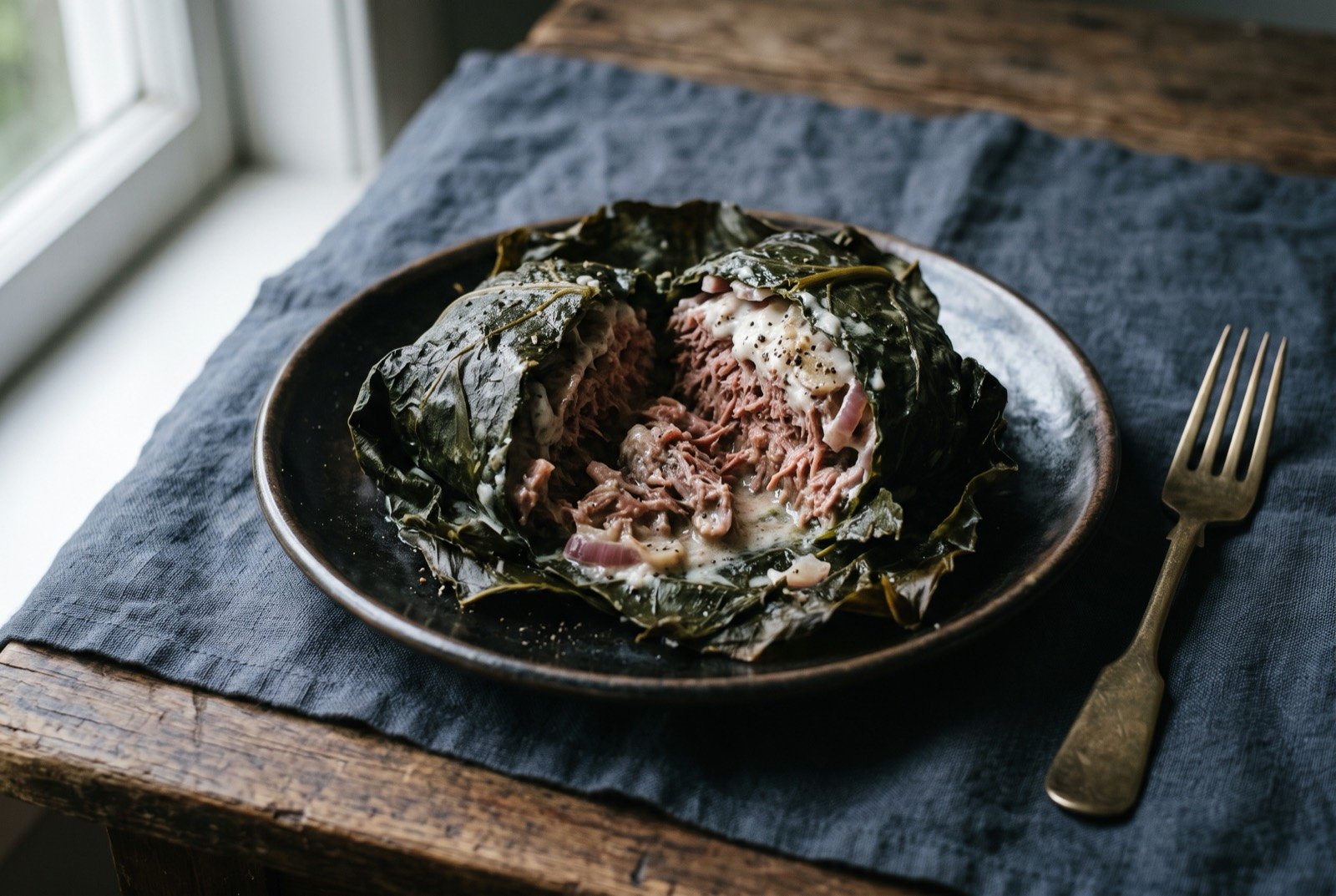
An illustration of the dish, not a photograph of it cooked.
- Time
- 1 hour
- Researched
- 29 sources cited
- Reviewed
- Not yet reviewed from inside the tradition
- Cooked
- Not yet cooked and reported
Recipes broadly agree on roughly a tin of corned beef per three stacked taro leaves. RNZ Recipes, "Lu Pulu, Pacific Island corned beef in taro leaves" The dish's Tongan history runs directly through the same pisupo import trade documented above for Samoa: tinned corned beef entered Tongan diets via nineteenth and twentieth century trading ships and wartime rations and has stayed since. ABC Pacific, "We know it's a health problem. How did corned beef become a Pacific Island delicacy?"
As tradition built it
About 1 hour
Ingredients
- 1 tin corned beef
- 3 taro leaves, stacked
- 1 onion, diced
- 500ml coconut cream
Method
- Stack the taro leaves and place the corned beef and diced onion at the centre.
- Pour over coconut cream.
- Fold the leaves closed around the filling and wrap.
- Bake in the ʻumu, or a conventional oven, until the leaf has softened fully.
What a modern chef changes
The oxalate chemistry treated with the same rigour as palusami, and the corned beef itself reconsidered rather than taken as given.
Rung 3
Method
- Blanch and shock the taro leaves properly, exactly as for palusami, since lu pulu carries the identical oxalate risk and deserves the identical care. Rung 3.
- Build a corned-beef-style brisket from scratch, brined and slow-cooked rather than tinned, honouring the ceremonial weight of the ingredient documented above while giving a UK kitchen with a sous vide setup a genuinely superior version of the same protein.
- Rest the parcel before opening, letting the residual heat finish setting the coconut cream around the meat.