Melanesia, Micronesia and Polynesia · Volume 07, The Reef, the Earth Oven and the Girmit Table
Palusami
iTaukei Fiji, and now also Indo-Fijian by adoption
Illustration
- Time
- 1 hour 30
- Researched
- 9 sources cited
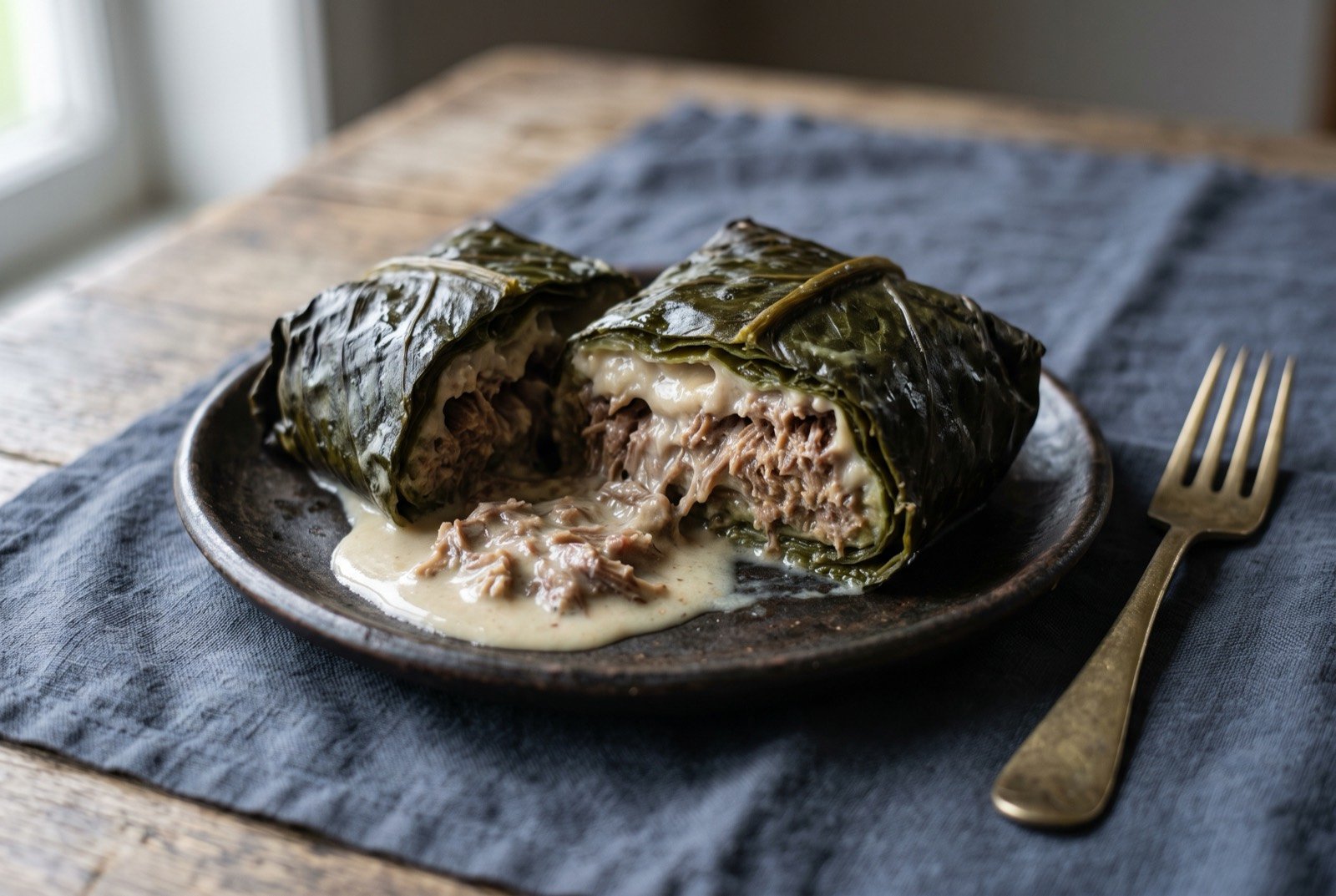
Young taro leaf, rourou, wrapped around a filling of coconut cream and finely chopped onion, most commonly, in what most retellings now treat as the definitive modern version, with tinned corned beef folded through. Genuinely worth telling as colonial-era history rather than a curiosity: bully beef entered the Pacific through missionaries and colonial trade, was entrenched by two world wars as standard British military ration, and was fully absorbed into Pacific feast cuisine rather than displacing anything, to the point that it is now simply part of the dish.
The safety chemistry, not folklore. Raw taro leaf contains needle-shaped calcium oxalate crystals that cause a genuinely acrid, stinging sensation if undercooked. A peer-reviewed study found boiling taro leaf for sixty minutes achieves a mean 84.2 per cent reduction in soluble oxalate; a related study on taro flower tissue found roughly two hours of sustained steam heat reduces needle-crystal count by around 80 per cent. Folk guidance calling for a thirty-to-sixty-second blanch is nowhere near long enough to do this work; Fiji's own tradition, wrapped and cooked again inside a lovo running for hours, already errs safe, and a UK cook using shop-bought leaf of unknown freshness should do the same.
As tradition built it
Serves 4. About 1.5 hours if steamed at home rather than lovo-cooked.
Ingredients
- 20 to 24 fresh taro leaves, stems trimmed
- 1 small onion, finely chopped
- 250 ml coconut cream
- 200 g tinned corned beef, roughly chopped (optional; omit for a vegetarian version, adding extra onion and tomato)
- to taste salt
Method
- Layer 4 to 6 taro leaves in a cross pattern to form a strong parcel base.
- Fill with a portion of onion, corned beef and a generous spoonful of coconut cream, and season with salt.
- Fold the leaves tightly over the filling and tie securely, or wrap again in foil for security.
- Steam for at least 1 hour, well beyond the point the leaves look cooked, since the safety work is happening in the tissue, not on the surface.
- Serve whole or sliced, with any extra coconut cream spooned over.
What a modern chef changes
A deliberate double cook, grounded directly in the peer-reviewed chemistry above, not a texture preference
Rung 3
Method
- Boil the taro leaves alone for a full 60 minutes before filling and wrapping, following the study's own protocol rather than a folk-recipe blanch, particularly important with shop-bought leaf of uncertain freshness.
- Then wrap and steam a second time with the filling, 30 to 40 minutes, so the parcel still gets its proper cook and flavour development on top of the safety work already done.
- State the substitution honestly if fresh taro leaf cannot be found: chard or spinach can stand in for texture and appearance, but neither carries taro leaf's characteristic mineral note or its oxalate content, and this is a compromise, not an equivalent swap, whatever the shape of the finished parcel suggests.