Melanesia, Micronesia and Polynesia · Volume 07, The Reef, the Earth Oven and the Girmit Table
Roti Parcel
Indo-Fijian
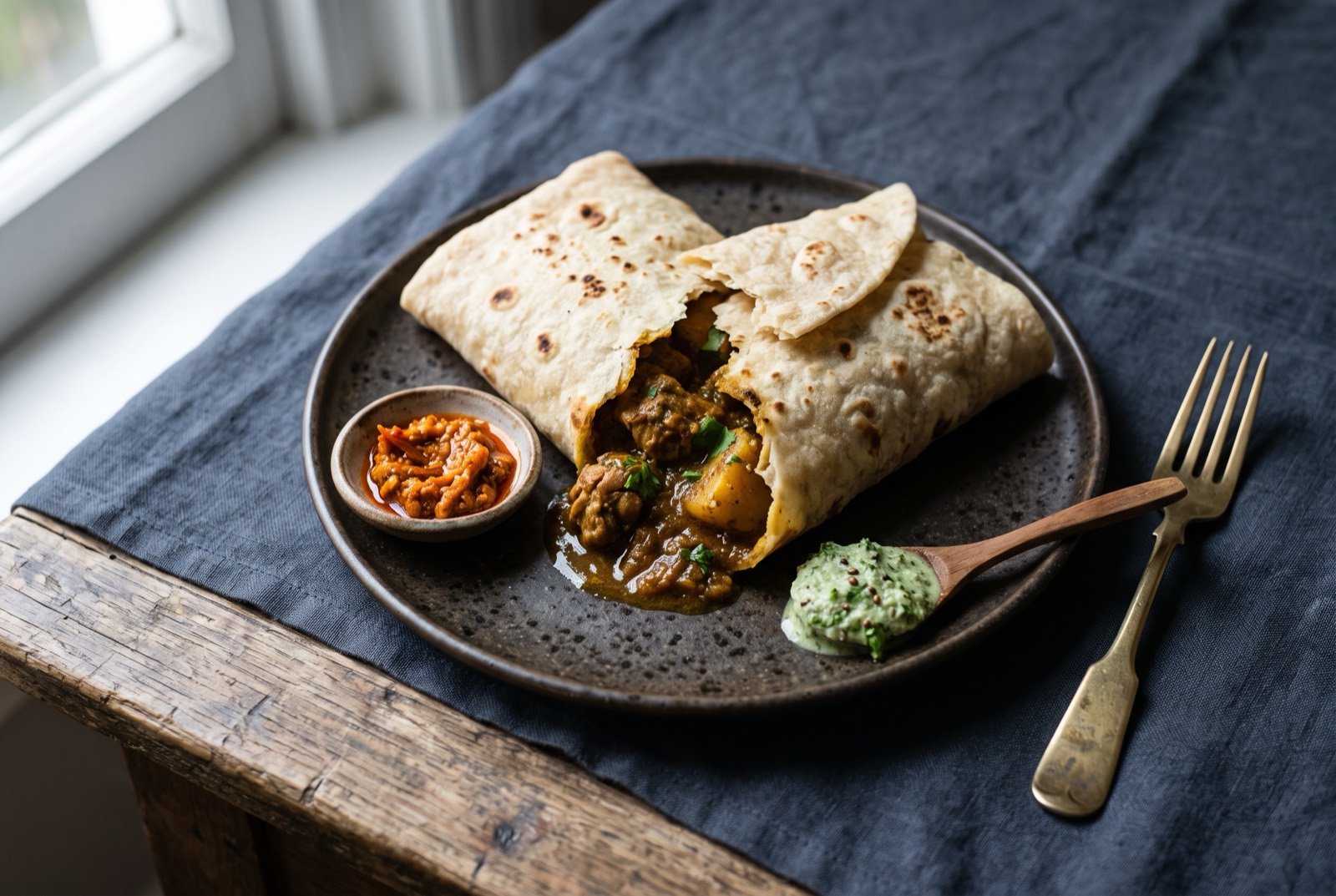
An illustration of the dish, not a photograph of it cooked.
- Time
- 45 minutes
- Researched
- 9 sources cited
- Reviewed
- Not yet reviewed from inside the tradition
- Cooked
- Not yet cooked and reported
A soft, tawa-cooked flatbread, closer in texture to a mainland Indian soft paratha than a dry chapati, traditionally puffed over an open flame. The distinctively Fijian practice, documented directly by the Fiji Times, is the roti parcel: curry, chutney, pickle and raita wrapped inside a folded roti as a one-handed handheld meal, sold as street food in Nadi, Lautoka and Suva. No source found gives a granular hydration ratio or rolling technique specific to Fiji; what follows is standard soft-roti technique, honestly presented as such rather than claimed as uniquely Fijian, with the roti-parcel practice itself, the genuinely Fijian element, given its own attention below.
As tradition built it
Makes 8. About 45 minutes including resting.
Ingredients
- 400 g plain flour, plus extra for dusting
- a pinch a pinch of salt
- 1 tbsp vegetable oil, plus more for cooking
- 220 to 250 ml warm water, roughly 220 to 250 ml
Method
- Mix the flour and salt, work in the oil, then bring together with warm water to a soft, smooth dough.
- Knead 8 to 10 minutes, until elastic, then rest, covered, at least 20 minutes.
- Divide into 8 balls, roll each thin and even.
- Cook on a dry, hot tawa or flat griddle, 1 to 2 minutes a side, then, if you have a gas flame, hold briefly directly over it to puff.
- To serve as a roti parcel: spoon a well-reduced curry (see Rung 6, and the goat palau and fish suruwa recipes below) into the centre, add chutney and pickle, fold into a tight parcel, and eat with your hands.
What a modern chef changes
The dough given a proper rest, and the filling curry built specifically to survive being wrapped
Rung 6
Method
- Rest the dough considerably longer than the traditional twenty minutes, up to 2 hours at room temperature, for a more extensible, softer-rolling dough less prone to shrinking back and tearing.
- Cook any curry intended for a roti parcel to the roti-consistency described in Rung 6, reduced until the oil visibly separates and the spice coats the meat directly, rather than serving whatever curry is on the stove regardless of its intended vehicle; a rice-consistency curry will simply leak through the fold.
- Warm the roti again briefly on the tawa immediately before filling, not straight from a batch cooked earlier, since a cold or reheated roti tears far more easily under the pressure of a tight fold than one still pliable from the pan.