The Indian subcontinent · Volume 22, The Coconut Coast, the Stone Grinder and the Chettiar’s Spice Road
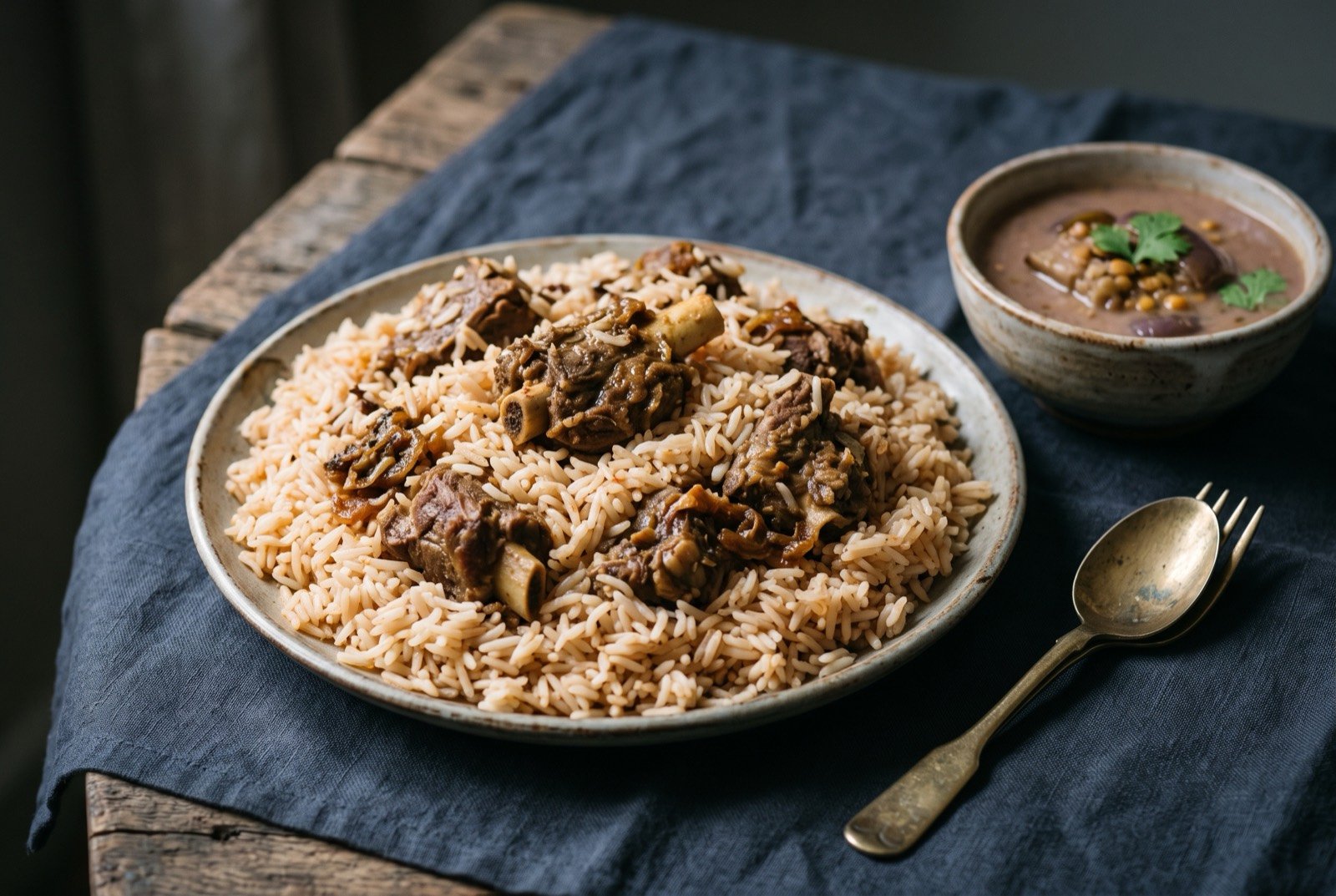
Ambur biryani
Tamil Nadu (Tamil Muslim, Arcot Nawabate)
Illustration
- Time
- 1 hour 30
Tamil Nadu's own Muslim biryani, from the Arcot Nawabate's colonial-era food history, and the clearest correction to any assumption that Tamil Nadu's food is only Brahmin or Chettiar.
As tradition built it
Serves 6. About 90 minutes.
Ingredients
- 500g seeraga samba rice
- 1kg mutton or chicken, bone-in
- 3 onions, sliced
- 3 tomatoes, chopped
- 1 cup yoghurt
- 2 tbsp ginger-garlic paste
- 8 to 10 cloves, 4 cardamom pods, a 2.5cm cinnamon stick, 1 bay leaf whole spices (cinnamon, clove, cardamom, bay leaf)
- A large bunch, chopped mint, coriander
- to taste salt
Method
- Fry the onion in ghee or oil until golden, then add the whole spices, ginger-garlic paste and meat, browning well.
- Add tomato and yoghurt and cook down to a thick, wet "kuska" gravy, wetter than a North Indian biryani's base, the meat nearly cooked through.
- Rinse the seeraga samba rice and add directly to the pot with hot water, mint, coriander and salt, bringing to a simmer.
- Cover tightly and cook on the lowest heat until the rice has absorbed the liquid and is tender, 20 to 25 minutes, resting covered for 10 minutes before serving.
- Serve with dalcha, a sour brinjal-and-lentil curry, and a raita or pachadi.
Notes
This is the single most under-represented dish in most English-language "Tamil food" writing, and this chapter gives it the same weight as its Malabar counterpart above rather than a footnote.
What a modern chef changes
A gravy built in two separate reductions, and a rice finished by resting rather than by more heat
Rung 5, applied to resting rather than souring
Method
- Cook the meat gravy a day ahead and reheat gently before the rice goes in, the same resting logic as Rung 5's kudampuli curry, since a wet biryani base concentrates in flavour exactly the way a rested curry does.
- Cook the seeraga samba rice separately to a precise, tested doneness before combining with the gravy, rather than cooking rice and gravy together from raw, for more even, controllable grains given how quickly this particular rice can overcook.
- Rest the finished pot, off the heat and covered, for a full 15 minutes rather than the traditional 10, letting the rice finish by residual steam alone.