The Indian subcontinent · Volume 14, The Langar, the Spit and a Coast Without a Restaurant
Aloo tuk
Sindh
Illustration
- Time
- 40 minutes
- Researched
- Researched from 48 sources in the brief
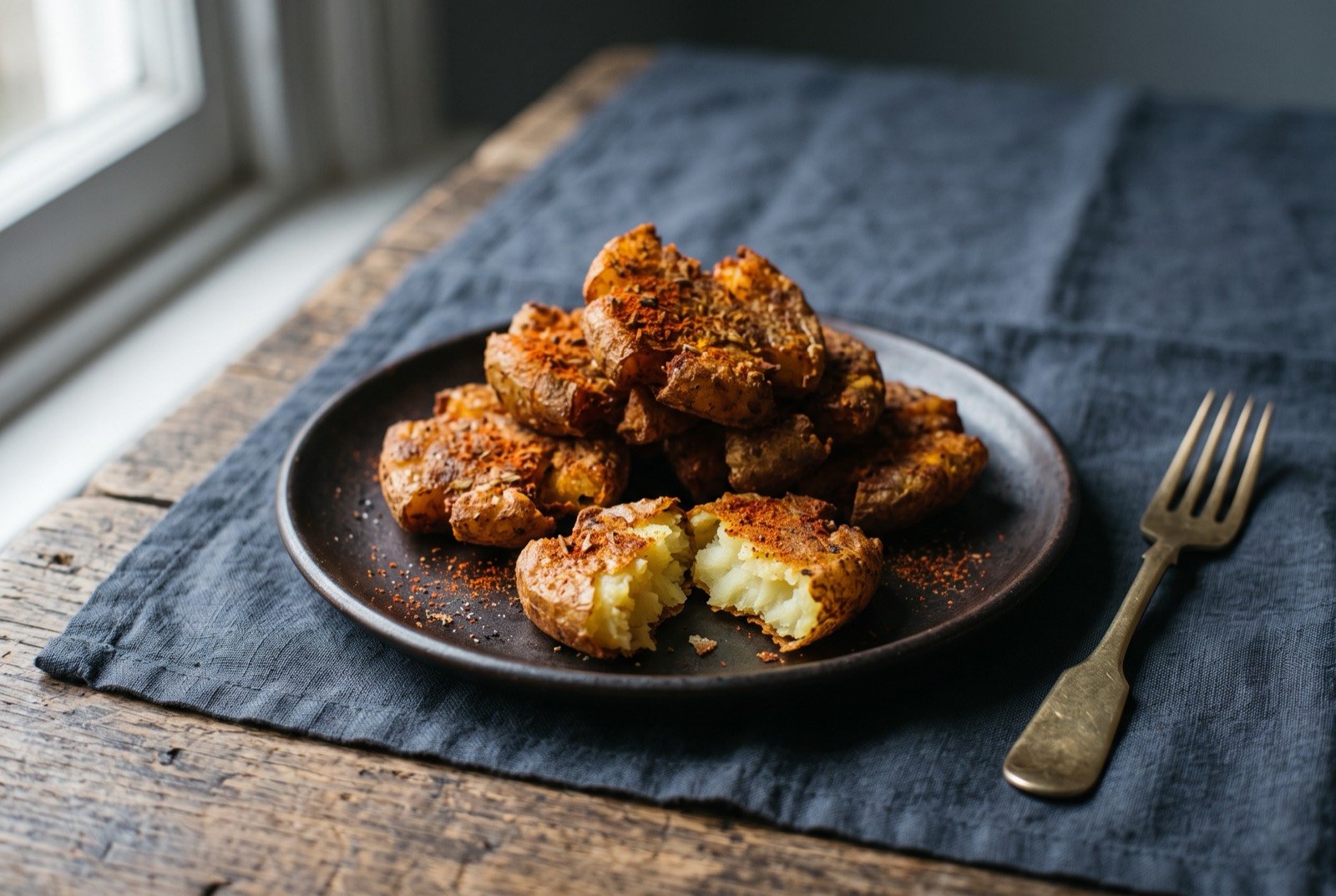
A double-fried potato snack whose defining technique is the second fry, not optional to the dish's identity: potato wedges are par-fried until soft and lightly golden, cooled, lightly crushed, which is what "tuk" refers to, cracking the surface so spices cling, then fried a second time at higher heat until shatteringly crisp. Finished with chilli powder, cumin-coriander powder and amchur for extra tartness.
As tradition built it
Serves 4 as a side. About 40 minutes.
Ingredients
- 4 medium potatoes, peeled and cut into thick wedges
- for frying oil, for frying
- 1 tsp chilli powder
- 1 tsp cumin-coriander powder, freshly ground
- 1/2 tsp amchur
- to taste salt
Method
- Par-fry the potato wedges in moderately hot oil until soft and just lightly golden, about 6 to 8 minutes.
- Remove and cool completely.
- Lightly crush each wedge with the flat of a knife or the back of a spoon, just enough to crack the surface without breaking it apart.
- Fry a second time in hotter oil until deeply golden and shatteringly crisp, 4 to 5 minutes.
- Drain, then toss immediately with the chilli powder, cumin-coriander powder, amchur and salt.
What a modern chef changes
A third drying stage, a precise fry temperature, and a tamarind-yoghurt dip
Three named changes
Method
- First, after the par-fry and crush, the wedges are dried in the dehydrator for 20 minutes before the second fry, pulling surface moisture that would otherwise flash to steam and soften the crust, extending the traditional two-stage fry into a three-stage one.
- Second, the second fry's oil temperature is held precisely at 190°C rather than judged by eye, giving a more consistent, evenly shattering crust across every wedge.
- Third, the finishing spice is ground fresh in the spice grinder immediately before tossing rather than used pre-ground, and served alongside a tamarind-yoghurt dip, referencing Sindhi kadhi's own tamarind souring, rather than the tradition's dry spice finish alone.