The Indian subcontinent · Volume 14, The Langar, the Spit and a Coast Without a Restaurant
Sindhi biryani
Sindh
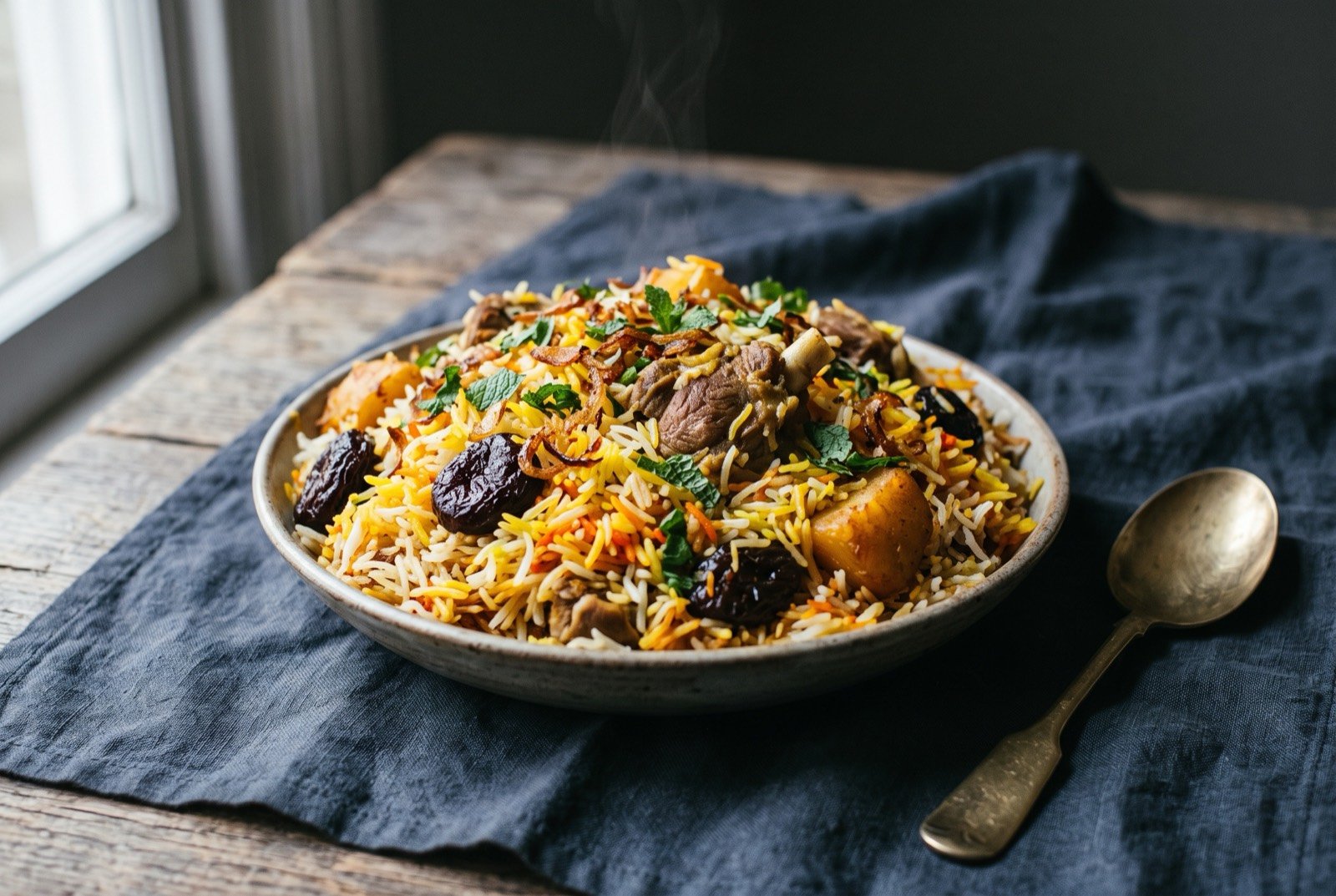
An illustration of the dish, not a photograph of it cooked.
- Time
- 2 hours
- Reviewed
- Not yet reviewed from inside the tradition
- Cooked
- Not yet cooked and reported
Distinguished from every other regional biryani by a built-in tartness stacked in three separate layers rather than delivered by one souring agent: sour yoghurt in the marinade, charred and pureed tomato in the base, and rehydrated dried sour plums, aloo bukhara, stirred through the gravy, balanced against a small deliberate pinch of sugar so the result reads as complex rather than simply sharp. Fried potato is layered in alongside the meat, one of the two elements, together with the dried plums, that most clearly marks this biryani apart from its Hyderabadi or Lucknawi cousins.
As tradition built it
Serves 6. About 2 hours.
Ingredients
- 400g bone-in chicken or 1.1lb (500g) bone-in lamb or mutton, in 2-inch pieces
- 300g basmati rice, soaked 2 hours
- 200g full-fat yoghurt
- 6 tomatoes, charred and pureed
- 10 to 12 dried plums (aloo bukhara), rehydrated 7 to 8 minutes in 250ml boiling water
- 3 onions, finely sliced and fried until golden, half reserved for layering
- 12 garlic cloves, made into a paste
- a 2-inch piece ginger, made into a paste
- 3 green chillies, sliced
- 250g potatoes, cut into wedges and deep-fried until nearly cooked
- 2.5 tsp cumin, for the spice blend
- 1 tsp shahjeero, for the spice blend
- 1 tsp black peppercorns, for the spice blend
- 8 to 12 Kashmiri dried chillies, for the spice blend
- 2 tsp coriander seed, for the spice blend
- 3/4 tsp fennel, for the spice blend
- a scrape nutmeg, for the spice blend
- 1 mace flower, for the spice blend
- 2 cinnamon sticks, for the spice blend
- 4 green cardamom, for the spice blend
- 1.5 tsp turmeric, for the spice blend
- 2 bay leaves, for the spice blend
- 100g ghee
- 2 tbsp oil
- 2 tsp salt
- 1/2 tsp sugar
- to layer fresh mint, to layer
- to layer coriander, to layer
- to layer lemon slices, to layer
- to layer kewra water, to layer
- a little food colouring, to layer
- a rope a rope of kneaded atta dough, to seal the pot
Method
- Bloom the whole spices in the ghee and oil.
- Cook the sliced onion 8 to 10 minutes until soft, add the meat and sear 5 to 7 minutes, then add the tomato puree, ginger-garlic paste, chillies and ground spice, and cook, stirring, until the oil visibly separates back out, the bhuna marker (rung 3).
- Stir in the rehydrated plums, 2 tsp salt and the sugar, then the yoghurt and 300ml hot water.
- Cover and simmer 20 to 25 minutes, or up to 1.5 hours for lamb, until the meat is tender, then fold in the fried potatoes.
- Parboil the rice in salted, lightly vinegared water with a bay leaf, 8 to 9 minutes, to about 75 percent doneness, and drain.
- Layer half the rice over the meat, scatter with reserved fried onion, mint, coriander, lemon slices and kewra water, then the remaining rice on top, dotting a little food colouring over the top layer for the traditional streaked look.
- Seal the pot's rim with the dough rope, cover, and cook 5 minutes on medium-high heat then 20 to 25 minutes on the lowest heat the hob allows.
- Rest, covered, 10 minutes before opening.
What a modern chef changes
The base built sous vide and finished as a clarified jus, the dum seal held in an oven
Rungs 5 and 6
Method
- First, the meat is cooked sous vide (75°C for lamb, roughly 4 hours) to a controlled, evenly tender doneness before it ever meets the biryani base, removing the guesswork of stovetop timing from the equation entirely.
- Second, the tomato-yoghurt-plum base is finished not as a gravy the meat sits in but as a separate sauce: the plums are blitzed in a high-power blender to a silky essence rather than left in pieces, and the whole base is passed through a chinois for total clarity, then reduced to a pourable jus finished tableside over the rice rather than folded through it.
- Third, the dum seal is retained in full (rung 6, unchanged, because it already works), but the sealed pot finishes in a precision-controlled oven rather than an unwatched hob flame, holding the exact low, steady heat the trapped steam needs without the risk of scorching the base.