The Indian subcontinent · Volume 14, The Langar, the Spit and a Coast Without a Restaurant
Peshawari karahi
Peshawar, Khyber Pakhtunkhwa
Illustration
- Time
- 45 minutes
- Researched
- Researched from 48 sources in the brief
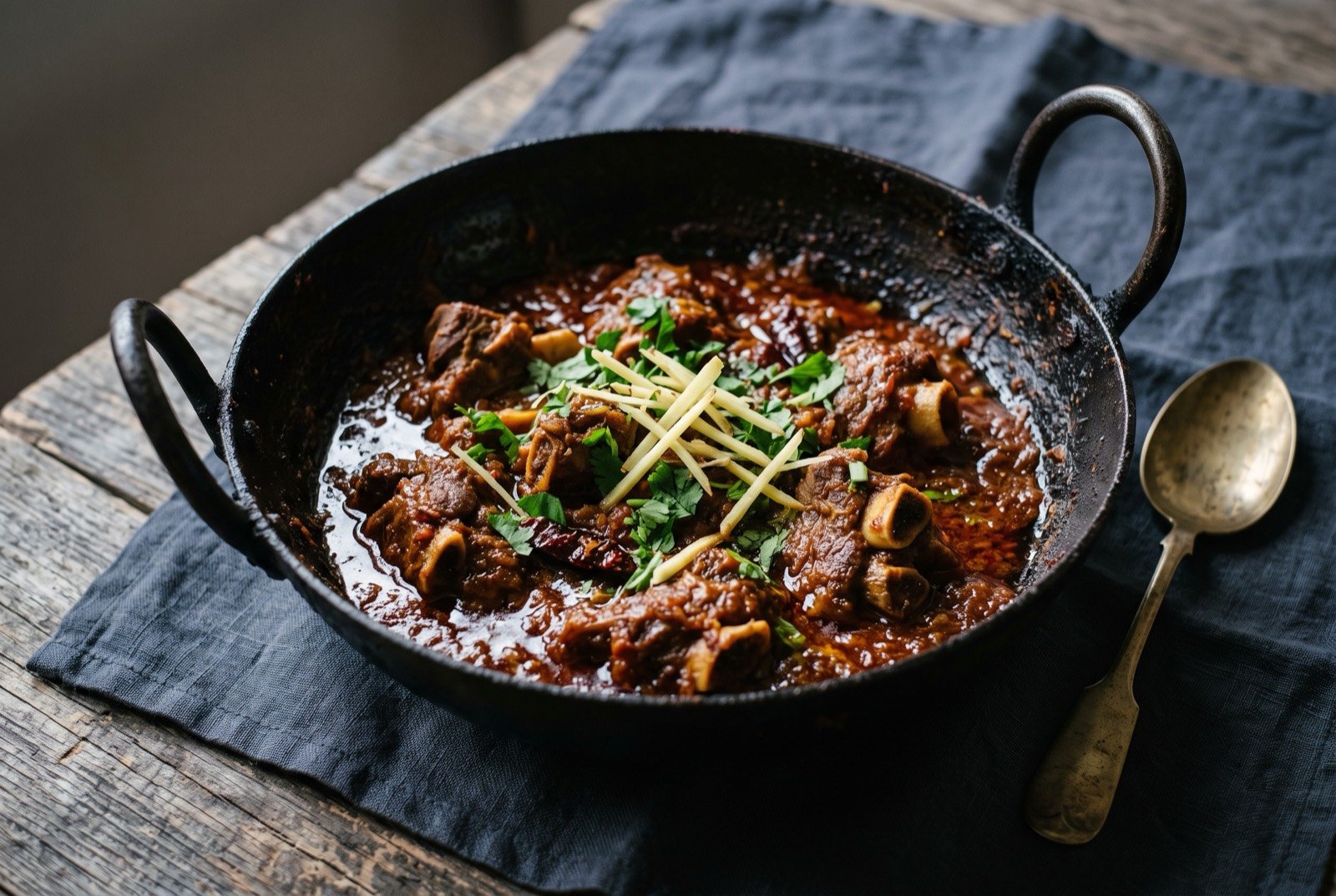
The Frontier's own version of the wok-cooked karahi family, built without onion in the base, using tomato, ginger, garlic, green chilli and fresh coriander instead, cooking in roughly 30 to 50 minutes. The whole dish turns on the bhuna step: the masala cooked on high heat until the oil visibly separates back out, the marker that the raw spice smell has cooked off and the base has reached full depth.
As tradition built it
Serves 4. About 45 minutes.
Ingredients
- 1kg bone-in lamb, goat or chicken, cut into pieces
- 6 tomatoes, chopped
- a 2-inch piece ginger, roughly chopped
- 8 garlic cloves, roughly chopped
- 3 to 4 green chillies, whole or sliced
- 100ml oil or ghee
- 1 tsp cumin seeds
- to taste salt, to taste
- to finish fresh coriander, to finish
- to finish julienned ginger, to finish
Method
- Heat the oil in a karahi or heavy wok.
- Add the cumin seeds, then the meat, and sear over high heat until browned all over.
- Add the tomatoes, ginger, garlic, green chillies and salt.
- Cook uncovered over high heat, stirring often, until the tomatoes break down completely and the oil visibly separates back out from the sauce, roughly 30 to 50 minutes depending on the cut.
- Finish with fresh coriander and julienned ginger.
What a modern chef changes
The bhuna isolated as its own reduction, the meat added only to finish
Rung 3
Method
- First, the meat is cooked sous vide to a precise doneness before it ever meets the karahi, so the pan stage becomes entirely about building the masala and searing the exterior rather than doing double duty as the cooking method.
- Second, the base is blitzed in a high-power blender to a completely smooth puree and passed through a chinois, removing every fibrous trace of skin and seed so the sauce that clings to the meat is silken rather than rustic.
- Third, the bhuna stage is isolated as a sauce-only reduction, cooked hard on its own until the oil separates, then the pre-cooked meat is added only at the very end purely to sear and take on the finished sauce, a deliberate inversion of the traditional method that treats the bhuna marker as the dish's actual technical heart rather than a step along the way.
- A finishing drizzle of house-made chilli oil, the same green chillies infused into warmed oil and strained, replaces the whole chillies scattered over the tradition's finish.