The Indian subcontinent · Volume 14, The Langar, the Spit and a Coast Without a Restaurant
Sindhi koki
Sindh
Illustration
- Time
- 15 minutes
- Researched
- Researched from 48 sources in the brief
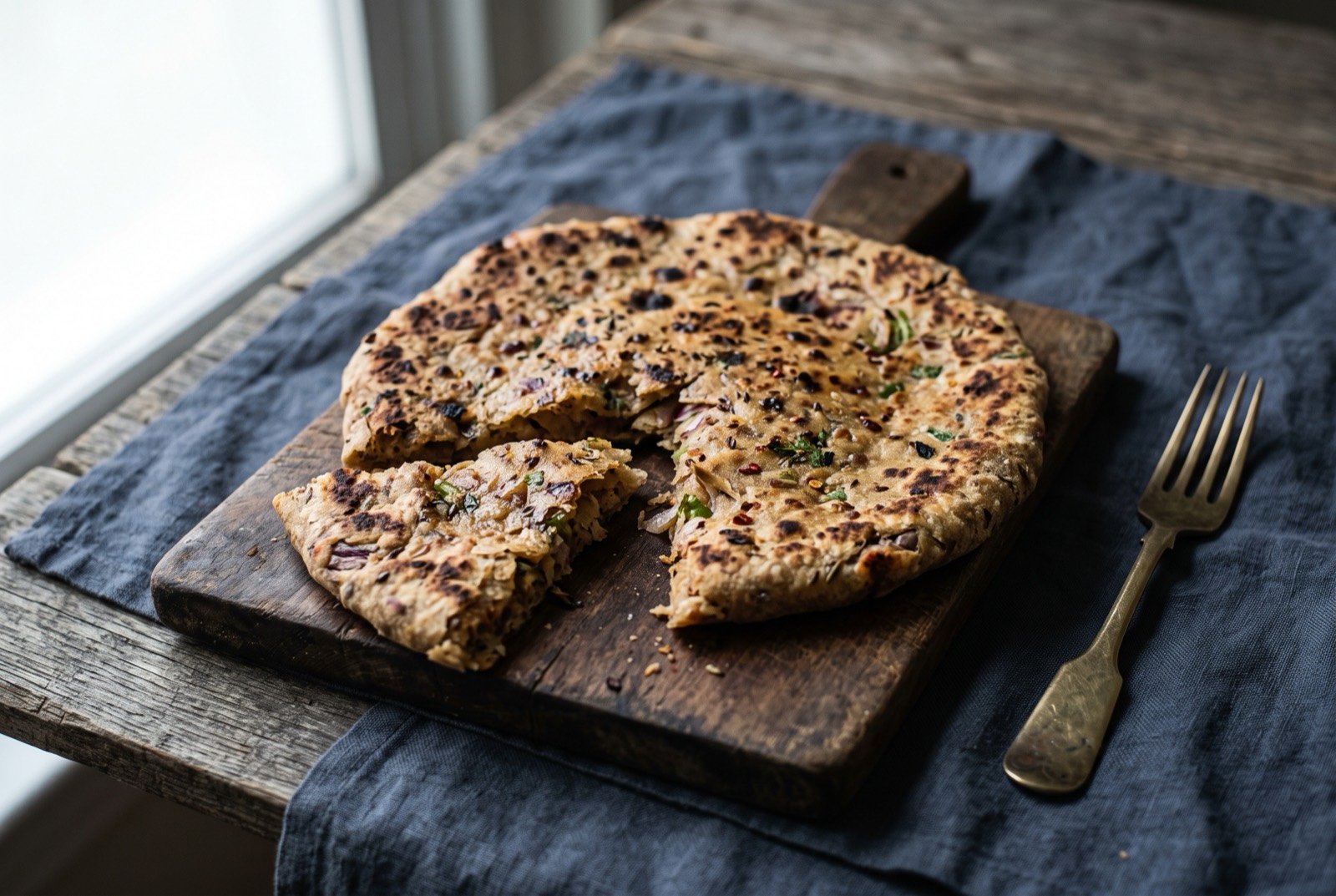
A whole wheat flatbread enriched with chopped onion, green chilli, coriander, ajwain, cumin, black pepper and danu khatta, its defining technique a deliberately crumbly, stiff dough, never smooth, rolled into small discs and double-rolled and double-cooked on a hot skillet, about two minutes per side, producing a flaky exterior and a chewy interior that mark it apart from a standard paratha.
As tradition built it
Makes 6 to 8. About 15 minutes.
Ingredients
- 300g wholewheat atta
- 1 small onion, finely chopped
- 1 to 2 green chillies, finely chopped
- a small handful a small handful of coriander, chopped
- 1 tsp ajwain
- 1 tsp cumin
- a good grind black pepper
- 1 tbsp danu khatta (dried pomegranate seed), crushed
- to taste salt
- as needed ghee or oil, for cooking
- as needed water, as needed, kept minimal
Method
- Mix the flour with the onion, chilli, coriander, ajwain, cumin, pepper, danu khatta and salt.
- Add water gradually, working it in just enough to bring the mixture together into a rough, deliberately stiff dough, resisting the urge to knead it smooth.
- Divide into 6 to 8 balls and roll each into a disc about 3 to 4 inches across, on the thicker side.
- Cook on a hot, dry skillet, then brush with ghee, flip, brush the other side, and repeat the roll-cook-brush sequence a second time, about 2 minutes per side in total, until both faces are deeply spotted and the koki holds together with a slight crackle when broken.
What a modern chef changes
A dried cracker pair, brown butter, and a surface-only sour glaze
Three named changes
Method
- First, a portion of the dough is rolled paper-thin and fully dried in the dehydrator rather than skillet-cooked, producing a crisp cracker version served alongside the traditional thick koki as a textural pair rather than a replacement.
- Second, the finished koki is brushed with a brown butter, ghee cooked past its clarified stage until the milk solids turn nutty and amber, rather than plain ghee, adding a depth the traditional quick brushing does not have time to develop.
- Third, the ajwain and cumin are toasted and ground fresh in the spice grinder immediately before mixing rather than used pre-ground, and the danu khatta is reduced with a little water to a thin glaze brushed over the finished bread rather than worked whole into the dough, giving a cleaner, more concentrated sour hit on the surface where it is tasted first.