The Indian subcontinent · Volume 14, The Langar, the Spit and a Coast Without a Restaurant
Balochi rosh
Balochistan
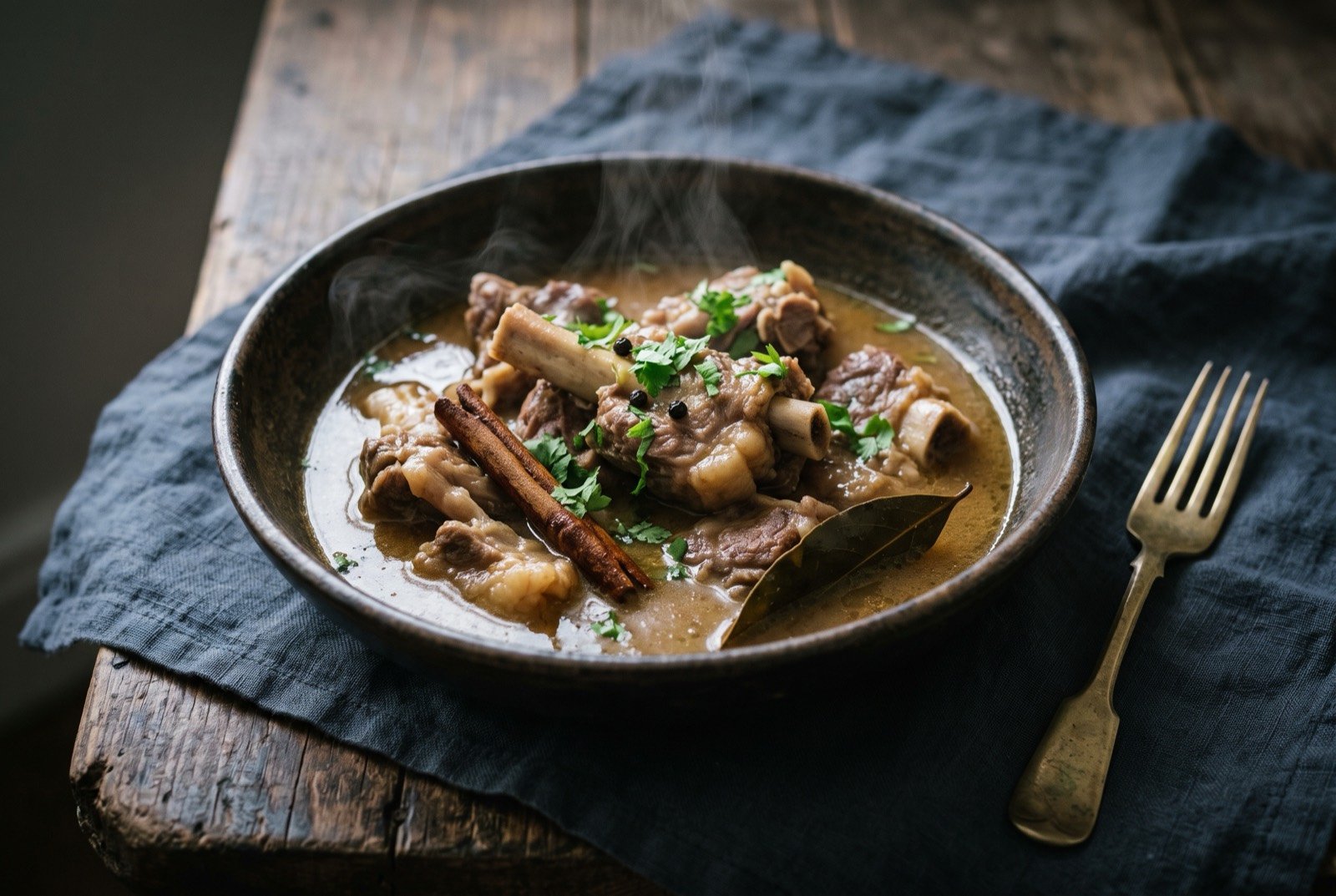
An illustration of the dish, not a photograph of it cooked.
- Time
- 3 hours 30
- Reviewed
- Not yet reviewed from inside the tradition
- Cooked
- Not yet cooked and reported
A cut-meat counterpart to sajji rather than a whole-animal dish: lamb, rubbed with coarse salt, rested, rinsed and dried, then slow-cooked in a pot with garlic, ginger, onion and further spices and herbs over roughly three hours until tender. Described as the dish that draws the most visitors to Quetta's restaurants after sajji itself, and specifically a winter dish. One commercial source gives a restaurant-kitchen ratio of 40kg of lamb to 250g each of chopped garlic and ginger, a ratio this recipe scales down for a home kitchen rather than quoting at catering volume.
As tradition built it
Serves 6. About 3.5 hours.
Ingredients
- 1.5kg lamb shoulder or leg, cut into large pieces
- 2 tbsp coarse salt
- 2 onions, sliced
- 9g garlic, chopped (about 2 to 3 cloves, scaled from the commercial ratio above)
- 9g ginger, chopped
- to taste black pepper
- to taste bay leaf
- 1 cinnamon stick
- to cover water to cover
- as needed oil
Method
- Rub the lamb with the coarse salt and leave to rest 30 minutes, then rinse and pat dry.
- Heat oil in a heavy pot and brown the meat in batches.
- Add the onion, garlic and ginger and cook until softened.
- Return the meat to the pot with the whole spices and enough water to cover.
- Bring to a simmer, cover, and cook gently around 3 hours, until the meat is fully tender and the liquid has reduced to a light sauce.
- Serve with kaak or rice.
What a modern chef changes
A twelve-hour sous vide braise, a reduced jus and a finishing sear
Three named changes
Method
- First, the meat is cooked sous vide at 68°C for 12 hours, a temperature and time that renders connective tissue to full tenderness without the risk of the stovetop simmer overcooking the outer surface before the centre catches up.
- Second, the braising liquid, built separately from the aromatics and any trim, is reduced hard and passed through a chinois into a concentrated, glossy jus rather than left as the thin cooking liquor.
- Third, the sous vide meat is finished with a short, very hot sear just before serving, restoring the Maillard crust a three-hour stovetop simmer never develops, plated with dehydrated garlic chips, made by slicing garlic paper-thin and drying it to a crisp, scattered over the top for a textural note the tradition's soft, cooked-through garlic does not offer.