Southern Africa · Volume 21, The Most Layered Plate
Bobotie
Cape Muslim, Afrikaner, Dutch and Roman, depending on whom you ask
Illustration
- Time
- 1 hour 15
- Researched
- Researched from 166 sources in the brief
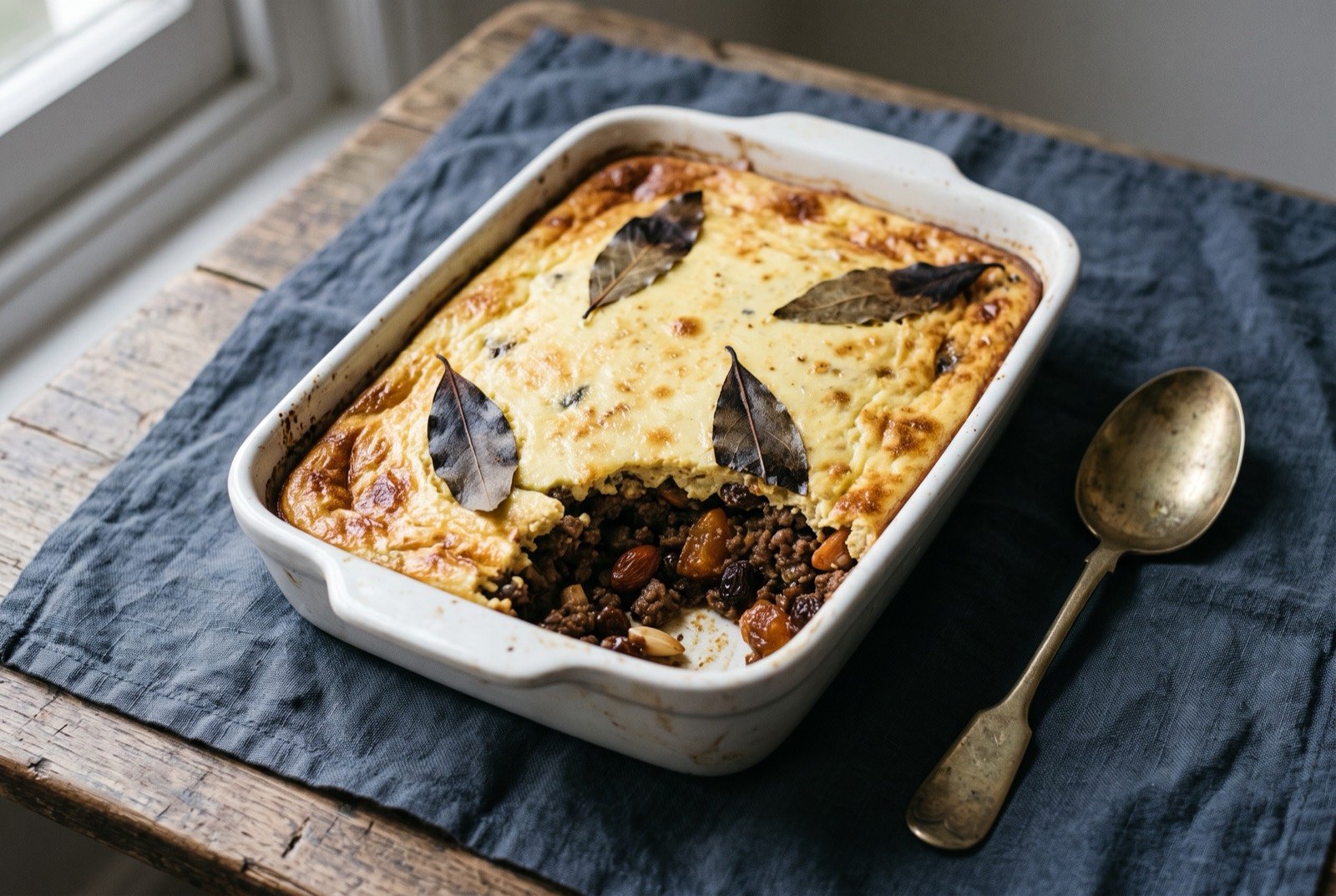
Bobotie is the dish this chapter refuses to adjudicate. What is not contested is the technique: a spiced, sweet and sour minced meat base under a loose baked custard, with bay leaves laid on the surface.
As tradition built it
Serves 6. 1 hour 15.
Ingredients
- 1 kg beef mince
- 50 g butter
- 500 g onion, finely chopped
- 30 g garlic and ginger paste
- 30 g sultanas and 30 g raisins
- 150 g apricot chutney
- 50 g Worcestershire sauce
- 50 g tomato paste
- 30 g brown sugar
- 12 g ground ginger, 12 g curry powder, 2 g turmeric
- 8 g salt
- 2 large eggs
- 350 g whole milk
- 4 bay leaves
Method
- Melt the butter and cook the onion down properly, well past translucent, until sweet and collapsing.
- Add the garlic and ginger, then the ground ginger, curry powder and turmeric, and let them bloom in the fat before anything wet goes in.
- Add the mince and brown it, breaking it up.
- Add the sultanas and raisins, chutney, Worcestershire, tomato paste, sugar and salt, and cook until thick and glossy.
- Press into a ceramic dish. Beat the 2 eggs with the 350 g milk, pour over, and lay the bay leaves on top.
- Bake at 180°C for 35 to 40 minutes, ideally in a bain marie to stop the edges overbrowning.
Notes
Note the custard ratio: roughly 1 egg per 175 g of milk. That is a very loose custard by pastry standards, deliberately so: a tighter one, 1 egg per 100 g or less, sets into an omelette and cracks, while this sets into a barely holding, spoonable layer that stays soft against the meat. The bain marie is not fussiness; it is the difference between a custard and a scrambled egg lid. The bay leaves are not decoration either: laid on the surface they infuse the milk fat directly and scorch slightly at the edges, which is where bobotie's faintly medicinal top note comes from. Leipoldt's 1933 recipe already specifies the egg and milk topping.
Two honest notes. Most published bobotie recipes soak white bread in milk and work it into the mince; this one does not. Both are traditional, the bread version being the older, poorer and looser form. And these weighed quantities are not from an in-tradition Cape Muslim source. They are internally coherent and the custard ratio is technically sound, which is why they are printed, but they should be replaced by Fatima Sydow's or Cass Abrahams's version. See the final section.
What a modern chef changes
Spice staged rather than dumped, the custard set as a custard, and the sweet-sour axis rebuilt from its parts
Rungs 5 and 1
Method
- Stage the spice in three. Whole cinnamon, clove and cardamom into the butter with the onion at the start and fished out at the end. Ground turmeric, ginger and curry blend bloomed in the fat before the mince. Fresh grated ginger stirred through off the heat. Three volatility classes, three moments.
- Cook the custard at 150°C in a bain marie and pull it at 78°C internal. Egg custard sets between roughly 75 and 82°C, and bobotie custards crack and weep because 180°C in a dry oven takes the edges to 95°C before the middle sets. Give the meat base a ten minute head start at 180°C so it is hot before the custard goes on.
- Replace the chutney with its parts: 100 g dried apricots soaked in 50 ml brown vinegar and chopped, 20 g brown sugar, and a tablespoon of tamarind paste. The same sweet-sour axis with real fruit acidity and pectin body instead of a jar of sugar. This is the Cape axis as it actually is: dried fruit, vinegar and tamarind, not brown sugar.
- Infuse the milk with bay before it meets the egg, at 70°C for 20 minutes, then lay fresh bay on top as well. Scorched leaf on the surface, bay perfume all the way through.