Southern Africa · Volume 21, The Most Layered Plate
Umngqusho
Xhosa Eastern Cape
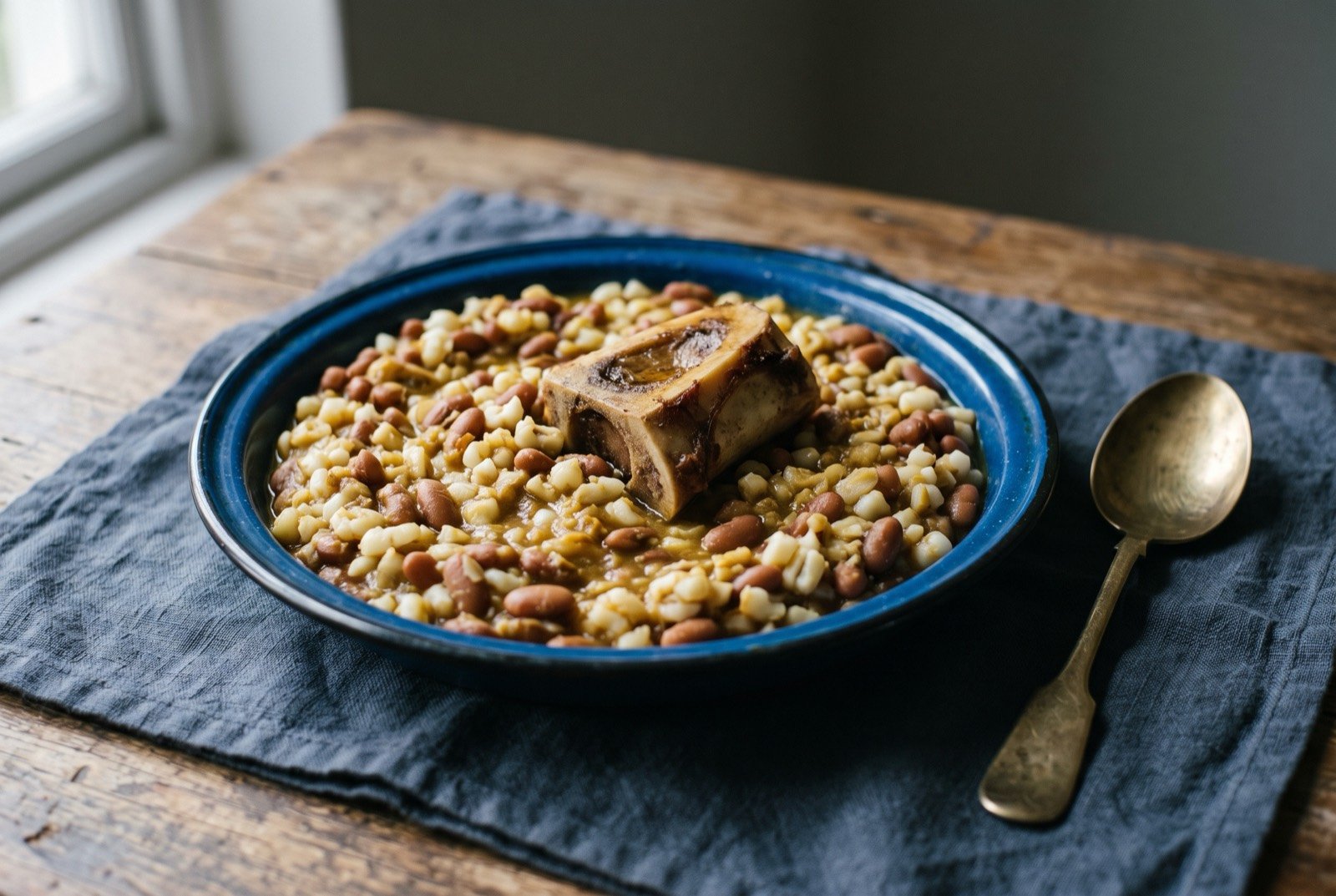
An illustration of the dish, not a photograph of it cooked.
- Time
- Hands on 2 hours · Waiting 8 hours
- Reviewed
- Not yet reviewed from inside the tradition
- Cooked
- Not yet cooked and reported
Samp is dried white maize pounded and stamped until the pericarp is knocked off and the kernel broken, but not milled. Because the germ and most of the endosperm are intact, it hydrates from the outside in over hours rather than minutes.
As tradition built it
Serves 6 to 8. About 2 hours, plus an overnight soak.
Ingredients
- 250 g dry samp
- 250 g sugar beans
- 500 g meat bones, marrow bones for preference
- 1 onion, chopped
- 1 tsp garlic
- 1 tsp curry powder
- 1/2 tsp turmeric
- 1 tsp BBQ spice
- 1 tomato, grated
- 1 large potato
- 250 ml chicken stock
- to taste bay leaf, thyme, salt
Method
- Soak the samp and beans together overnight. Skipping it costs you two hours, not twenty minutes.
- Drain, cover with fresh water, and boil 1 hour.
- Add the bones, onion, garlic, curry powder, turmeric, BBQ spice, tomato, potato, stock, bay leaf, thyme and salt. Simmer a further 1 hour, until tender and most of the liquid is absorbed.
- Season late and taste twice.
Notes
After Mogau Seshoene, The Lazy Makoti.
Nomalizo's austere version, recorded by her grandson Ray Mahlaka, is 3 cups samp and bean mix to 5 cups cold water, soaked overnight, brought to the boil with onion, bay and garlic, then simmered low 1 to 2 hours. Without soaking, 3 to 4 hours. Cook that one at least once, with nothing on it.
Why the ratio is 1 to 1 by weight. Samp and sugar beans hydrate on comparable curves, so the soak brings both to a similar water activity and they finish at the same moment. Cook them unsoaked and the beans blow out before the samp has softened.
What a modern chef changes
Marrow used as the fat it is, staged salt, and a closed pot
Rungs 5, 1 and 4
Method
- Roast the marrow bones first and use the marrow deliberately. Twenty minutes at 220°C, then scrape it out. Umngqusho has almost no fat in it, and marrow is the fat the tradition already supplies. Stir half through at the end, spoon the rest over, and put the bones in the pot as usual.
- Salt in three stages: in the soaking water at 1 per cent, again when the bones go in, and a correction at the end. On a dish this plain that is the difference between deep and flat.
- Cook it closed, not open. Lid on, oven at 140°C for the second hour, liquid low. Rung 1: the samp above the bones steams rather than boils and stays as discrete swollen kernels instead of collapsing into porridge.
- Put amasi or strained kefir on the table. Rung 4. The Eastern Cape plate is starch and salt with a sour dairy beside it, and reproducing the starch without the sour is reproducing half a dish.