The Nordics and the Baltic · Volume 25, Rye, Manor and the Fast Night Table
Kama
Estonia
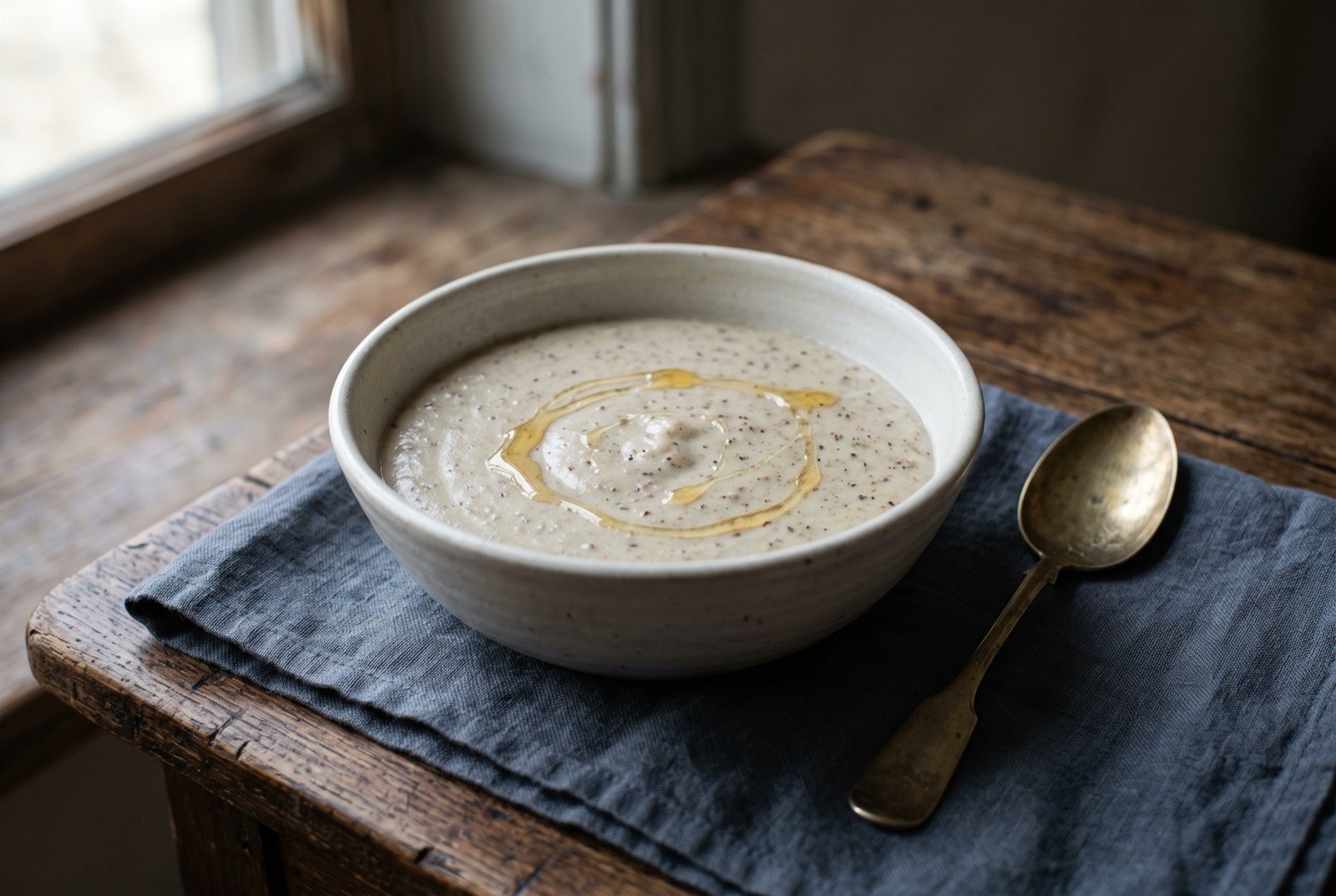
An illustration of the dish, not a photograph of it cooked.
- Time
- Not statedNo source states a time and the atlas has too few comparable dishes to estimate one.
- Researched
- No outside sources linked
- Reviewed
- Not yet reviewed from inside the tradition
- Cooked
- Not yet cooked and reported
Estonia, originally Mulgimaa, now nationwide.
As tradition built it
Ingredients
- 5 kg barley
- 5 kg rye
- 5 kg wheat
- 10 kg oats
- 3 kg peas
- 2 kg beans
- to taste sour milk, kefir or yogurt, to mix, to taste
Method
- Roast and cook each grain (barley, rye, wheat, oats) separately.
- Dry each grain, then grind it on its own into flour.
- Blend the ground flours together with the peas and beans.
- Stir the kama flour into sour milk, kefir or yogurt to taste: thinner for drinking, thicker as a spoon-eaten porridge (kamapudruks).
Notes
This is one recorded household ratio, run at bulk scale; grains, peas and beans were traditionally mixed in whatever proportion a household actually grew.
What a modern chef changes
A silken, aerated kama mousse, not a coarse porridge
Method
- Roast each grain separately to its own optimal colour, oats lightest, rye darkest, rather than one blended roast.
- Grind each grain in a dedicated spice grinder to a genuinely fine flour, finer than a stone mill typically achieves.
- Fold the finished kama flour into a high-power blender with live kefir and a touch of set honey; blend until fully aerated.
- Pass through a chinois for a silken, mousse-like result entirely unlike the traditionally coarse porridge.
- Serve chilled in a glass as a dessert course rather than a breakfast, with a few whole roasted grains scattered on top for texture.