Southern Africa · Volume 20, Desert, Coast and Funge
Oshifima with ombidi
Ovamboland, northern Namibia
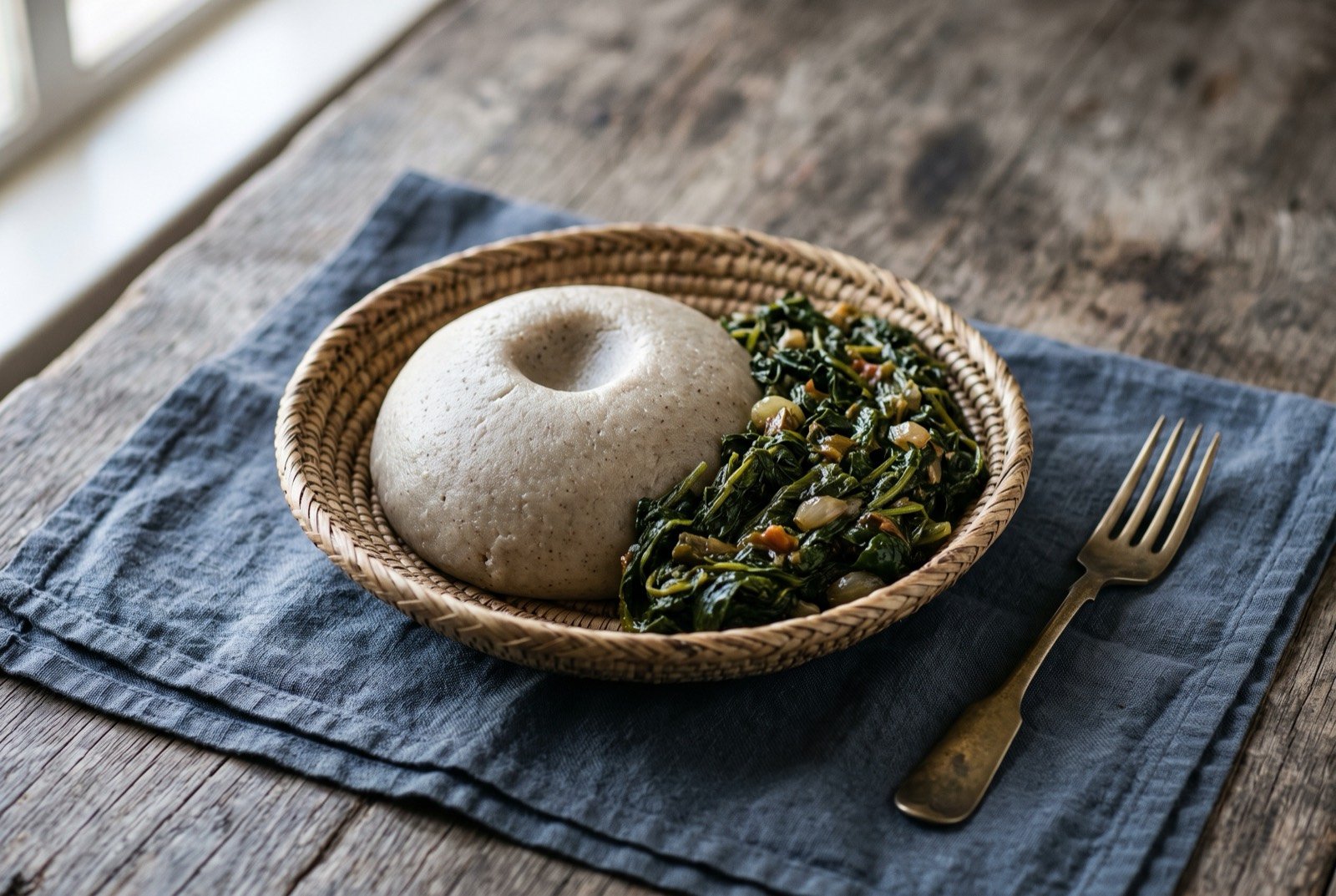
An illustration of the dish, not a photograph of it cooked.
- Time
- 15 minutes
- Reviewed
- Not yet reviewed from inside the tradition
- Cooked
- Not yet cooked and reported
Oshifima is the mahangu and maize porridge of the Namibian north, eaten with wild greens, a stew, or soured milk, and it uses the identical slaking principle as funge, done in the pot rather than in a bowl.
As tradition built it
Serves 4. About 15 minutes.
Ingredients
- 1.6 L water
- 160 g maize meal
- 180 g mahangu (pearl millet) flour
- to taste a good pinch of salt
Method
- Heat the water to lukewarm, not boiling. Add the maize meal and salt and stir smooth. This is the slake, done in the pan.
- Bring to the boil, stirring occasionally, and cook about 2 minutes once it bubbles.
- Add the millet flour slowly with one hand while stirring hard with the other, holding the pan handle, until smooth.
- Drop the heat and cook 1 to 2 minutes more, still stirring.
- Turn out and shape. It is eaten from one basket by up to five people: wash hands, roll a ball in the right hand, press a dimple with the thumb to hold more sauce, dip, eat.
Notes
The only fully weighed method in the Namibian half of the chapter, from the Namibian cook Ester Nghikembua. The ratio is about 4.7 parts water to 1 part total flour.
For ombidi, gathered greens from the oshana margins are cooked down long and often finished with a little marula kernel oil.
What a modern chef changes
The two-flour logic understood, and both substitutions named honestly
Rungs 1, 6 and 2
Method
- The two flours are not a compromise and the order is not arbitrary. Maize is the structural flour and goes first because it needs longer; mahangu is finer, swells faster, and goes into an already-gelatinised base where it can disperse without seizing. Maize alone gives a bland, slightly slimy porridge. Mahangu alone is grey, dense and expensive.
- Two substitutions, stated rather than hidden. Mahangu flour, as distinct from generic millet flour, is not available in Britain in any form I could verify; a fine millet flour from a mill rather than a health-food shop is the closest, and it is not the same. Food-grade marula kernel oil is also not available: cosmetic marula oil is easy to buy and is not sold to food standards, and you should not cook with a skincare oil. Cold-pressed unroasted hazelnut or macadamia gets the soft nutty lift and none of the specificity.
- For ombidi, cook the greens far longer than seems reasonable. Frozen spinach cooked half an hour with a handful of groundnut paste is the honest British approximation; fresh spinach and kale collapse before they develop anything.
- Serve it with soured milk on the side and no salt on the table. A thick live kefir, or drained natural yoghurt soured a further 24 hours at room temperature, stands in for omashikwa and supplies the acid axis this plate is built around.