Southern Africa · Volume 20, Desert, Coast and Funge
Seswaa
Botswana
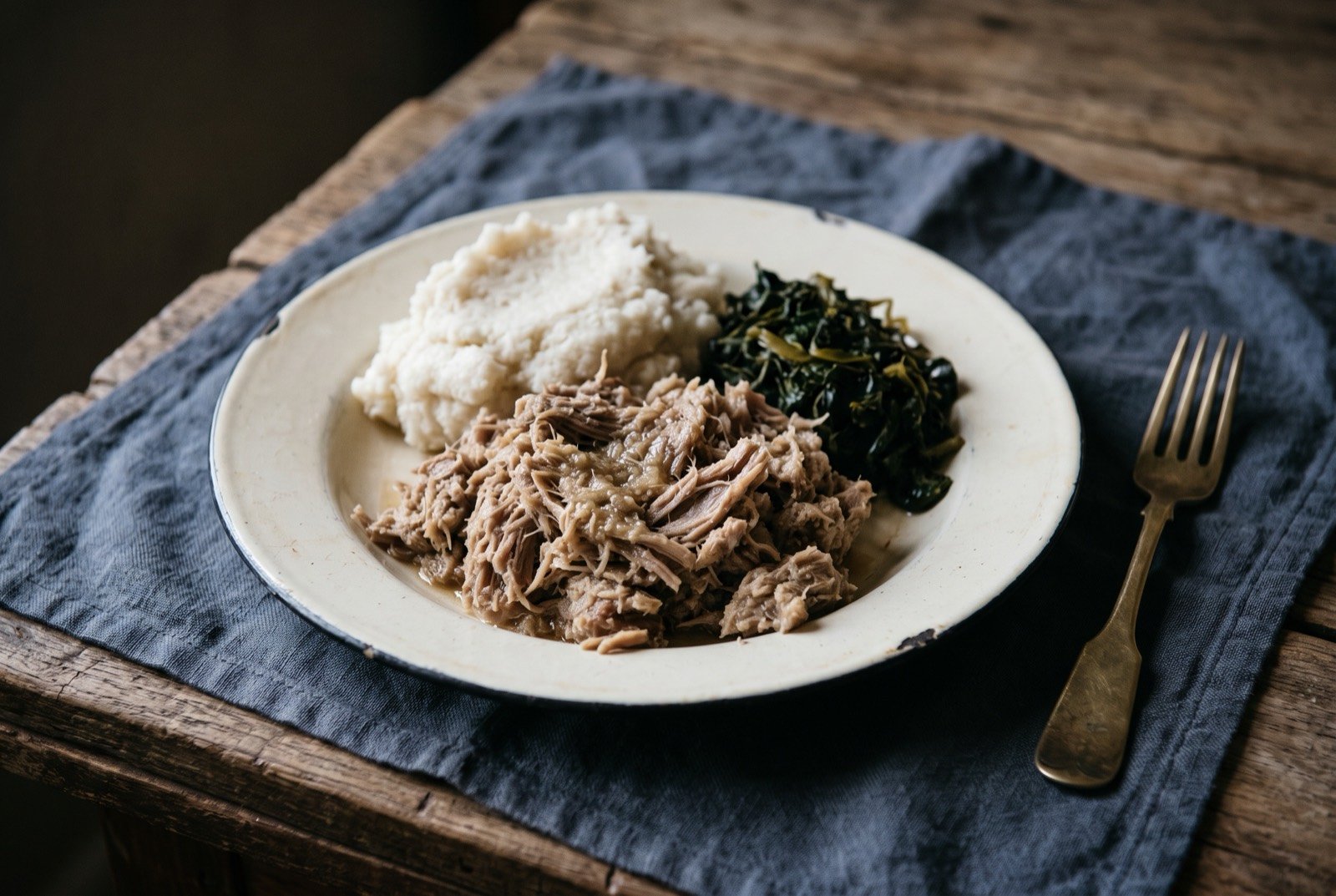
An illustration of the dish, not a photograph of it cooked.
- Time
- 4 hours 30
- Reviewed
- Not yet reviewed from inside the tradition
- Cooked
- Not yet cooked and reported
Seswaa, also chotlho or tshotlo, is Botswana's national dish and the dish of every kgotla gathering, wedding and funeral. At those occasions it is the men who cook it, which is unusual for the region; whether that is a rule with exceptions or a very strong tendency I could not establish from an ethnographic source, so I have put it that way. Kenneth Tebogo Middleton, the Motswana cookbook author, already cooks a luxury seswaa slow-braised with red wine and beef stock. That is an elevation of this dish already existing, made by a Motswana, and the honest thing is to engage with it rather than invent a rival. What it changes is the braising medium; what it keeps is the pound. This chapter goes the other way, keeping the medium and being stricter about everything else.
As tradition built it
Serves 8. About 4 hours 30.
Ingredients
- 2 to 3 kg lean beef on the bone: shin, leg or neck
- to cover water to cover
- 1.5 tsp salt
- to taste chilli powder (optional)
- 2 to 3 extra marrow bones, for the frying step
Method
- Cut the beef into large pieces, put in a heavy pot, cover with water. Add the salt and the chilli powder, if using, now, at the start. Over four hours it reaches the centre of the meat, which is the only way an unseasoned dish can taste of anything.
- Simmer, low, about 4 hours, stirring occasionally, until the meat falls off the bone. Traditionally in a three-legged cast-iron pot over an open fire.
- Drain, and keep the liquor.
- Scoop the marrow from the bones and fry the drained meat in it over medium heat.
- Pound in a mortar with a pestle, or crush with a heavy wooden spoon, until it flakes into a coarse floss. Not shredded with forks. Pounded.
- Serve on bogobe or phaletshe with morogo and often butternut.
Notes
From Kutlwano, the Government of Botswana's magazine.
Two honest notes. The four-hour figure is for a domestic hob at a controlled simmer; a three-legged pot over wood will not behave the same way and I have not watched one. And the rabbit version in the same source is boiled about thirty minutes, which shows the four hours is a function of beef shin's collagen load rather than a property of seswaa.
What a modern chef changes
The marrow restored, the pound protected, and the liquor put back under the dish
Rungs 3 and 6
Method
- Buy bone-in and ask for extra marrow bones. Marrow is a soft, largely monounsaturated fat carrying phospholipids, and frying the pounded meat in it re-fats the surface area the pound created, with the gelatin already in the meat acting as emulsifier. Supermarket boneless casserole packs cannot make seswaa, and no technique fixes that.
- Pestle, never blade. Pounding separates fibre bundles along the connective planes; a blade cuts across them and releases the interior as paste. A 20 cm granite mortar is the most important tool in this volume.
- Reduce the cooking liquor to a glaze and put it under the meat, not over it. Two litres down to 150 ml gives a dark, gelatinous spoonful that reads as depth under the seswaa and as gravy over it.
- Do not season it further, and put the acid beside it. If the plate needs lifting it needs madila or a spoonful of ting, not more salt.