Southern Africa · Volume 20, Desert, Coast and Funge
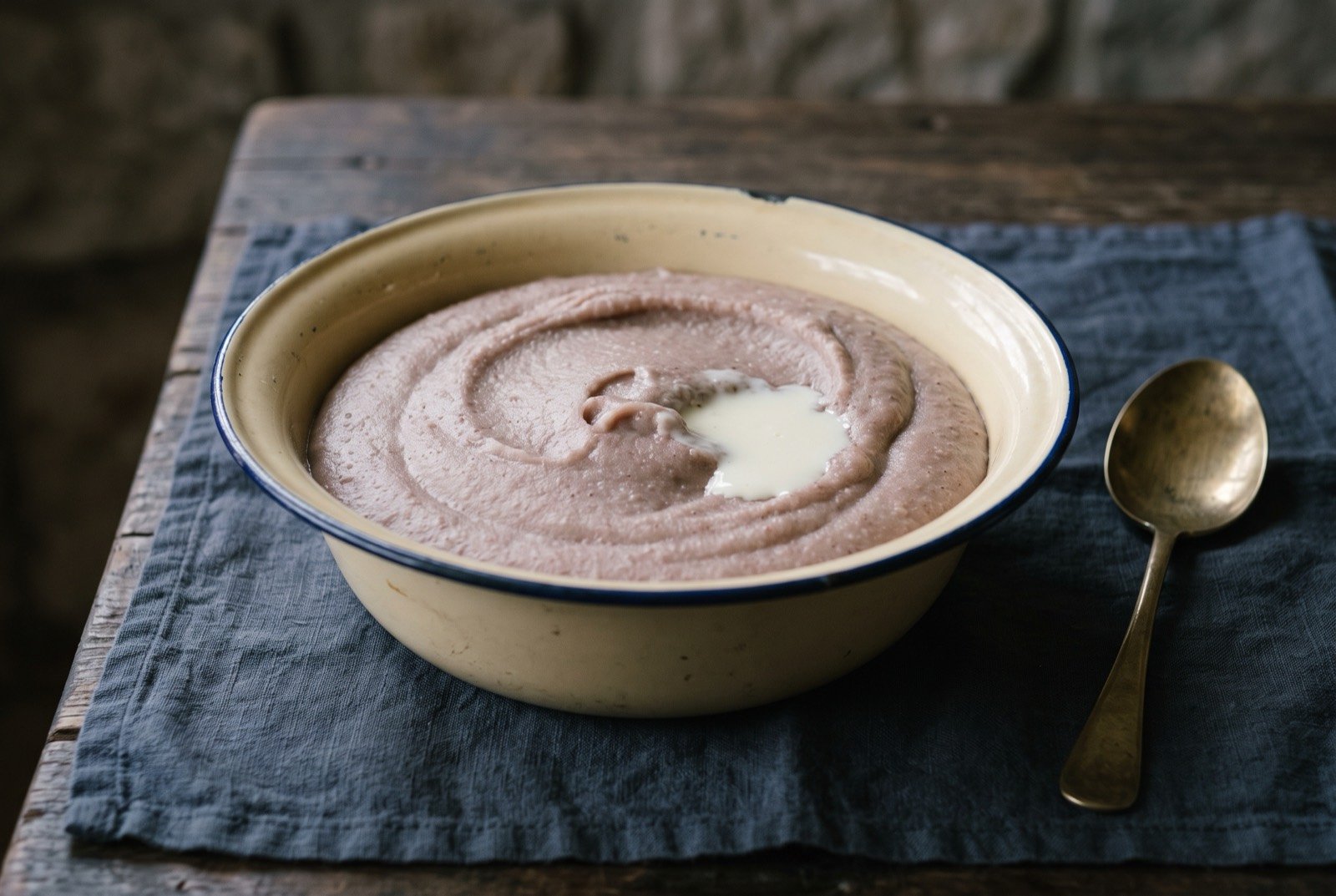
Bogobe jwa ting
Botswana
Illustration
- Time
- 30 minutes
- Researched
- Researched from 209 sources in the brief
Bogobe is the stiff porridge, motogo the thin one, and the difference is water and cooking time rather than recipe. Ting, fermented sorghum meal, is the one worth learning, because it is the acid axis of an entire national cuisine and it is quietly disappearing.
As tradition built it
Serves 4. 2 to 3 days fermenting, then 30 minutes.
Ingredients
- 250 g finely milled white sorghum meal (mabele)
- 500 ml warm water, for the ferment
- 1 L water, for cooking
- 1 tsp salt
- 1 tbsp ting from a previous batch, if you have it
Method
- Mix the sorghum meal with the warm water and the ting from a previous batch, if you have it, to a loose slurry in a non-reactive container. Cover and leave 2 to 3 days, ideally at 28°C, which the optimisation literature gives as the optimum at 72 hours.
- Readiness is judged by smell, when the aroma turns sharp. Chemically you want a final pH of 3.5 to 4.0: sour, faintly cheesy, gently active.
- Bring the litre of water to the boil with the salt.
- Stir the sour slurry smooth and pour it into the boiling water, stirring hard.
- Cook, stirring, 20 to 25 minutes, until thick, smooth and pulling from the pan.
- Serve with seswaa, with morogo, or with madila stirred through.
What a modern chef changes
Backslopped, measured, and the sour dairy treated as a dressing
Rungs 6 and 1
Method
- Backslop from the first batch onward. A tablespoon from the last ferment establishes the lactic population immediately, shortens the lag and makes the result repeatable instead of seasonal. The identical mechanism to the unwashed calabash and to oshikundu's kept-back portion.
- Buy pH strips and use them. A ferment at 3.5 to 4.0 is safe and correct; one that has not acidified is neither. These are spontaneous lactic ferments in a cereal slurry, and the honest test is whether they are visibly and smellingly acidifying.
- Cold slake the second charge if you want it stiff, exactly as with funge. The physics does not change because the grain did.
- Use the madila as a dressing rather than a topping. Wilderness Mombo serves a morogo salad dressed with madila, which is the crème fraîche role played by a fermented milk with more acid and more lactic complexity. A quenelle of ting, morogo dressed in madila and seswaa beside it is a restaurant plate built entirely from Botswanan household technique, and none of it is imported.