Southern Africa · Volume 20, Desert, Coast and Funge
Kizaka com ginguba
Angola
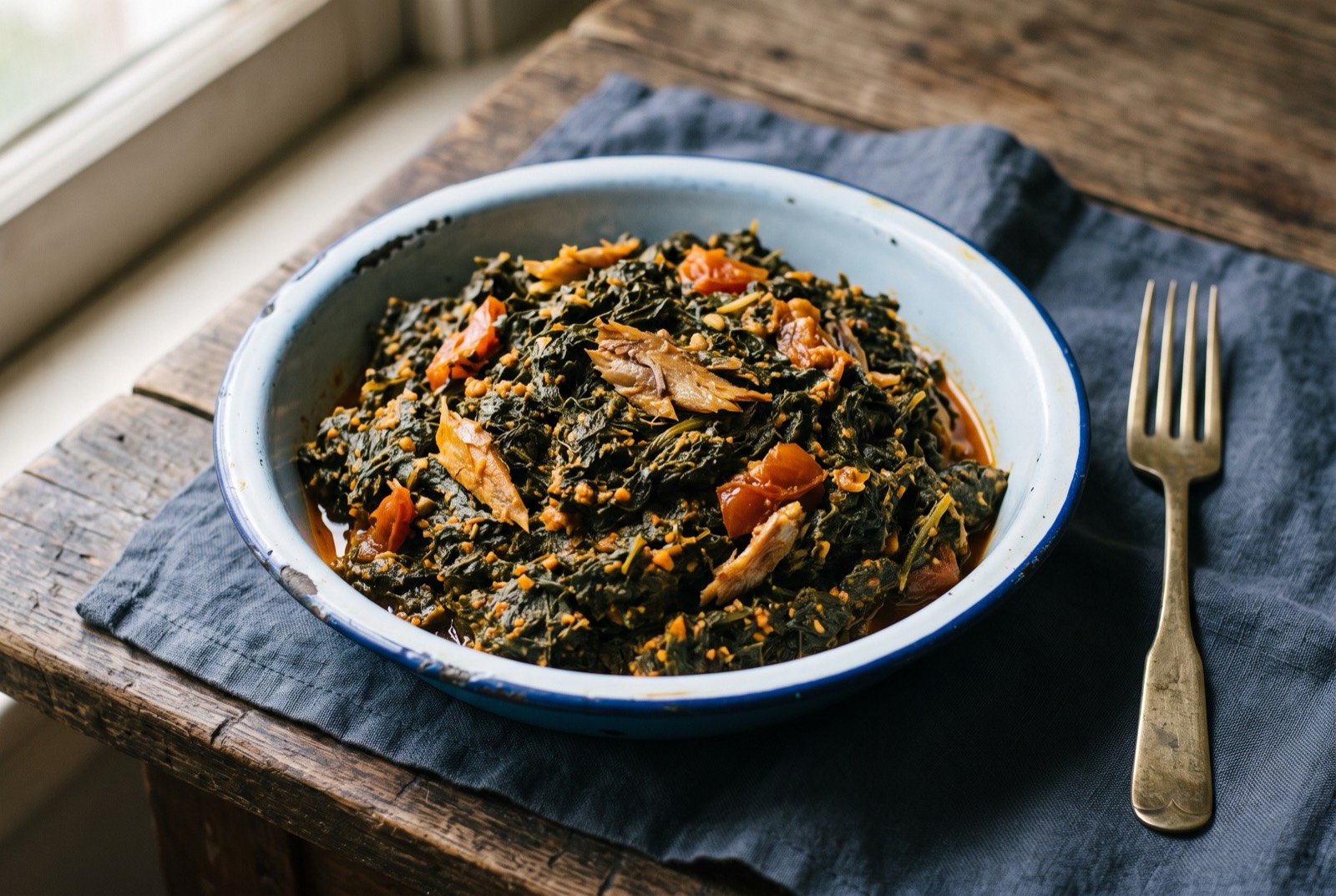
An illustration of the dish, not a photograph of it cooked.
- Time
- 40 minutes
- Reviewed
- Not yet reviewed from inside the tradition
- Cooked
- Not yet cooked and reported
Kizaka belongs to a Central African family that includes Congolese pondu, Mozambican matapa and Sierra Leonean cassava leaf. Why the pounding is not optional: it ruptures the cell walls so the leaf will soften in reasonable time, and it brings the plant's own linamarase into contact with the linamarin, the same enzymatic detoxification as in root retting but far faster because the tissue has been destroyed mechanically. The boil then drives off the liberated hydrogen cyanide. Where the Sahel uses potash to collapse a tough leaf, Central Africa uses force, and both arrive at the same place.
As tradition built it
Serves 4. About 40 minutes.
Ingredients
- 500 g cassava leaves
- 2 ripe tomatoes, chopped
- 1 onion, chopped
- 100 g dark-roast groundnut paste
- 3 tbsp red palm oil
- 200 g smoked fish, skinned and boned (optional)
- to taste salt
Method
- Wash the cassava leaves thoroughly. Sand in this dish is unfixable.
- Pound in a mortar until thoroughly broken down. If starting from frozen pounded leaf, which is what Britain sells, pound it again: commercially pounded leaf is coarser than it looks.
- Boil in sufficient water for 20 minutes, adding the onion and tomato partway.
- Finish with the groundnut paste, or palm oil, or both, and the fish if using. Season with salt at the end.
Notes
After a Lusophone recipe collection giving weighed quantities.
What a modern chef changes
The leaf pounded twice, the groundnut emulsion broken deliberately, and the palm oil raw
Rungs 2 and 6
Method
- Pound, pound again, and cook it longer than instinct allows. One of very few dishes here where long cooking is correct. The bitterness that develops is the point: it is what stops a palm oil plate reading as one flat note.
- Break the groundnut paste before it goes in. Buy 100 per cent dark-roast paste with the oil separated on top, which is the unstabilised emulsion you want, and temper it with a ladle of hot cooking liquor before stirring it through. Added cold it seizes into lumps that never disperse.
- Palm oil off the heat, state one, so the sauce carries fruit and colour rather than a cooked-out orange, and serve it beside the funge rather than on it, because the eater presses a thumb hollow and scoops.