Southern Africa · Volume 20, Desert, Coast and Funge
Funge de bombó
Angola, the Kimbundu and Bakongo north
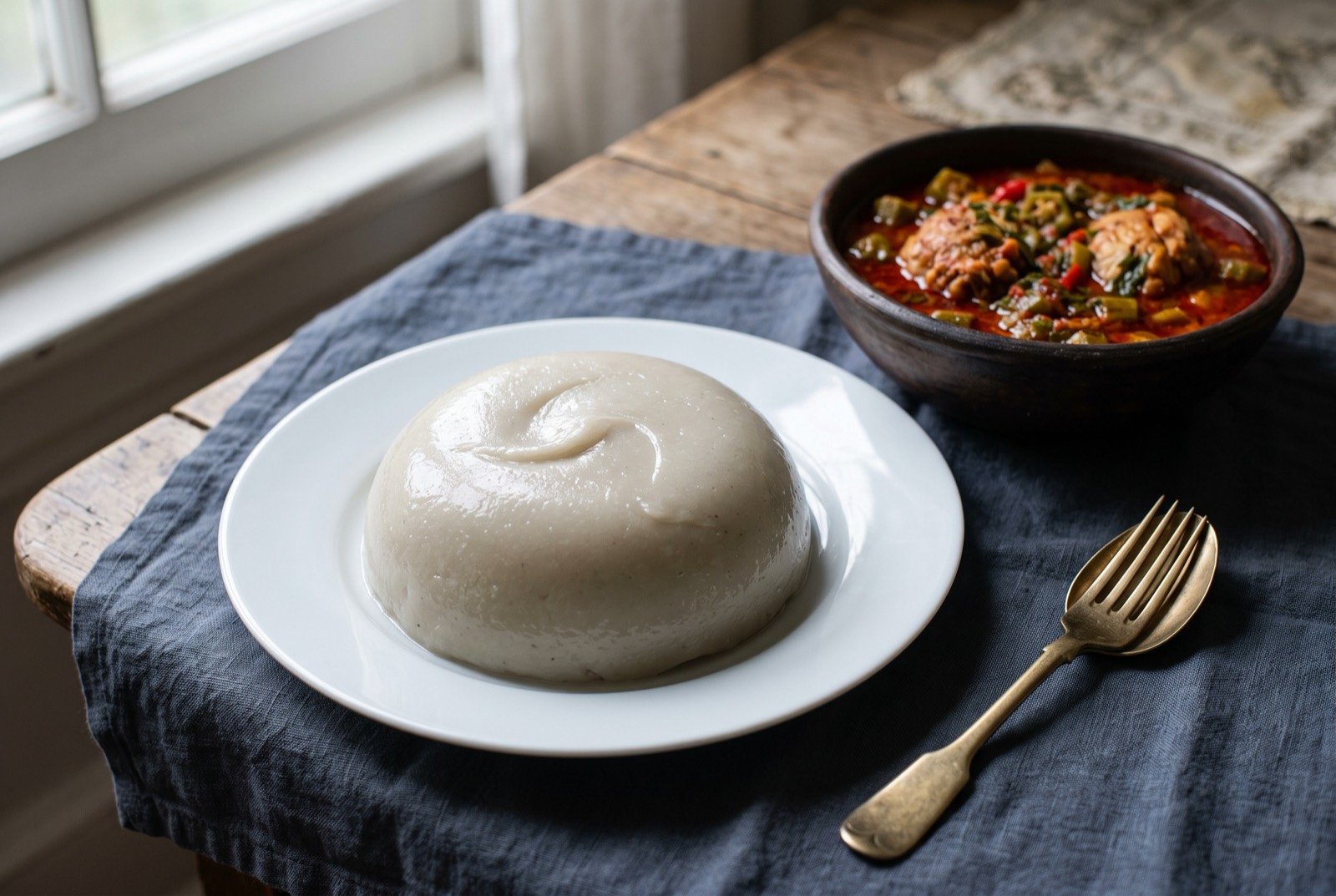
An illustration of the dish, not a photograph of it cooked.
- Time
- 35 minutes
- Reviewed
- Not yet reviewed from inside the tradition
- Cooked
- Not yet cooked and reported
Funge is not a side dish. It is the meal, and the muamba is the sauce for it. A piece is pinched off with the right hand, a thumb hollow pressed into it, and it is used to scoop. Two honest notes. No credible Angolan source publishes a weighed ratio, so this recipe fixes the water and works the flour to a texture, which is what the traditional method does anyway. And retted bombó flour is not sold in Britain: every UK cassava flour is sweet-cassava flour, safe and characterless. Do not attempt to ret cassava roots at home. The cyanide chemistry is real and konzo is irreversible. Build the sourness back instead, which is what the bench is for.
As tradition built it
Serves 4. About 35 minutes.
Ingredients
- 1.5 L water
- 150 g cassava flour, sifted, for the slake
- 250 ml cold water, for the slake
- 250 to 350 g further cassava flour, sifted, added to the endpoint
- 1 tsp fine salt
Method
- Bring the 1.5 litres of water to a rolling boil in a deep, narrow, heavy pan. Salt it.
- Whisk the 150 g of cassava flour into the 250 ml of cold water until absolutely smooth. Do not use warm water. This step decides everything.
- Pour the slurry into the boiling water in a steady stream, stirring hard. Cook this thin gruel 5 to 8 minutes, until the raw flour smell has gone and the surface takes on a gloss.
- Rain in the remaining cassava flour a little at a time, beating hard with a stout flat wooden paddle, until the mass stiffens and pulls away from the pan wall in one piece. That is the endpoint, not a weight.
- Beat 10 to 15 minutes more. It will pass from grainy to stretchy and glossy.
- Turn into a wetted bowl and swirl to a dome.
What a modern chef changes
The sourness rebuilt, the shear taken seriously, and the paste never held
Rungs 1 and 6
Method
- Rebuild the acid, because your flour has none. Replace 200 ml of the boiling water with the strained sour cassava slurry from the bench, or 150 ml of ting liquor. You are restoring lactic acidity on the axis it originally had, and it is the difference between funge and wallpaper paste.
- Beat past the point you think it is done. The change from grainy to elastic happens because continued shear ruptures swollen granules and releases amylose and amylopectin into a continuous network. Two more minutes at the end is worth more than any ingredient you could add.
- Do not hold it. Funge skins and dries within minutes over heat, so use a deep narrow pan, serve at once, and if you must wait press wetted greaseproof onto the surface.