Southern Africa · Volume 20, Desert, Coast and Funge
Phane
Botswana, and the Oshiwambo north where it is omagungu
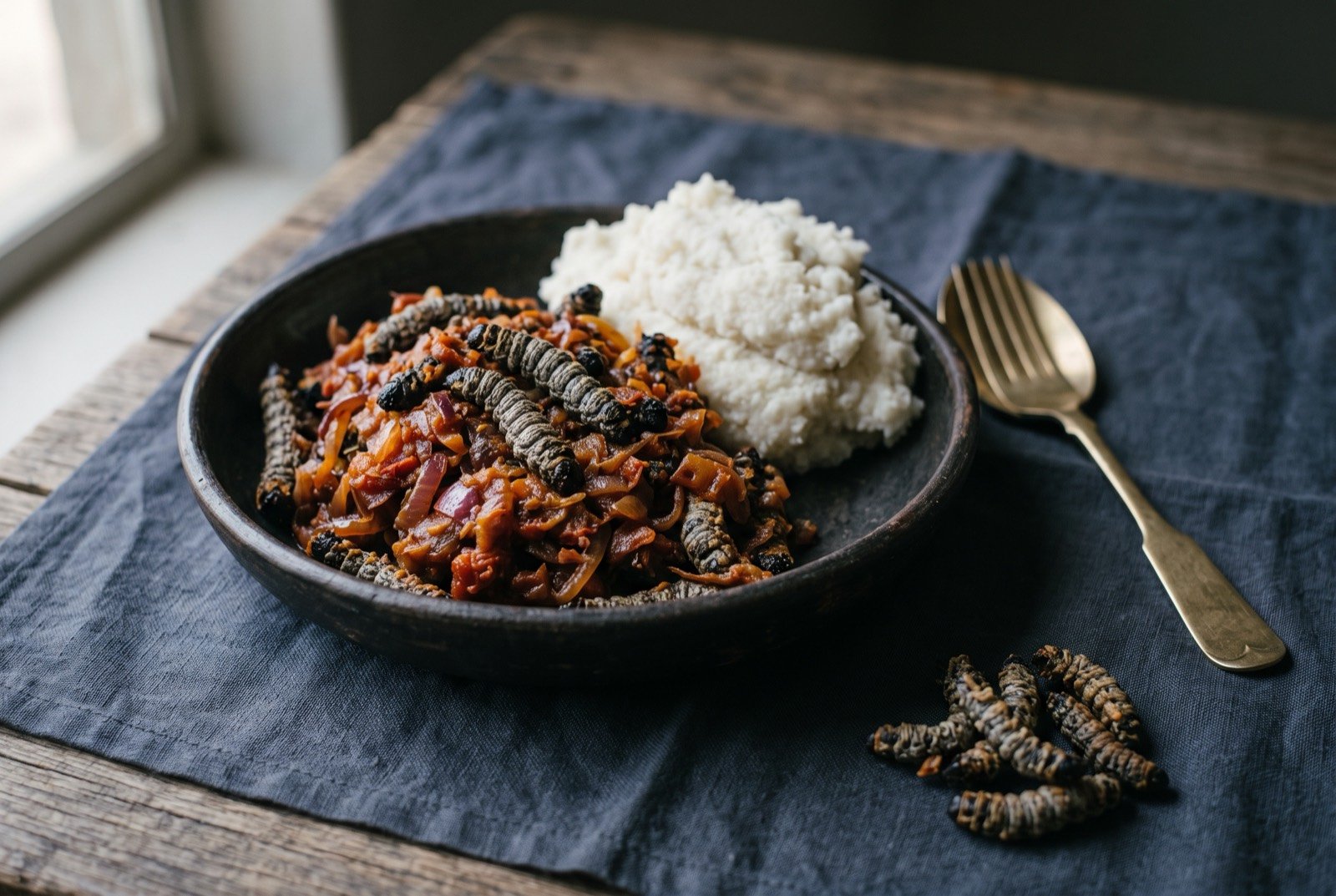
An illustration of the dish, not a photograph of it cooked.
- Time
- 25 minutes
- Reviewed
- Not yet reviewed from inside the tradition
- Cooked
- Not yet cooked and reported
Gonimbrasia belina, the mopane emperor moth caterpillar, harvested twice a year in step with the rains. The regional trade is worth tens of millions of dollars annually, harvested largely by rural women, with prices spiking June to November after the harvesters have already sold cheap, so most of the margin accrues to traders rather than to the people who did the work. This is also the best-measured technique in the volume. A response-surface optimisation across boiling times of 0 to 20 minutes and drying temperatures of 40 to 60°C found the optimum to be boiling for 20 minutes and drying at 40°C, giving 49.4 per cent protein by dry weight, coliforms below 1.5 log cfu/g, crude fibre 13.6 per cent, fat 20.2 per cent, iron 19.0 mg and zinc 17.9 mg per 100 g, and moisture below 7 per cent. And the counter-intuitive result is the useful one: hotter drying is worse. Drying at 40°C rather than 60°C preserved protein better, and the microbial kill is done by the boil, not the drying. Hot drying case-hardens the cuticle and traps moisture inside.
As tradition built it
Serves 4 as part of a meal. 25 minutes from dried.
Ingredients
- 200 g dried mopane worms, degutted
- 2 tbsp beef fat or neutral oil
- 1 onion, sliced
- 2 tomatoes, chopped
- 1 chilli, chopped
- to taste salt
Method
- Rehydrate the dried worms in warm water, about 15 minutes. Drain well.
- Heat the fat and fry them hard, 5 minutes, until the edges crisp.
- Add the onion until soft, then the tomato and chilli, and cook down about 10 minutes to a thick relish.
- Salt and serve with bogobe or oshifima.
Notes
They are also eaten dry as a crisp snack, and in Botswanan practice cooked fresh in hot ashes.
What a modern chef changes
The measured parameters used as written, and the ingredient treated as what it is
Rungs 4 and 6
Method
- If processing fresh or under-dried worms, boil 20 minutes in salted water then dehydrate at 40°C to under 7 per cent moisture. Those are published, optimised figures and there is no reason to guess. Your dehydrator does exactly this.
- Treat them as a dried umami ingredient, not only as a protein. At 49.4 per cent protein with a flavour between dried mushroom and dried shrimp, a portion ground to powder in the spice grinder is a seasoning of real force. A teaspoon into a bogobe, or into the seswaa liquor reduction, does what a stock cube pretends to do.
- Fry harder and shorter than you think, and finish with acid. The failure mode is a soft, muddy relish; you want crisp edges, which means a hot pan, a dry worm and no crowding. A spoonful of ting liquor at the end lifts a relish that is otherwise all fat, salt and earth.
Notes
Part Four