Southern Africa · Volume 20, Desert, Coast and Funge
Kapana
Katutura, Windhoek
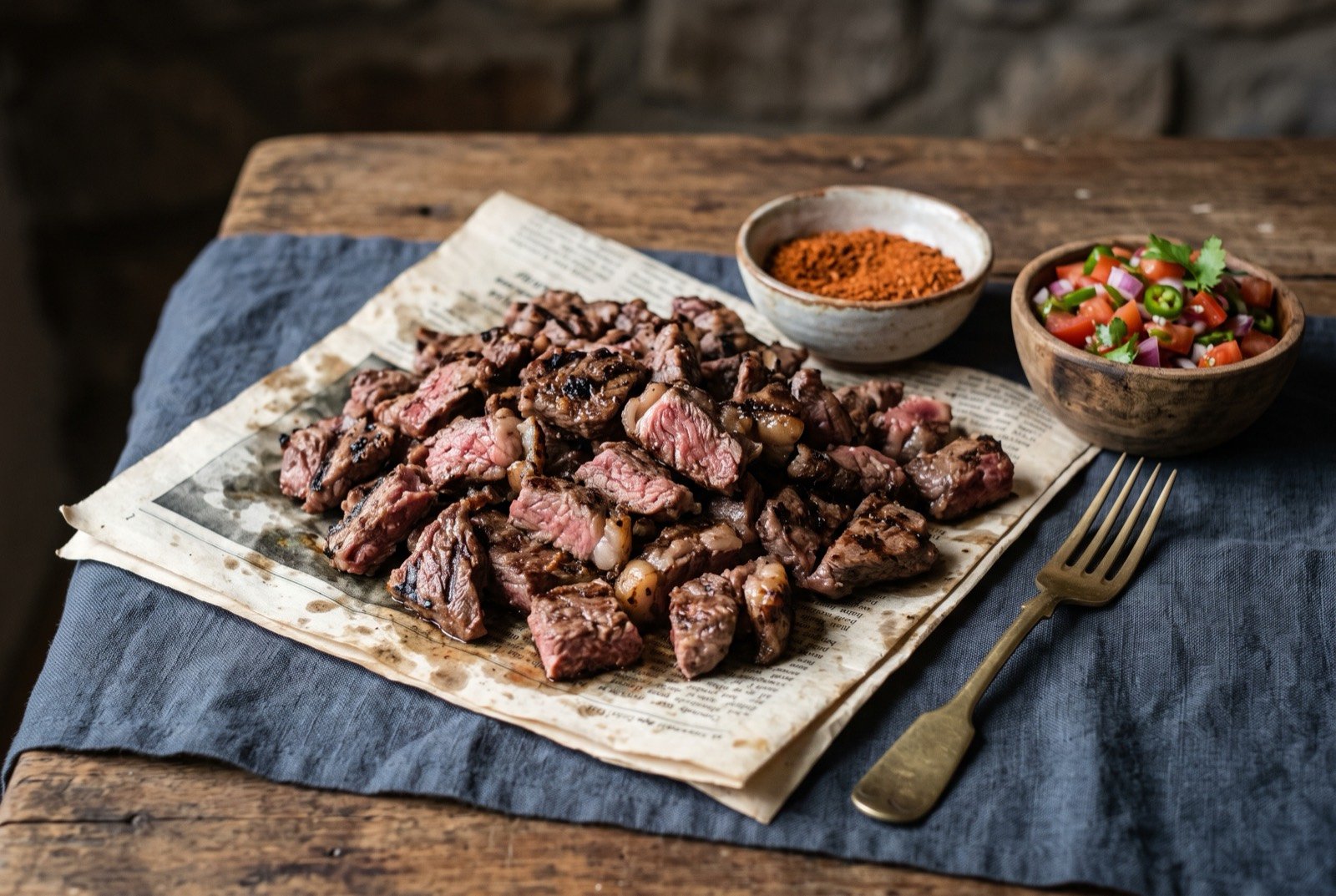
An illustration of the dish, not a photograph of it cooked.
- Time
- Hands on 20 minutes · Waiting 1 hour
- Reviewed
- Not yet reviewed from inside the tradition
- Cooked
- Not yet cooked and reported
Beef cut into strips, grilled on a welded steel plate over wood, chopped into bite-size pieces to order, handed over in newspaper with a bowl of dry spice to dip into and a salsa on the side. It is eaten by everyone: the Christian Science Monitor's phrase, that it is the street food of the rich and the poor alike, is the right register. The crucial detail is technical as well as commercial: at the market the meat is grilled with no seasoning at all and the spice is applied by the eater. The vendor cannot know how hot you want it. It also happens that no salt on the surface means no moisture drawn out before it hits the plate, and no sugar or spice to burn. The market solved a commercial problem and got the cooking right on the way.
As tradition built it
Serves 4. 20 minutes, plus 1 hour resting if seasoning ahead.
Ingredients
- 1.5 kg well-marbled entrecôte or ribeye
- 2 tsp kapana spice, if seasoning at home rather than at the table
- 2 tbsp oil
- 2 tomatoes, chopped, for the salsa
- 1 onion, chopped, for the salsa
- 50 ml white vinegar
- 2 tbsp neutral oil
- to taste a bowl of dry kapana spice, for dipping
Method
- Cut the beef lengthwise into slices about 1 cm thick, left interconnected so the sheet can be handled as one piece. Fat means flavour and lean means dry kapana.
- If seasoning at home, rub with the spice and oil and rest refrigerated 1 hour. If cooking the market way, do neither.
- Grill at about 175°C: 3 minutes a side to start, then turn every 2 minutes until the bar marks set. About 10 minutes total.
- Chop into bite-size pieces with a heavy knife.
- Mix the tomato, onion, vinegar and oil for the salsa and leave it to sit.
- Serve the meat, the salsa and the bowl of dry spice separately. Eat standing up, with your fingers, dipping each piece.
Notes
The market method, with a Namibian home cook's tested numbers for a domestic grill.
What a modern chef changes
The plate, the fuel, and the seasoning left where it belongs
Rungs 5 and 6
Method
- Cook on a plate, not a grate. A cast-iron plancha on the Big Green Egg reproduces the welded steel plate of the Oshetu Market stand, so the rendered fat stays under the meat and the strips fry in it while they sear.
- Fuel it properly. Camelthorn at 936 kg per cubic metre and 1 to 2 per cent moisture is a different fuel from British kiln-dried hardwood at 15 to 20 per cent, and the difference is visible in the sear. Failing camelthorn or mopane, insist on the densest, driest lumpwood you can find and refuse briquettes with binder, which cannot reach or hold the flux. Binchotan works for the same reason, though the flavour tradition is unrelated.
- Season at the table and mean it. The market method is technically superior, not merely convenient. Grill clean, put the spice in a bowl, let people dip. Nothing on the surface means a dry surface, and a dry surface is the whole of the sear.
- Build the salsa half an hour ahead. It is the only acid on the plate.