The Caribbean · Volume 13, The Pilón, the Colony and the Frontier
Chimichurri dominicano
Dominican Republic (Santo Domingo)
Illustration
- Time
- 20 minutes
- Researched
- Researched from 23 sources in the brief
As tradition built it
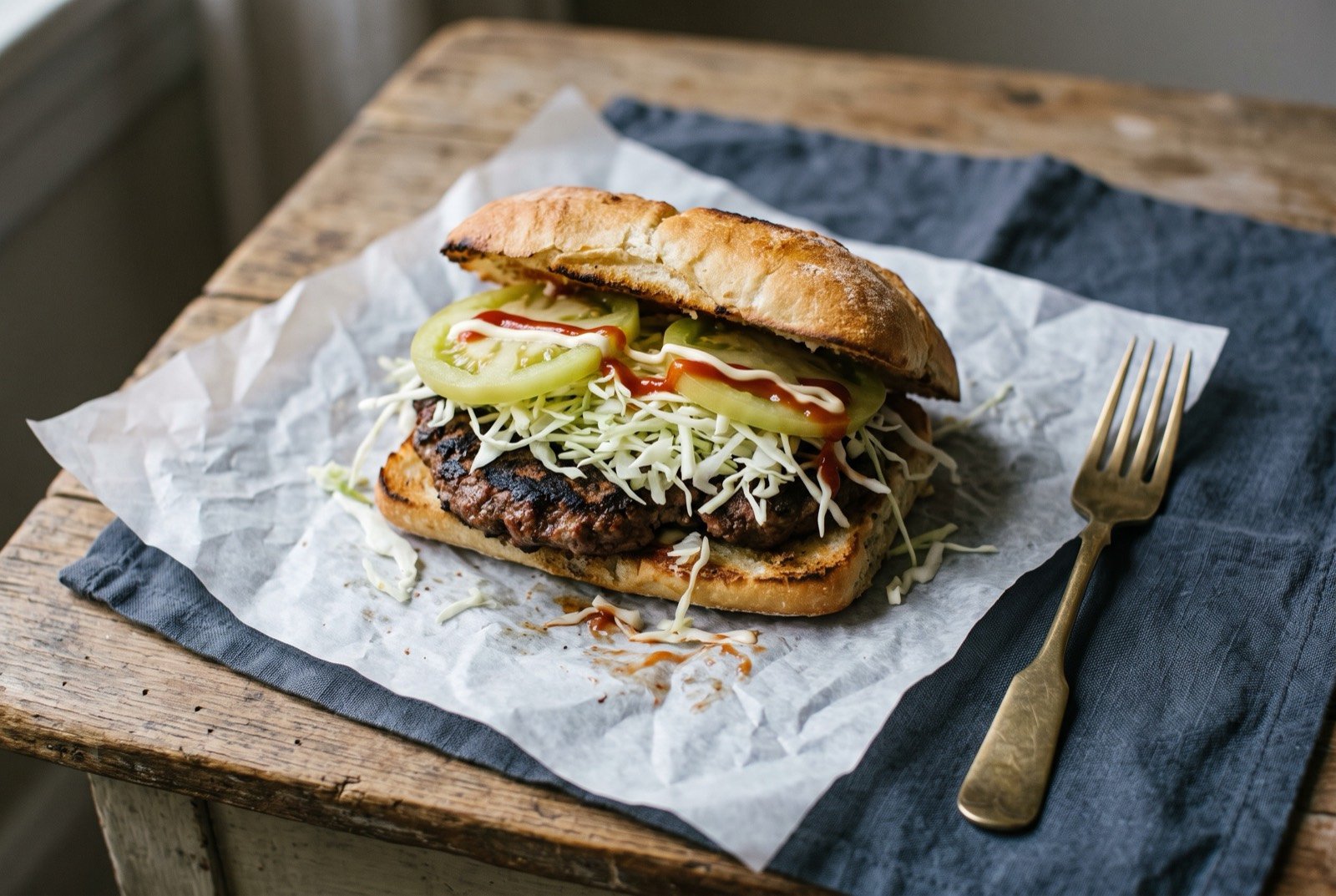
Chimichurri dominicano (chimi)
Serves 4 . 20 minutes
Ingredients
The method as the tradition gives it, ingredients named but not yet weighed. Quantities follow as we verify them, lead dishes first.
- ground beef
- pan de agua, toasted
- green tomato
- cabbage
- sautéed onion
- ketchup
- mayonnaise
Method
- Charcoal-grill the ground beef.
- Toast the pan de agua, a cheaper bread than a hamburger bun.
- Top the grilled beef on the toasted bread with green tomato, cabbage, sautéed onion, ketchup and mayonnaise, never cheese.
Notes
Despite the name, this has nothing to do with Argentine chimichurri sauce. Dominican and English-language sources agree on the same origin story: in the 1970s an Argentine immigrant, named in one Dominican source as Juan Abrales, set up a Santo Domingo street cart selling choripán topped with genuine Argentine chimichurri sauce. Customers began asking for "a sandwich with chimichurri," the name stuck, and the food it named evolved into something with no remaining resemblance to the sauce it was named after.
Every street vendor keeps a personal recipe, so no two are ever quite the same, a genuine, working, unfixed street food rather than a dish with a single settled ratio to give. It is the Dominican Republic's late-night food, eaten after a night out.
What a modern chef changes
Hand-ground beef, quick-pickled crunch
Method
- Grind the beef fresh and coarse in a dedicated grinder attachment rather than using pre-ground meat, then sear it hard and fast on the Big Green Egg's direct zone for real charcoal char, the one part of the dish's own name that is at least accidentally true to the technique.
- Quick-pickle the green tomato and cabbage rather than using them raw, a fast vinegar treatment that echoes mangú's own pickled onion technique elsewhere in this chapter without importing anything foreign to the dish.
- Dehydrate and grind a portion of sautéed onion into a fine, sweet dust worked into the mayonnaise, concentrating a flavour the traditional version only achieves by using a great deal of raw onion.