The Caribbean · Volume 13, The Pilón, the Colony and the Frontier
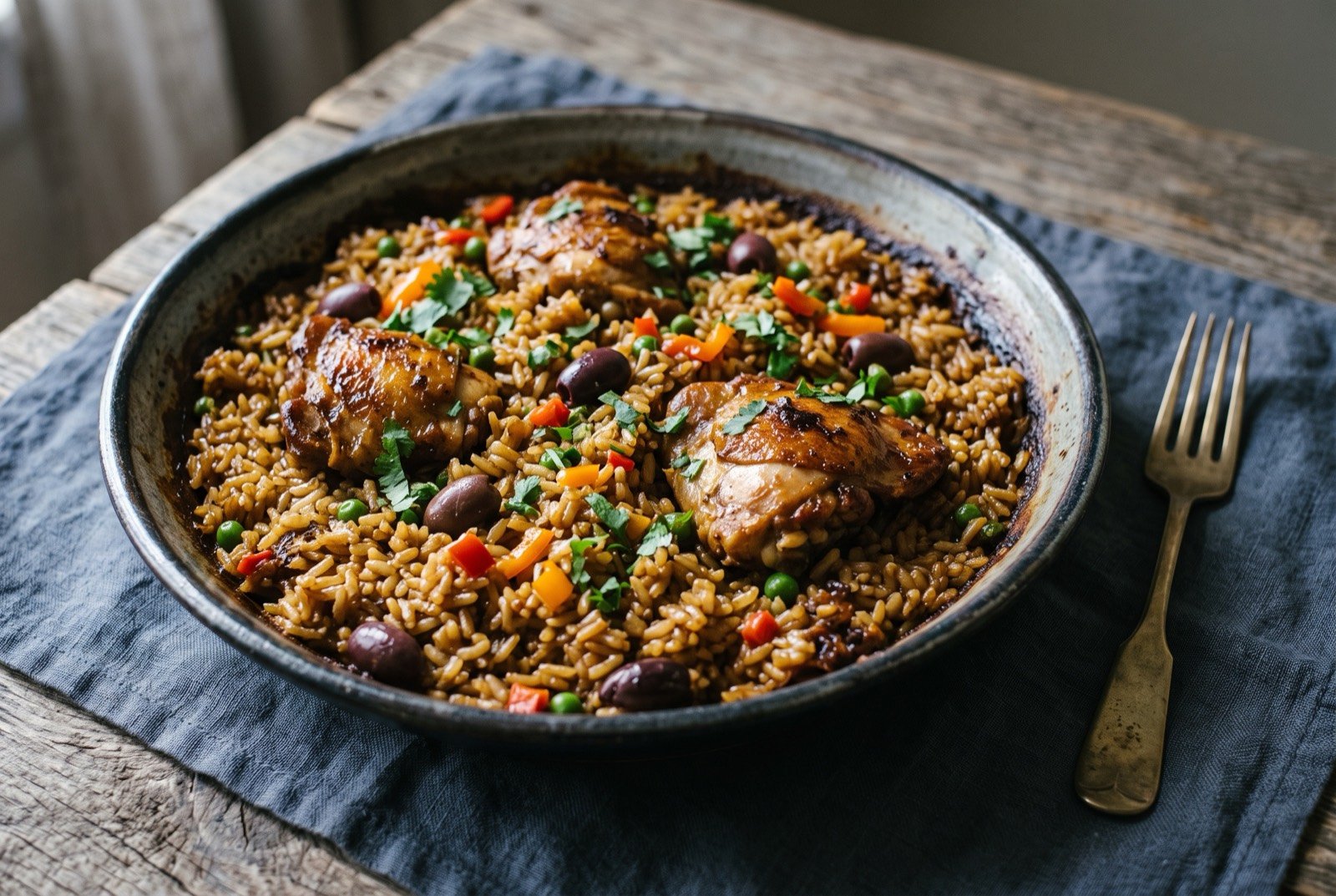
Locrio de pollo
Dominican Republic
Illustration
- Time
- 1 hour 20
- Researched
- Researched from 23 sources in the brief
As tradition built it
Locrio de pollo
Serves 4 to 6 . 50 minutes (plus 30 minutes to marinate)
Ingredients
- 1.4kg (3 lb) chicken, cut into pieces
- to taste salt
- to taste oregano
- 1 bunch, chopped cilantro
- to taste pepper
- diced ají cubanela
- minced red onion
- 1 stalk, chopped celery
- 4 cloves garlic
- a small handful, or to taste (optional) capers
- about ½ cup, pitted, green or black olives
- a squeeze lemon juice
- 1 tbsp sugar
- 3 tbsp hot oil
- a handful, diced (optional) squash or carrot
- 1 cup tomato sauce
- 2 cups water
- 2 cups long grain rice
Method
- Marinate the chicken 30 minutes in salt, oregano, cilantro, pepper, diced ají cubanela, minced red onion, celery, garlic, capers, olives and lemon juice.
- Caramelise a tablespoon of sugar dark in three tablespoons of hot oil, add the marinated chicken and stir a minute.
- Add the reserved vegetables, squash or carrot, and a cup of tomato sauce, then two cups of water, and bring to the boil.
- Stir in two cups of long grain rice, cook uncovered until the water evaporates, then cover and cook 15 minutes on low, stir, cover a further 5 minutes, and check for doneness, extending if needed, roughly 50 minutes total.
Notes
The name is said to derive from "locro" plus "criollo," traced by Dominican sources to cooking carried by the retinue of María de Toledo, wife of Diego Colón.
A regional variant, locrio de pica pica, swaps the chicken for sardines.
What a modern chef changes
A darker caramel, a deliberate concón
Rung 05
Method
- Caramelise the sugar to a slightly darker point than the traditional recipe risks on an open stovetop, using the more even, controllable heat of a heavy pan on the Big Green Egg's direct zone, for a deeper bitterness underneath the finished rice than a home hob reliably achieves without scorching.
- Confit the chicken thighs sous vide before the final sear in the caramelised sugar and oil, so the meat is fully, evenly cooked before it ever meets the rice, rather than finishing inside the pot alongside grains that need a different amount of time.
- In the final low-heat stage, close the Big Green Egg's lid over the pot for the last five minutes rather than a domestic hob's loose lid, building the concón crust at the base deliberately, the same logic as pegao on the Puerto Rican side of this chapter.