The Caribbean · Volume 13, The Pilón, the Colony and the Frontier
Pasteles
Puerto Rico
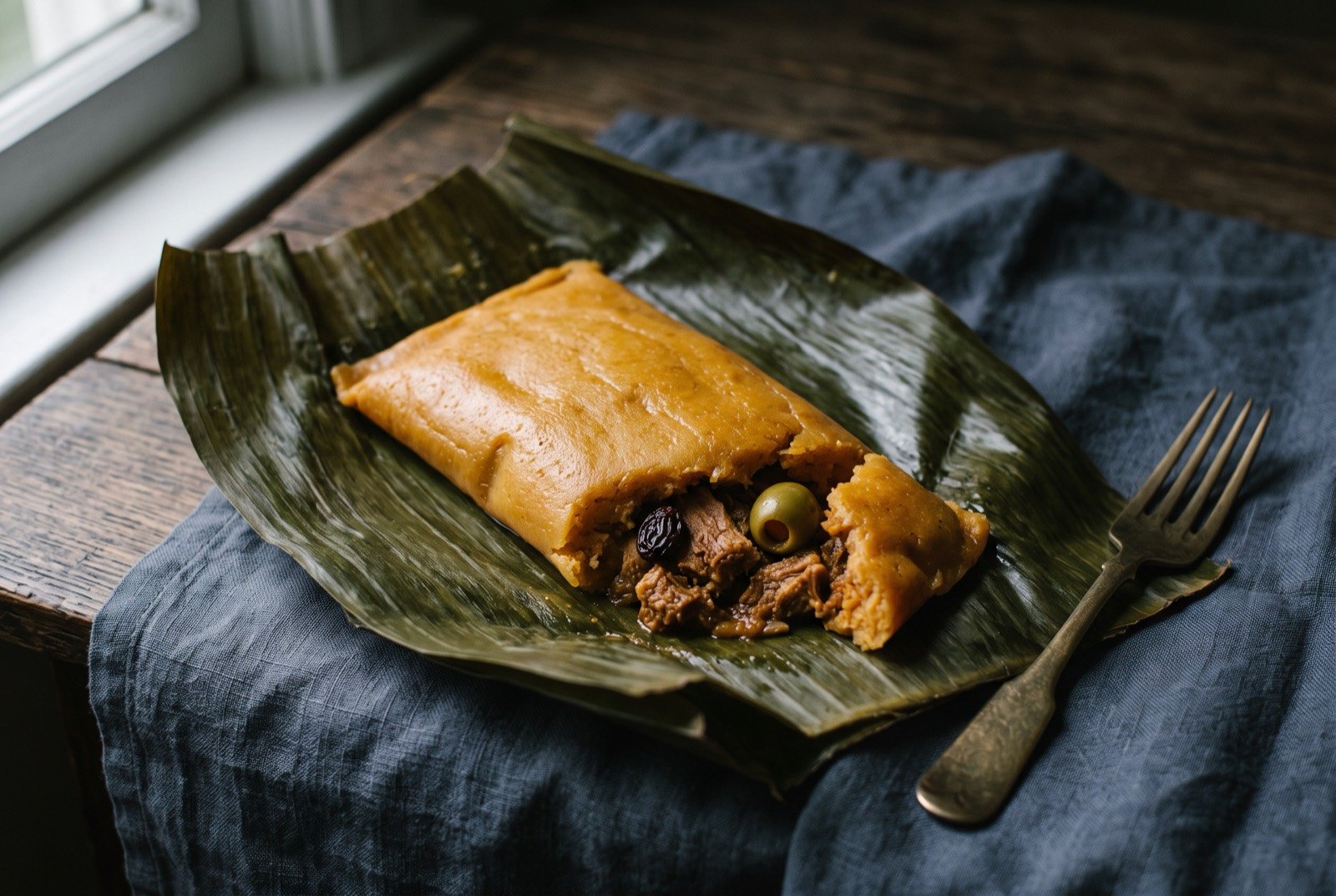
An illustration of the dish, not a photograph of it cooked.
- Time
- 3 hours
- Reviewed
- Not yet reviewed from inside the tradition
- Cooked
- Not yet cooked and reported
As tradition built it
Pasteles
Serves 6 (makes about a dozen) . 3 hours
Ingredients
An outline, not yet a recipe: the tradition's method with its ingredients named but not weighed. Quantities are being added from sources inside the tradition, lead dishes first.
- 12, peeled and grated (for about a dozen pasteles) green banana, grated
- 450g (1 lb), peeled and grated yautía, grated
- 450g (1 lb), peeled and grated calabaza, grated
- batata, grated
- ⅓ to ½ cup achiote oil, to bind and colour
- 1 to 2 tsp, or to taste adobo
- a little broth, to loosen
- about 3 cups (roughly ¼ cup per pastel, for a dozen) pork picadillo
- a few, added individually to each pastel olives
- a few, added individually to each pastel raisins
- a few, added individually to each pastel chickpeas
- enough pieces to wrap a dozen parcels banana leaf (or parchment paper as a home substitute)
- roughly a metre per bundle (two pasteles tied together as one yunta) kitchen string
- roughly 5 litres (for about a dozen pasteles) water, for the boiling pot
- 3½ tbsp (for about a dozen pasteles) salt, for the boiling pot
Method
- Make the dough from grated green banana, yautía, calabaza and batata, bound and coloured with achiote oil and adobo, occasionally loosened with a little broth.
- Make the filling: pork picadillo with olives, raisins and chickpeas, a dish that visibly layers all three founding traditions in one parcel, Taíno starches and ají, Spanish pork and olives, African-introduced banana and technique.
- Wrap a portion of dough and filling in banana leaf and tie with kitchen string; parchment paper is a common home substitute for the leaf itself.
- For about a dozen pasteles, boil in a pot of roughly 5 litres of water to 3½ tablespoons of salt; fresh pasteles boil 35 to 40 minutes, frozen ones 45 to 50, turned halfway through.
What a modern chef changes
A gentler steam, a concentrated batata
Method
- Steam the wrapped pasteles in a Big Green Egg run as an oven with a water pan, rather than fully submerging them in a boiling pot, for a gentler, more even cook that keeps the banana leaf's aroma in the parcel rather than leaching it into the water.
- Dehydrate a portion of the grated batata before folding it back into the dough, concentrating its sweetness against the more savoury yautía and banana rather than letting the batata's natural moisture dilute the whole dough.
- Clarify the reserved broth used to loosen the dough through a chinois, for a cleaner base flavour with none of the starch cloudiness a straight simmer leaves behind.