Mesoamerica · Volume 07, Belize, Honduras and the Mosquito Shore
Sopa de caracol
Garifuna coast, Honduras
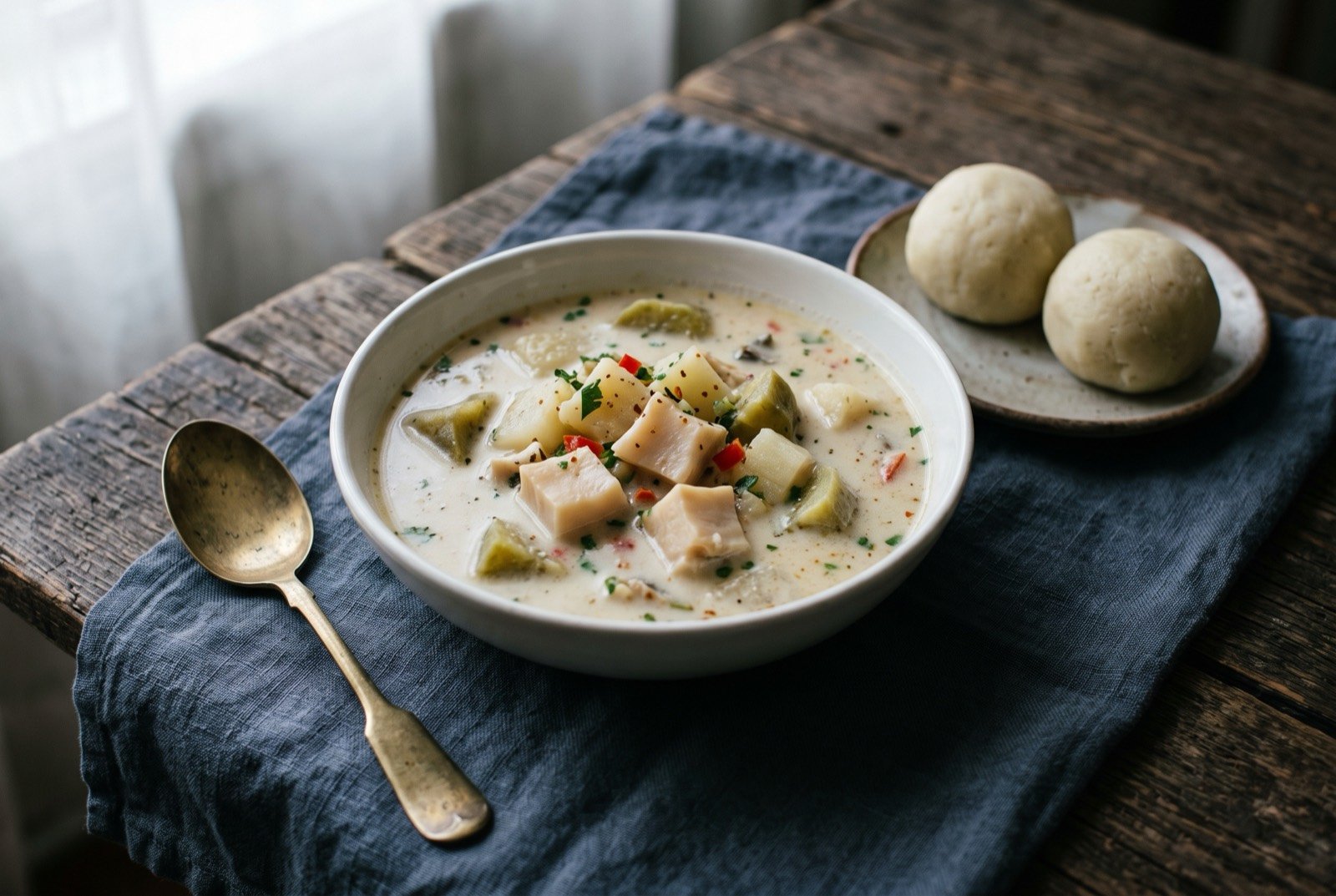
An illustration of the dish, not a photograph of it cooked.
- Time
- Not statedNo source states a time and the atlas has too few comparable dishes to estimate one.
- Researched
- No outside sources linked
- Reviewed
- Not yet reviewed from inside the tradition
- Cooked
- Not yet cooked and reported
As tradition built it
Sopa de caracol
Documented by Honduran press (La Prensa, El Heraldo)
Ingredients
- 2 fillets conch, cut into roughly two-inch squares, lightly tenderised
- 1 cup coconut milk
- ½ pound yuca
- 2 green plantains plantain
- 1 green and 1 ripe plantain machuca (mashed plantain formed into balls), to serve on the side
Method
- Build a white, undyed, coconut-forward soup made with coconut milk, with comparatively few vegetables, chiefly yuca and plantain.
- Cook the conch only briefly, around five minutes, because any longer toughens it past the point of pleasant eating.
- Serve with machuca, mashed plantain formed into balls, on the side rather than folded into the soup.
Notes
This stands against the more commonly seen commercial version, coloured orange with annatto.
What a modern chef changes
Precision on the one variable that matters
Rung 01, 03
Method
- Cook the conch sous vide, at a precise low temperature for a controlled few minutes, for an even, genuinely tender result rather than the uneven texture a quick open-pot boil can give a thick-walled mollusc, since the single variable that matters most is exactly the one the tradition already names: do not over-cook the conch, and do not colour the broth.
- Build the broth's body from a slow reduction of coconut milk with the yuca and plantain, passed through a chinois for a silkier, whiter result with no annatto anywhere near it, keeping faith with the tradition's own stated correctness rather than modernising away from it.
- Serve the machuca balls formed with a hand-held ice-cream scoop for a genuinely neater, more even shape than hand-rolling gives, a small, honest kitchen convenience rather than a real technique change.