Mesoamerica · Volume 08, Pupusas, Gallo Pinto and the Pacific Volcanic Belt
Indio viejo
Ometepe Island, Nicaragua
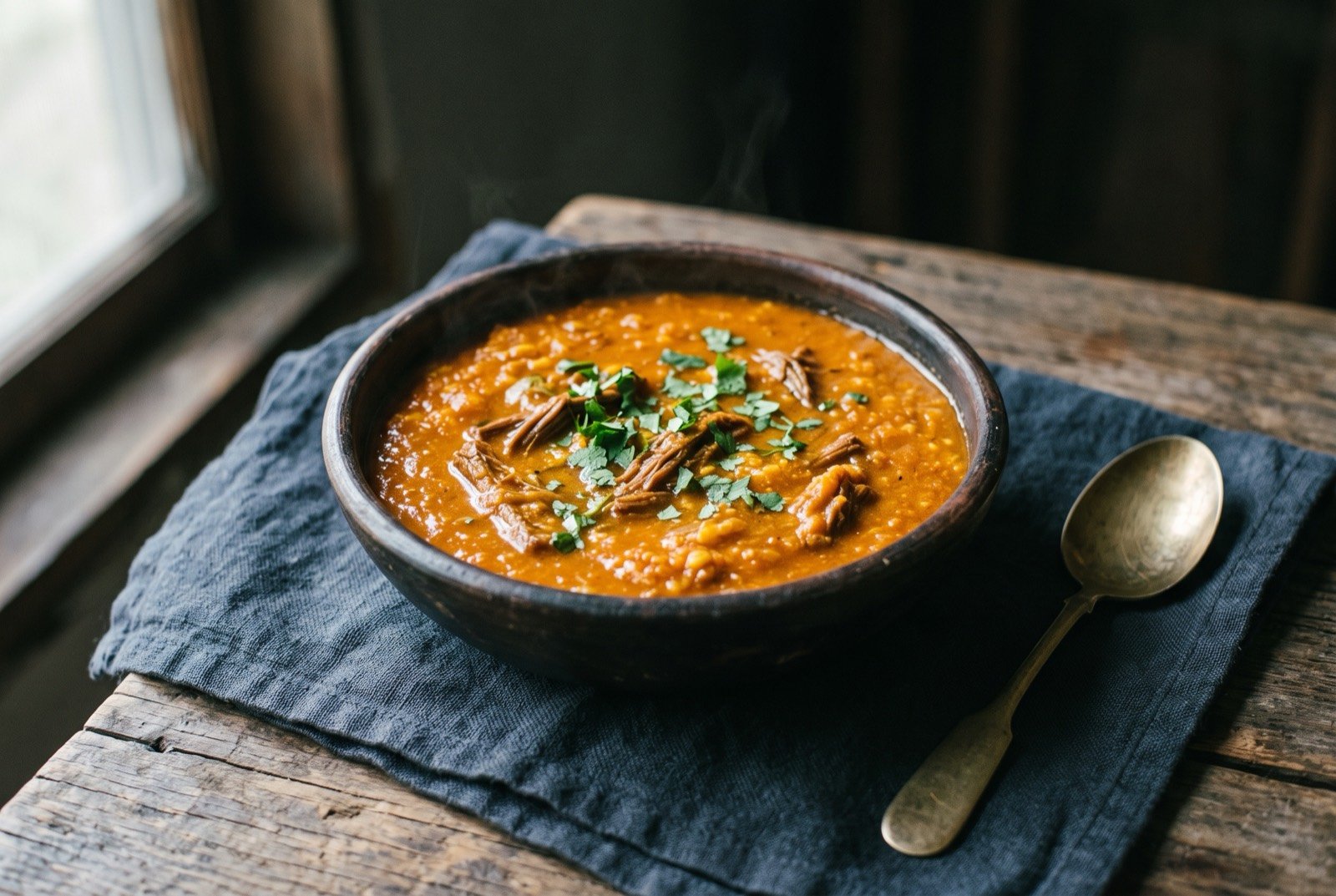
An illustration of the dish, not a photograph of it cooked.
- Time
- Not statedNo source states a time and the atlas has too few comparable dishes to estimate one.
- Reviewed
- Not yet reviewed from inside the tradition
- Cooked
- Not yet cooked and reported
As tradition built it
Indio viejo
Ingredients
- 2 cups, diluted in a cup of water maize masa, to thicken
- 1½lb, cooked and shredded beef, shredded
- to taste achiote
- 5 tomato
- 2 onion
- 4 cloves garlic
- 3 sweet pepper
Method
- Make a maize-and-shredded-beef stew, thickened with maize masa.
- Colour and flavour with achiote, tomato, onion, garlic and sweet pepper.
Notes
Attributed origin to the Nicarao people of Ometepe Island, prepared before Spanish contact with maize, tomato, achiote, native herbs, and venison, turkey or iguana rather than beef.
The name carries a well-documented folk legend, that it derives from a joking lie an indigenous leader told two Spaniards on Ometepe who asked what the natives were eating, claiming they were eating "an old Indian" rather than admit reluctance to share food, reported everywhere as legend rather than verified history.
Known regionally as "marol" or "picadillo" around Diriamba and further north.
No precise modern quantities or timings were found in credible sources for this dish, and this chapter names that gap rather than filling it with invented numbers.
What a modern chef changes
Restraint, not reinvention
Method
- Toast and grind the achiote seed fresh in a dedicated spice grinder immediately before it goes into the pot, rather than using a pre-made paste, for a brighter colour and a cleaner, less muddy pepper note than most commercial achiote delivers.
- Smoke the beef briefly on a Big Green Egg before shredding it into the masa-thickened stew.
Notes
Given how little firm technique documentation survives for this specific dish, this chapter's own approach here leans toward restraint rather than reinvention, closer in spirit to what Pablo Bonilla does at Sikwa in San José, replicating community method faithfully rather than laying new technique on top of it.
No named source documents the beef-smoking step as traditional practice, though it is a genuine, defensible addition given how many of the dish's own possible original proteins, venison, iguana, would themselves have carried some smoke from open-fire cooking.