Mesoamerica · Volume 08, Pupusas, Gallo Pinto and the Pacific Volcanic Belt
Nacatamal
Nicaragua
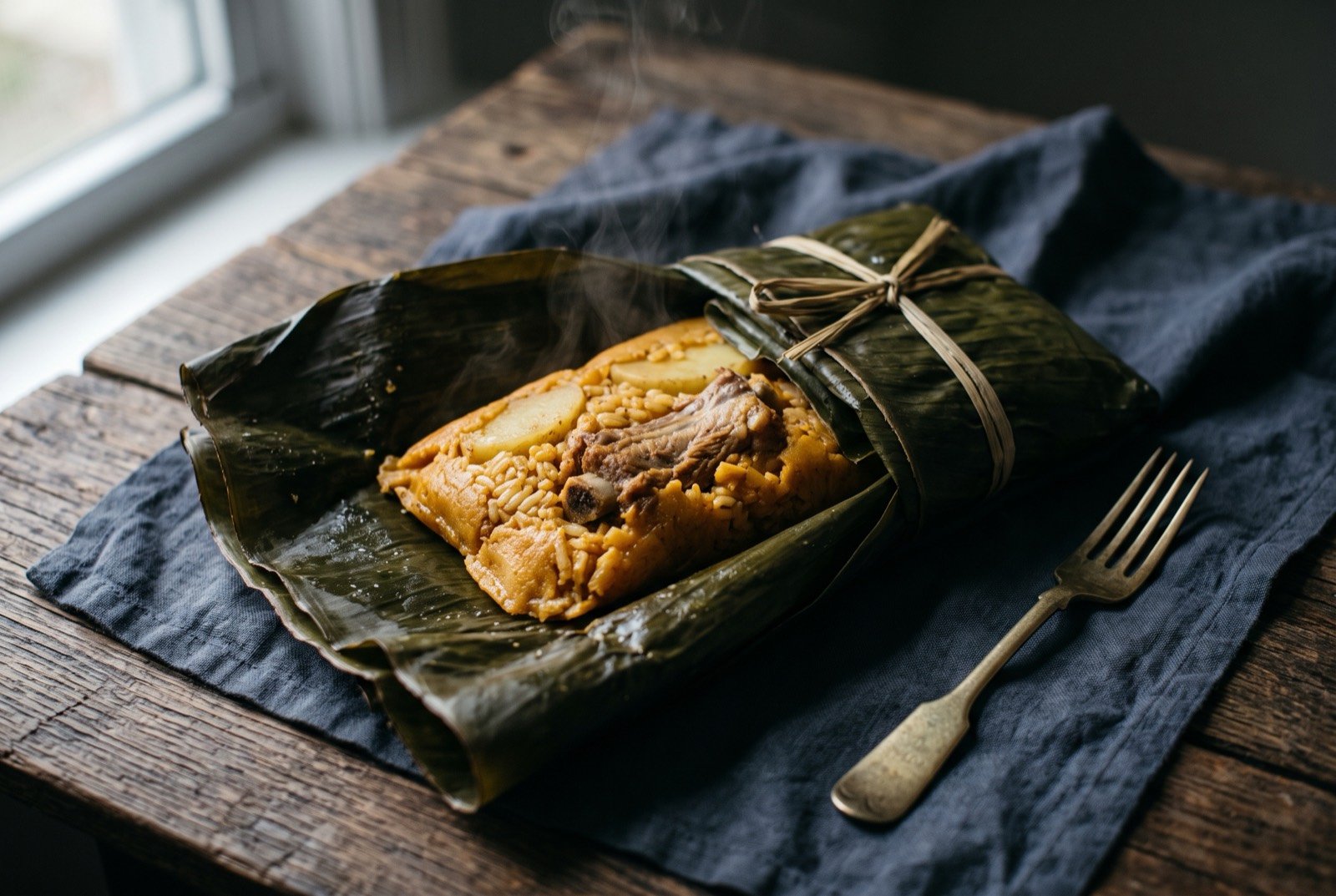
An illustration of the dish, not a photograph of it cooked.
- Time
- 4 hours
- Reviewed
- Not yet reviewed from inside the tradition
- Cooked
- Not yet cooked and reported
As tradition built it
Nacatamal
Serves 8. About 4 hours.
Ingredients
- 1.5kg, hydrated maize dough (masa)
- 1 cup warm water
- ¼ cup sour orange juice
- 1 cup lard
- ½, for the recado, plus rings for the filling onion
- 2, for the recado, plus rings for the filling chiltoma
- 3, for the recado, plus slices for the filling tomato
- 1 bunch mint
- 6 tbsp rice
- 6 slices potato, sliced
- 500g each, ribs and loin pork rib and loin, pieces
- 2, about 38cm squares banana leaves, softened
Method
- Mix masa from maize dough, warm water, sour orange juice and lard, kneaded to a soft, moist consistency.
- Sauté onion, chiltoma and tomato, plus mint, in lard.
- Work the sautéed mixture through the masa itself, cook over medium heat and stir continuously until it thickens into a dense, porridge-like paste that pulls away from the pan bottom.
- Place the masa in the centre of softened banana leaves.
- Fill with rice, potato slices, chiltoma, onion, tomato and pieces of pork rib and loin.
- Tie the leaf parcel tightly.
- Boil at medium-low heat for 4 to 5 hours until tender.
Notes
Named from Nahuatl nacatl, meat, and tamalli, tamal, tracing the dish's own name to Nahua, Nicarao-linked linguistic layers, even though it is now claimed as distinctly Nicaraguan against the smaller, plainer Mexican or Honduran tamal.
What a modern chef changes
Concentrated souring, separately held pork
Rung 01, 03
Method
- Reduce the sour orange marinade in a dehydrator into a concentrated paste before it goes into the masa, a genuine intensification of the dish's own souring agent rather than a substitution for it.
- Pass the finished masa through a chinois after mixing for a silkier texture than hand-stirring alone gives.
- Hold the pork separately at a precise sous vide temperature until just tender, then fold it into the assembled parcel for a shorter final boil, long enough for the banana leaf's aroma to properly penetrate the masa without the meat itself overcooking.
Notes
The parcel's own leaf-steaming logic is preserved rather than replaced by this change.